
This Victorian dental set oozed luxury while signaling trust—and marking the early rise of patient-centric dentistry.

LARRY COHEN, Benco Dental’s chairman and chief customer advocate, has over the past half-century collected hundreds of unique dental artifacts, which reside at Benco’s home office in Pittston, Pennsylvania.
FOR FASHIONABLE PATIENTS circa 1845, appearance mattered. While today’s elite dental practices compete by offering spa-like interiors and cutting-edge technology, the Victorian dynamic was rather different. Wealthy patients didn’t go to the dentist; dentists came to them. Doctors aspiring to serve such clientele needed tools as opulent as the homes they visited. This remarkable set was built for that world, and only the most trusted dentists could afford it. An ornate wooden lockbox by London’s legendary Chubb’s holds more than 80 meticulously crafted instruments and medicine bottles, with details ranging from mother-of-pearl handles to sterling-silver fittings, all cradled by three velvet-lined trays. Beyond its beauty and rarity, the set is important for two other reasons. First, it was a very special—and, I imagine, expensive—90th-birthday gift to me from my sons. Second, it represents one example of dentistry’s transition from trade to profession (even if true medical parity was still decades away). Some extraordinarily forward-looking dentists were thinking about the kind of “patient experience” we routinely prioritize today—almost 180 years ago!
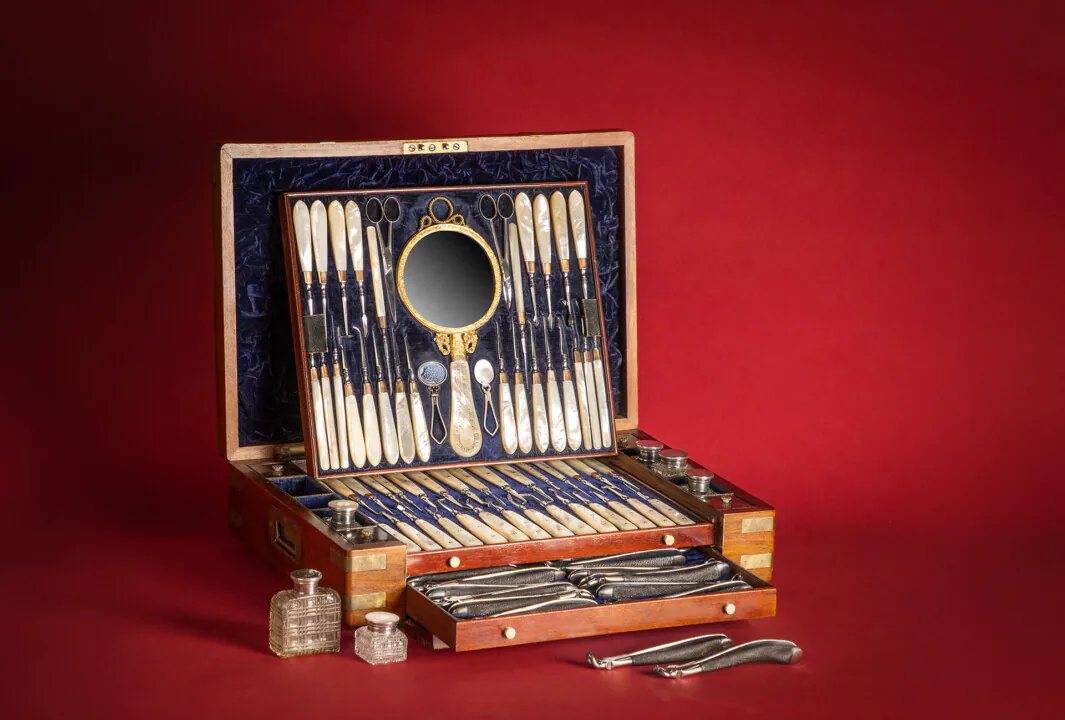
Ordering takeout: The set is dominated by Dixon forceps, each labeled for a specific tooth, reflecting an era when extractions were dentistry’s primary treatment.

 LOADING FORM...