
Dentistry is ascendant in ways it has never come remotely close to in the past. Understanding how our profession shed decades of cultural malaise reveals why dentists have risen from punchlines to powerful influencers.
By Gloria Liu
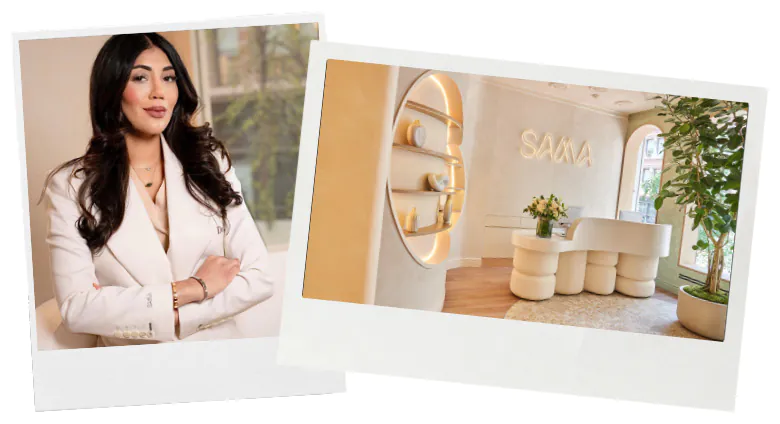
Y tu Sama también: Dr. Jaskaren Randhawa doesn’t look much like a freaky, unpleasant dentist to us. Her practice, Sama Oral Health in Manhattan’s bustling Flatiron district, casts a spell from the moment a patient walks in. It’s all a far cry from the instant recoil that many of us experienced during our long-ago childhood dental visits—and that’s exactly the point.
EVEN FOR A dental spa, the atmosphere at Sama Oral Health may best be described as aspirational. Saunter off the streets of the wellness-forward Flatiron district of Manhattan into the softly lit 3,300-square-foot space—designed by Madelynn Ringo, architect of vibes for brands including Sephora and Steve Madden—and your inner patient can’t help but leap to all the ways you could be better. How this isn’t just a visit to the dentist but the start of a new era, one in which you not only floss daily and get your semiannual prophy, but finally begin that new skin care routine, eat more protein and go to the gym regularly.
 It’s not just the private suites, personally customizable aromatherapy experience or infrared sauna that inspire the ambition to be your best self. It’s Dr. Jaskaren Randhawa, who walks in looking like she just stepped off the pages of Vogue, with her enviable brows and elevated, neutral-toned scrubs (paired with a custom European blazer) that match the Sama palette. Dr. Randhawa, a 2025 Incisal Edge 40 Under 40 honoree, has been featured in Vogue (really), Harper’s Bazaar, Cosmopolitan and Bustle for running this “oral oasis,” as one headline put it. (Another deemed it “The Chic Dentist’s Office That Wants to Help You Live Longer.”)
Sama bills itself as an integrated dental clinic and wellness center, one that focuses on how oral health affects the whole body and provides services ranging from oral microbiome testing to nutrition consultations to Botox. Dr. Randhawa clearly practices what she preaches—in a Vogue India article about her recent wedding in Bali, she displays toned arms and chiseled abs—and to sum her up in one hashtagged word is easy: #Goalz.
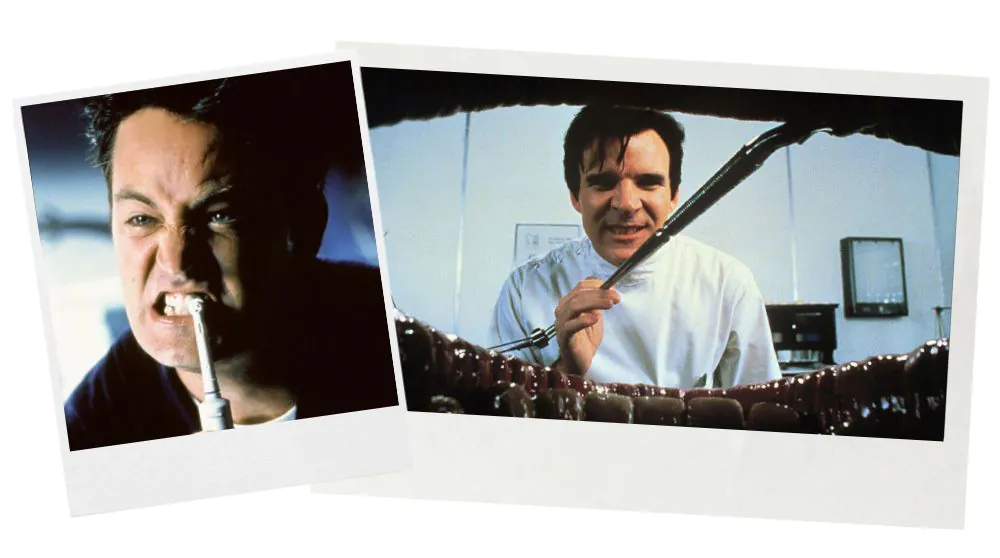
Jekyll and Hyde: The late Matthew Perry, as the amiable Dr. Nicholas “Oz” Oseransky, shows a toothbrush who’s boss in The Whole Nine Yards (2000); a tongue’s-eye view of the malevolent nitrous addict Dr. Orin Scrivello (Steve Martin) from the 1986 movie Little Shop of Horrors.
Escaping History’s Drag
Dr. Randhawa’s aura is about as far as one gets from old movie-comedy portrayals of dentistry, whether Steve Martin as the terrifying dentist-sadist in Little Shop of Horrors or Matthew Perry as the beta-male pushover in The Whole Nine Yards. But media reflect culture, and there were real reasons for the negative perception of dentistry in the past, says Dr. Scott Swank (below right), curator of the National Museum of Dentistry and a clinical associate professor at the University of Maryland School of Dentistry. “A large part of the negative perception of dentistry is probably derived from the emotional context that revolves around your mouth,” he says.
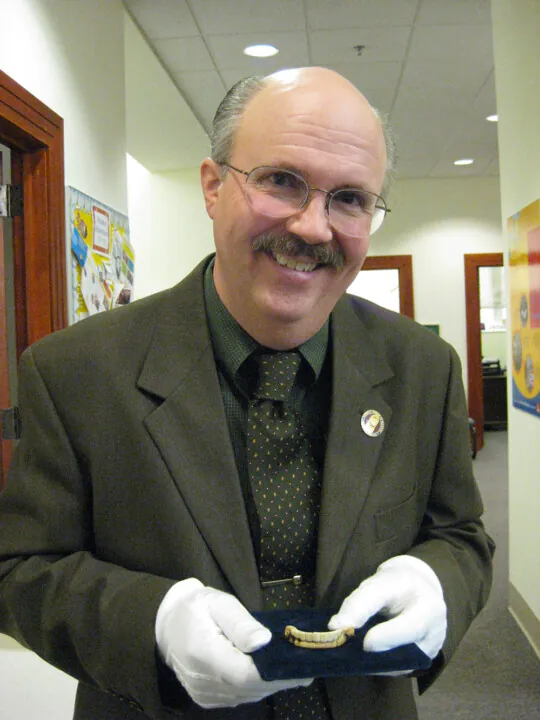
Dr. Scott Swank
As many dentists are taught, the mouth is both personal and extremely sensitive, with the tongue ten times more sensitive to touch than the fingers, Dr. Swank says. And for much of its history, dentistry was a commodity-based, cost-oriented service. When Dr. Swank’s father was growing up, he recalls, his parents took him to the lowest-cost option, a military dentist who didn’t use anesthesia. The standardization of anesthesia across the profession, and fluoridation of water in the 1950s, both improved the image of dentistry—the latter by significantly decreasing the incidence of caries and thus negative dental experiences for kids. Still, stereotypes persisted, especially in the media.
Shaping the Glow-Up
Cosmetic dentistry didn’t just improve smiles. It reframed dentists as collaborators in identity, confidence and self-image. “You go from the dentist being the bad guy,” Dr. Swank says, “to now you’re looking to the dentist to do something to enhance your well-being.” The emotional experience turned “180 degrees,” he says, from negative to positive—for evidence, just look at the mainstream popularity of TikTok videos of patients crying with joy when they see their new smiles in the mirror.
At the same time, research on the oral connection to whole-body health has reached the masses, says Dr. Zachary Brian (below right), associate professor and director of the Dentistry in Service to Community program at the University of North Carolina at Chapel Hill. Dr. Brian’s patients now come in asking questions from their primary care physicians about their oral health. “I want to do a happy dance,” he says.

Dr. Zachary Brian
Entrepreneurs to Influencers
Practice owners like Dr. Randhawa are also using social media, PR and brand strategy to shift perceptions. Since she acquired her first practice in 2017 at age 28—then one of the youngest female dentists in Manhattan to own her own clinic, she says—she has invested significantly in building a unique brand. Her adjacency to fashion and beauty is intentionally curated: When she opened her new office in the Flatiron neighborhood in 2024, she worked with a PR firm to invite magazine editors from high-profile publications for dental experiences. During these visits, Dr. Randhawa delves enthusiastically into the nitty-gritty of technology and science. (“They’re, like, overwhelmed with information from me,” she says with a laugh.) The long-term goal: convincing journalists and influencers to talk about oral health the same way they talk about retinol and other beauty products.
With dentistry’s glow-up, however, come new expectations from patients, who now behave more like consumers—even when it comes to medically necessary treatments, Dr. Brian says. In the old model, patients “endured” the experience, he points out. Now, with the advent of social media and online reviews, patients do more “shopping” for their providers, expect a more positive and personalized experience, and want to be treated as partners instead of passive participants. “The practitioners I see thriving long-term are those who treat the conversation as a clinical tool—who invest in listening, explaining and reducing the sense of powerlessness that historically defined the dental encounter.”

Tim Newton
There are other ways to give patients a greater sense of agency, too—many already sitting in plain sight. Dr. Chris Karapasha (lower right), an Incisal Edge 40 Under 40 honoree from 2025 who owns a practice in Brandon, Florida, points to color intraoral scans for every new patient. The technology is no longer novel, so what matters is how doctors make it their own as part of a distinctive treatment discussion with patients. “They can zoom in and show me what’s bothering them,” he says. Likewise, he takes time to walk patients through what’s happening inside their mouth and why he recommends various treatments. That shift—from simply capturing images to making them part of a two-way conversation—has tangible impact for those who take care to leverage it. Dr. Karapasha says his practice sees a 70 percent treatment acceptance rate, driven in part by this “show, don’t just tell” approach.
Dentistry is painting, sculpting, problem-solving, being artistic with restorations.”
Dr. Chris Karapasha
Of course, social media, magazines and even the most beautiful office can do only so much. The new relationship between dentists and patients stands to create more positive experiences than before—but with one key caveat, says Tim Newton (above left), a professor of psychology as applied to dentistry at King’s College London: “if expectations are met.” At the foundation is the timeless requirement for practicing good dentistry.
Dr. Karapasha sees dentistry as an extension of many doctors’ inherent aesthetic skill set. “Dentistry is painting, sculpting, problem-solving, being artistic with restorations,” he says. When a dentist takes this much care with his work, he adds, “it markets itself.” In other words, social media hype and sharper brand strategy aren’t what’s driving dentistry’s newfound pop-culture relevance. They’re amplifying how much more substantive, nuanced and rewarding dentistry has become.

 LOADING FORM...