
X-ray film was a pain. This shielded lead film container is a clunky reminder why.
DENTISTS RAISED IN the digital age don’t know how good they have it. Back in the day, analog X-ray film was the only imaging option—requiring not only a stock of perishable film, but also an old-fashioned darkroom for developing it. Since X-ray film is ruined by exposure to light and stray radiation, Kodak (then called Eastman Kodak) introduced lead film safes in the 1920s to store film in operatories until it could be processed. Nearly every office with an X-ray machine had one or something like it. The catalog price was $3 back then, so about $50 in today’s money. While it’s only five inches tall, it feels as heavy as a bowling ball. Drop it on your foot and it could break a toe. No wonder digital imaging caught on so quickly—and why few dentists still use film today.
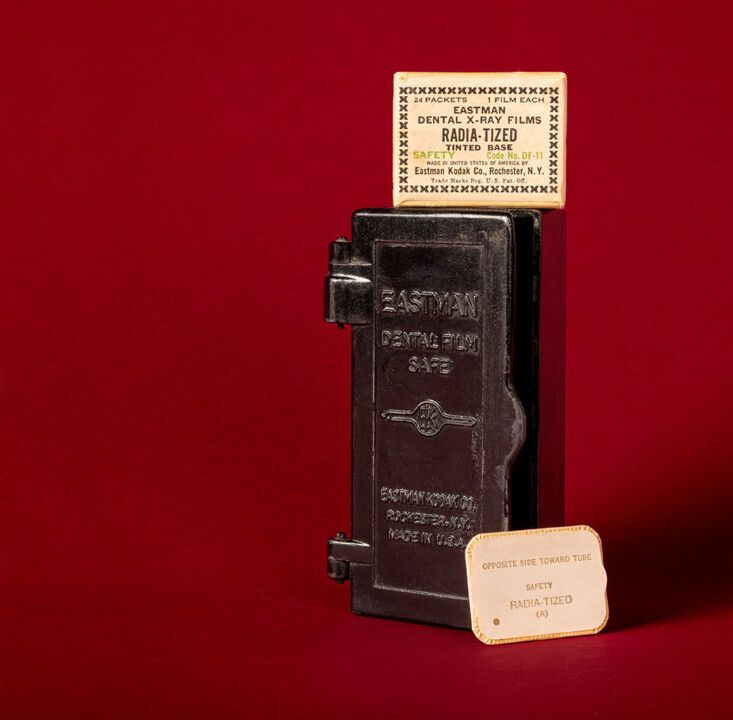
Heavy was the crown: Eastman Kodak was the leading producer of dental X-ray film for decades thanks to innovations like 1924’s Radia-Tized film, which offered faster exposures and reduced patient radiation doses.

 LOADING FORM...