
OVER THE TEN YEARS that Incisal Edge has published this list, we’ve made it clear that trying to define a concept as nebulous as “influence” is something of a mug’s game, with our list something of a thought experiment about what being influential really means in an industry like dentistry.
This year, to mark a full decade of this exercise, we’re coming at it from a slightly different direction, spurred largely by “Dentistry at the Crossroads,” the introductory essay of sorts, beginning on page 36, penned for this issue by Benco Dental Managing Director Charles Cohen. As he put it, “Influence is not always synonymous with progress; past 32 Most Influential lists have included figures whose impact sparked real debate within dentistry. This year, however, we see a group with the potential to use its platform in predominantly constructive ways. Are they the right people, at the right time, to help move dentistry forward?”
That’s what we seek to answer in the pages ahead. Thoughts? Reach out to editor@incisaledgemagazine.com and let us know. In the meantime, gaze upon our present judgment—and we’ll see you back here in 12 months for another assessment.
By Jerry Markon, Novid Parsi, Lisa Randazzo and Edward Kobesky
Benco Dental, the publisher of Incisal Edge, maintains business relationships—including partnerships and distribution agreements—with several individuals, firms and organizations on this year’s list, including but not limited to A‑dec, Align Technology, Dentsply Sirona, Overjet AI, Planmeca, Dr. David Rice, SprintRay, Solventum and Straumann. In addition, Benco Managing Director Charles Cohen is an investor in Dental Innovation Alliance and vVardis.
1. Nader A. Nadershahi, Marko Vujicic, James Schulz Jr.
THE ADA’S MR. FIX-ITS
Last year: 2 (Schulz and Vujicic); New (Nadershahi)
Executive Drector (Nadershahi); Chief Economist
(Vujicic); Head of Government Affairs (Schulz);
American Dental Association
Chicago (Nadershahi, Vujicic); Washington, D.C. (Schulz)

IN 1859, ON THE eve of the Civil War, 26 dentists gathered in Niagara Falls, New York, to form a new national organization, guided by the highest standards of their profession.
Over the next 150 years or so, the American Dental Association lived up to its pedigree. Membership was virtually automatic among dentists, who oversaw what became a scientific and research leader and a powerful political force.
Now, the ADA is entrusting its future to Dr. Nadershahi (top), who was appointed executive director in March after a stint as senior vice president of education and professional affairs.
No shortage of challenges await him. The ADA is trying to emerge from something of a crisis, with declining membership over two decades, recent financial problems and an unclear identity in a rapidly changing industry. (See “The ADA Faces Its Reckoning,” page 80.) Yet there are already early signs of momentum: The ADA Forsyth Institute—on whose board Dr. Nadershahi also serves—rose to No. 1 nationally in NIH dental research funding, up from No. 4 a year earlier.
Dr. Nadershahi, 55, is optimistic but clear-eyed about what he’s confronting. A newcomer to this list, he calls the recognition “humbling, because it’s really not about me. It’s about leaders I have the privilege of working with,” citing another new ADA leader, Dr. Richard Rosato, the group’s president.
Dr. Nadershahi is a former nine-year dean of the University of the Pacific’s School of Dentistry in San Francisco. Once a private-practice dentist in California, he has said he was inspired to explore the profession in part because his brother is a dentist as well. As someone able to potentially get things done about the numerous challenges facing dentistry, Dr. Nadershahi brings an excellent reputation to the task. “He’s the right leader for this time in the ADA’s history,” says Dr. Cindy Lyon, a professor emeritus at the University of the Pacific dental school. “He values commitment, creativity and accountability, has high expectations for colleagues and even more stringent expectations for himself.”
Dr. Nadershahi is joined here by two existing members of this list: Vujicic, 51 (above middle), the ADA’s chief economist and vice president of the Heath Policy Institute, its esteemed think tank; and Schulz (above bottom), the ADA’s chief lobbyist.
Schulz, 57, is coming off a solid 2025 for ADA advocacy, in which the organization helped preserve critical oral health care funding at the National Institute of Dental and Craniofacial Research and the CDC’s Division of Oral Health, while fighting Trump administration efforts to limit fluoride in drinking water.
But our eyes will be most closely watching Dr. Nadershahi. And his eyes are planted firmly forward. “If I had to put on a scale of 1 to 10 how important the ADA is to organized dentistry and to the profession, I’d say it’s an 11,” he tells Incisal Edge. “If we don’t have a strong ADA as the unifying voice and as the best source of information about the profession—whether it’s on Main Street or Wall Street or Capitol Hill—how do we continue to bring value to all the stakeholders we serve?” —J.M.
2. Jennifer Webster-Cyriaque
THE FEDERAL FACTOTUM
NEW: Acting Director, National Institute for Dental and Craniofacial Research
Bethesda, Maryland
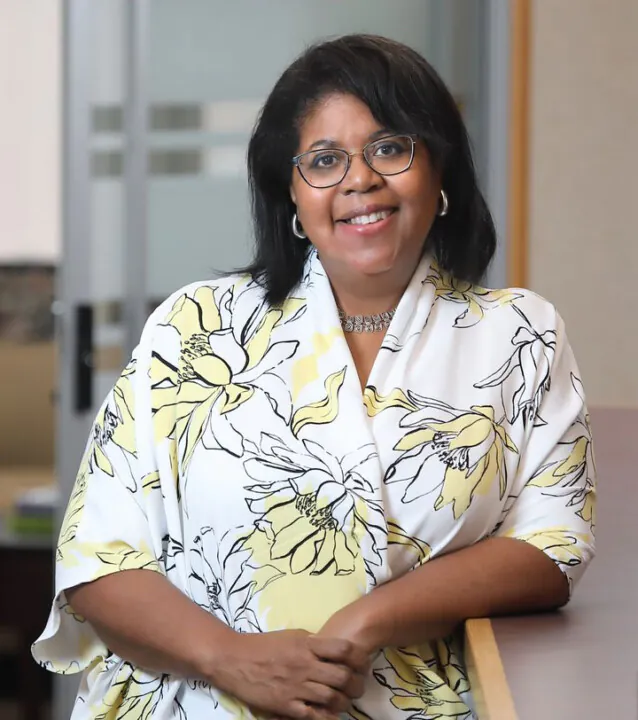 UNDER THE BEST circumstances, the NIDCR director holds down an important job, overseeing more than $500 million annually to fund scientific research on oral and craniofacial health as the federal government’s top dental official.
Dr. Webster-Cyriaque, it seems, did not inherit the best circumstances when she ascended to the post on an acting basis last year. With the Trump administration—specifically Health and Human Services secretary Robert F. Kennedy Jr., last year’s No. 1 on this list—seeking to limit fluoride in the country’s drinking water, a big question facing the director is: Will she fight for science? She declined to be interviewed, but the public record reveals some potentially hopeful signs.
She has spoken a number of times on the topic of fluoride’s efficacy, and the minutes of a September meeting of the National Advisory Dental and Craniofacial Research Council show that she addressed “calls for additional research on fluoride and health” by saying that the NIDCR “is strengthening its research efforts . . . to generate high-quality, evidence-based data to strengthen public trust in science.”
Dr. Webster-Cyriaque also dodged any harm to NIDCR’s budget, which had seemed to be on the chopping block. NIDCR received a $5 million boost—a relative pittance, perhaps, but an increase all the same—raising its funding to $525 million for fiscal year 2026.
It’s unclear if such largesse will continue, but Dr. Webster-Cyriaque brings ample experience to the battle. Before becoming deputy director of the NIDCR in 2021, she was a faculty member at the University of North Carolina’s schools of dentistry and medicine for more than two decades.
“As a beneficiary of the NIDCR training pipeline, I have always been drawn to NIDCR’s mission,” she said upon joining the agency, “and to the tremendous impact I know the institute can have by translating scientific discoveries and reducing oral health disparities.”
Her role is not the only federal dental position prompting questions. Dr. Natalia Chalmers resigned in November as the first chief dental officer for the Centers for Medicare and Medicaid Services (CMS). A coalition of dentistry groups at the time urged CMS to “move expeditiously” to replace Dr. Chalmers, but it is unclear if her position will be filled—and, if it isn’t, what will happen to her portfolio. CMS did not respond to requests for comment. —J.M.
“I have always been drawn to NIDCR’s mission and to the tremendous impact I know the institute can have by translating scientific discoveries and reducing oral health disparities.”
3. Wade Rakes
THE IN-DEMAND BENEFACTOR
NEW: CEO, CareQuest Institute for Oral Health
Boston
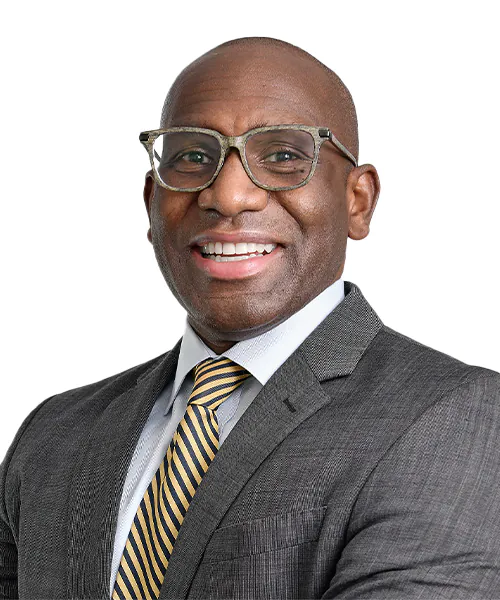 AS IT STRIVES for a more accessible, equitable and integrated oral health system for everyone, especially historically marginalized groups, the CareQuest Institute for Oral Health aims for nothing less than “long-term systemic change,” says Rakes, who was appointed CEO in 2025 after 15 years with Centene.
The need for change is urgent, he notes: “Right now, nearly 70 million people are without dental insurance, and too many families must make impossible trade-offs between getting the care they need and going into debt or putting food on the table.” Recent cuts to Medicaid and efforts to restrict or remove fluoride from drinking water aren’t helping. “The oral health of our nation is especially at risk.”
CareQuest mitigates that risk in part by awarding about $14 million in grants annually to organizations (90 in all last year) that expand access to dental care and improve health outcomes. That’s an impressive sum. But with $2.6 billion in assets, what’s keeping CareQuest from spreading around more of its wealth? “CareQuest is more than a grantmaker,” Rakes tells Incisal Edge. “We also invest in resources that are available at no cost to the field.”
He points to the nonprofit’s policy and advocacy work (such as helping arrest proposed fluoride bans in several states), education (last year, the group hosted 22 webinars for more than 20,000 learners) and research (like this past year’s reports on oral health equity and water fluoridation). Also, CareQuest’s for-profit affiliate, CareQuest Innovation Partners, covers the cost of participating in the SMILE Health accelerator program, which helps early-stage companies innovate and increase access to oral health care. “With comprehensive and quality oral health care out of reach for far too many Americans,” Rakes says, “this work is more important now than ever.” —N.P.
“With comprehensive and quality oral health care out of reach for far too many Americans,” Rakes says, “this work is more important than ever.”
4. Sarah Chavarria
THE INSURANCE DISBURSER
Last year: 15
President and CEO, Delta Dental of California and Affiliates
San Francisco
 AT DELTA DENTAL of California, the largest dental insurer’s largest entity, business under Chavarria’s leadership has been thriving. With more than 200,000 dentists in network, Delta Dental of California provides benefits to more than 27 million people in 15 states, plus Washington, D.C. and U.S. territories—and last year retained over 96 percent of its customers.
Chavarria takes a clear stance on something that could cut into that lucrative business: dental loss ratio (DLR) laws, which would require that certain percentages of insurance premiums get spent on patient care rather than operating costs. “Our purpose is to improve health by providing access to quality care,” she says. “Mandatory dental loss ratio requirements would undermine this access.”
She says such mandates would likely raise premiums substantially, reduce plan flexibility, encourage employers to self-insure outside state oversight and limit consumer choice through market consolidation. “The result would be higher costs and less affordable coverage,” she says. That remains to be seen: While only two states (Massachusetts and North Dakota) have enacted a DLR threshold, several more have proposed similar legislation.
But Chavarria isn’t just motivated by the bottom line, she says. “As a nonprofit organization, Delta Dental of California and its affiliates are not driven by short-term market pressures but by a long-term responsibility to the communities we serve.”
The nonprofit has been meeting that responsibility, she explains, by expanding beyond dental benefits into broader health care. “We must move beyond traditional clinical silos to recognize that oral health is fundamental to overall wellness,” she says. Case in point: Delta Dental’s recently launched Next Stage Women’s Health program offers enhanced benefits for a variety of oral health conditions associated with menopause, pregnancy and other hormonal changes. —N.P.
“We must move beyond traditional clinical silos to recognize that oral health is fundamental to overall wellness.”
5. Pat Bauer, Robert Fontana, Steve Thorne
THE DSO TRIO
Last year: 20 (all)
Bauer: CEO, Heartland Dental;
Fontana: CEO, The Aspen Group;
Thorne: Founder and CEO, PDS Health
Effingham, Illinois; Chicago; Irvine, California
THESE THREE CONTINUE to stand atop the DSO pile. Together, their organizations serve more than 4,400 practices (up from 3,900 two years ago). Heartland Dental leads the pack with about 1,930 offices, while The Aspen Group has more than 1,400 and PDS Health 1,100-plus. Impressive numbers, to be sure—though still just 3 percent of dental practices nationwide.
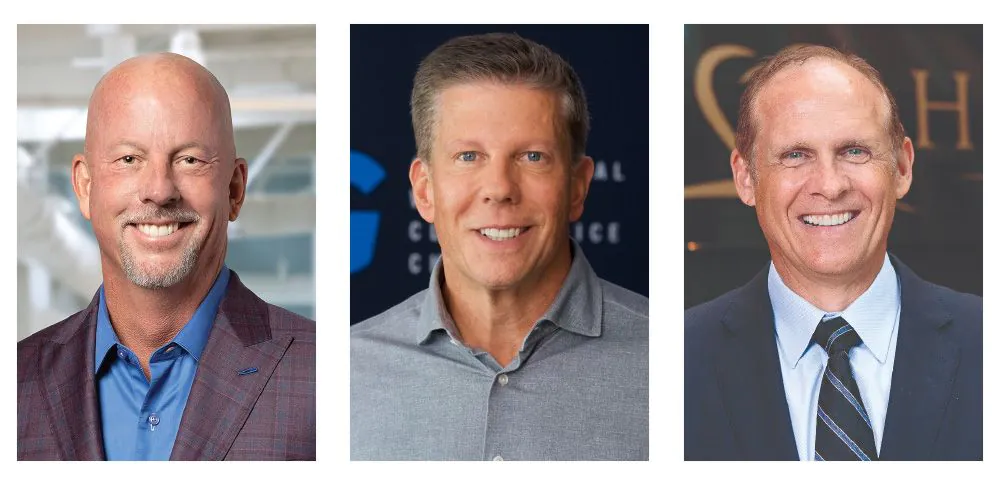
“People want to call us a DSO, but it’s a group practice—it’s the same mentality,” Bauer (bottom at right) tells Incisal Edge. “We got big, but we’re doing the same thing: supporting doctors and helping them be successful.”
What dentists need to succeed, he adds, is better technology and more hygienists: “The biggest challenge is making sure we have staff.” To that end, Heartland has partnered with Concorde Career Colleges, a private health care educator, to open a school for hygienists and assistants last year in Florida. Now, Heartland Dental is looking to open a few more schools, Bauer says.
While private equity titan KKR has been a major Heartland investor for eight years, Bauer is well aware of the chatter around a potential IPO. “Certainly a public offering is an option. It’s not my favorite option, and it’s not something we’re contemplating today,” he says.
Both PDS Health and The Aspen Group have continued to pursue dental-medical integration. Under its trademarked Mouth-Body Connection program, PDS Health (formerly Pacific Dental Services) has been integrating medical and dental services to rectify what Thorne (top) calls “the persistent, outdated compartmentalization of oral health from overall systemic health.” Last year, PDS Health generated a company-record $3.1 billion in annual revenue.
TAG’s portfolio includes WellNow, an urgent care provider in five states, and TAG University, which provides continuing education in dentistry, urgent care, medical aesthetics and veterinary care. —N.P.
“We got big, but we’re doing the same thing: supporting doctors and helping them be successful.”
—PAT BAUER
6. Wardah Inam, Ophir Tanz
THE AI ACCELERATORS
Last year: 6 (Inam); New (Tanz)
Inam: Founder and CEO, Overjet; Tanz: Founder and CEO, Pearl
San Mateo, California (Inam);
Beverly Hills, California (Tanz)
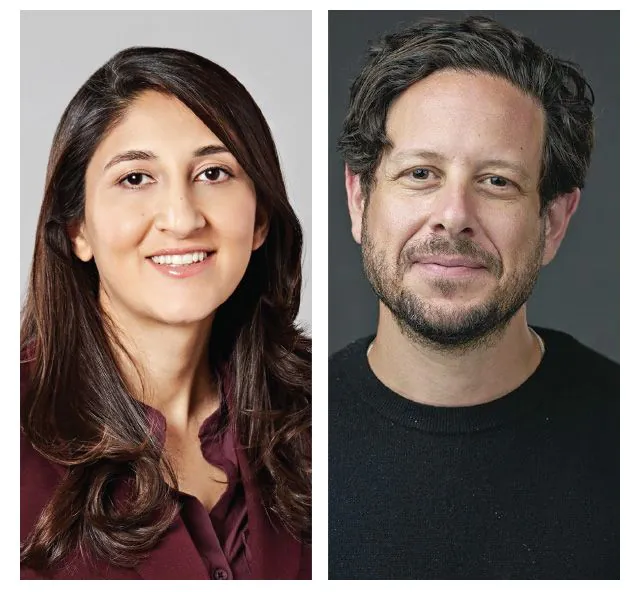 THIS YEAR MARKS the fifth appearance on our list of Inam (left), having plucked AI from its supporting role in diagnostics and treatment planning, and placing it into the clinical workflow via Overjet. The company excels in revenue cycle management by using AI to mimic insurance payer logic to reduce claim denials and speed up reimbursements.
Enter Tanz (right), making his debut here with Pearl, Overjet’s only direct-market competitor in dental AI. Introduced in 2019, Pearl offers a host of overlapping technologies—specifically core 2D diagnostic capabilities such as identifying caries and measuring bone loss. It diverts from Overjet, however, with its focus on the chairside dentist-patient relationship and front-to-back practice workflow.
“We solved the core AI challenge of detecting pathology accurately and consistently in radiographs, but a dentist still has to communicate findings to a patient. That’s where we’ve invested heavily,” Tanz says. “The goal is that the moment a finding appears, everything a clinician needs to confirm it, explain it and move to treatment is right there. Patients aren’t just hearing a diagnosis—they’re participating in it.”
Both companies offer deep integration with dozens of practice management systems: Overjet’s key users are the clinicians and DSO admins—while Pearl has tools for the entire dental staff: real-time insurance verification, clinical performance analytics, recall and schedule management, voice charting, claim optimization and more.
Despite having raised staggering amounts of money, both companies are technically considered “startups” due to their privately held status and venture capital funding: Overjet has raised a total of $160 million, its latest round a Series C in March 2024. Pearl clocks in at $91 million after a Series B that July. Both actively seek partnerships with global DSOs, vying to become the preferred central operating system for dental practices and organizations worldwide. With Inam and Tanz at the helm, the race to market supremacy is proving to be a nailbiter. —L.R.
“Patients aren’t just hearing a diagnosis—they’re participating in it.”
—OPHIR TANZ
7. Guillaume Daniellot
THE OPERATOR
Last year: 4
CEO, Straumann
Basel, Switzerland
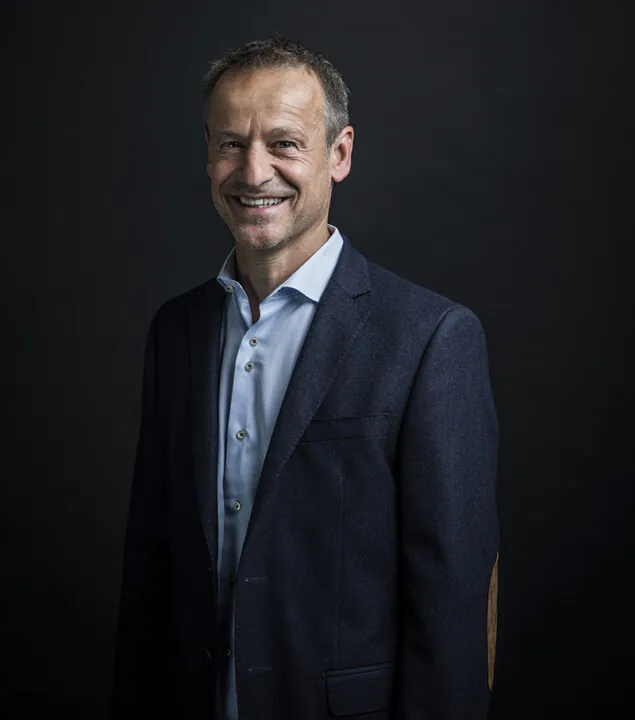 A STAPLE ON this list since being named CEO of the Straumann Group in 2020, Daniellot is here for the seventh time, having topped the entire shebang back in 2024. More an operator than a dealmaker, he has steered Straumann from being the premier implant company, with growth fueled by acquisition, into a global, multibrand workflow platform by way of integrations, partnerships and internal technology development.
“Our cloud-based Straumann AXS platform is the foundation of our Straumann ecosystem, expanding our influence from the product to the entire clinical workflow,” he tells Incisal Edge. “By connecting digital hardware and software tools to create a seamless end-to-end clinical workflow and integrating data across the treatment journey, we’re supporting clinicians in reducing complexity in daily practice.”
Partnerships with companies such as Smartee Denti-Technology, SprintRay, SmileCloud and Carestream have expanded Straumann’s reach into new product categories such as orthodontics, prosthetics and digital dentistry (3D printing and intraoral scanners). He has also expanded its global footprint with growth in Asia-Pacific and Latin America; new infrastructure sites include campuses in China and Brazil.
Yet while Straumann has grown in scope, scale and infrastructure, its market capitalization has tumbled some 30 percent in the last year, with headcount remaining flat. Analysts posit that despite steady growth, the market has reclassified Straumann from a high-growth disruptor to a mature cyclical medtech company. The year ahead will start to show the results of that transition. Can the widely respected Daniellot pull it off? We’ll presumably see you here in 12 months for an audit. —L.R.
“By connecting digital hardware and software tools to create a seamless end-to-end clinical workflow and integrating data across the treatment journey, we’re supporting clinicians in reducing complexity in daily practice.”
8. Doug Brown
THE EAGLE-EYED INVESTOR
Last year: 8
Managing Partner, Dental Innovation Alliance
Cary, North Carolina
 AS A VENTURE CAPITAL FIRM for early-stage dental technology companies, Dental Innovation Alliance (DIA) operates in a space where, as Brown says, “there aren’t many people leading.”
Now in its third year, DIA has quickly become that indisputable VC leader. “We want to advance dentistry through innovation,” Brown adds, holding up two DIA-funded businesses as examples: Endeavor enables patients to apply for financing from multiple sources on a single platform, and SOTA Cloud centralizes dental imaging in a single system.
So far, DIA has invested in 16 companies (up from 10 last year) and hopes to almost double that number to 30 over the next two to three years. There’s no lack of options: So far, the firm has vetted about 1,500 dental-tech companies. “That puts us in a great position of being very selective,” Brown says. In addition to DIA’s five-member team, about 70 investors and an advisory committee made up of U.S. and European dental leaders all weigh in on investment decisions. “We make an evaluation primarily on our ability as an investor group to help these companies grow.”
Which is precisely what they’ve done. Revenue for DIA-backed companies, which have an average value of about $25 million, has grown about 70 percent per year. “These are not slow-growing companies,” says Brown, whose firm has poured about $18 million into its businesses to date. —N.P.
9. Dan Wicker
THE FINANCE GURU
Last year: 9
Managing Partner, Cain Watters & Associates
Dallas
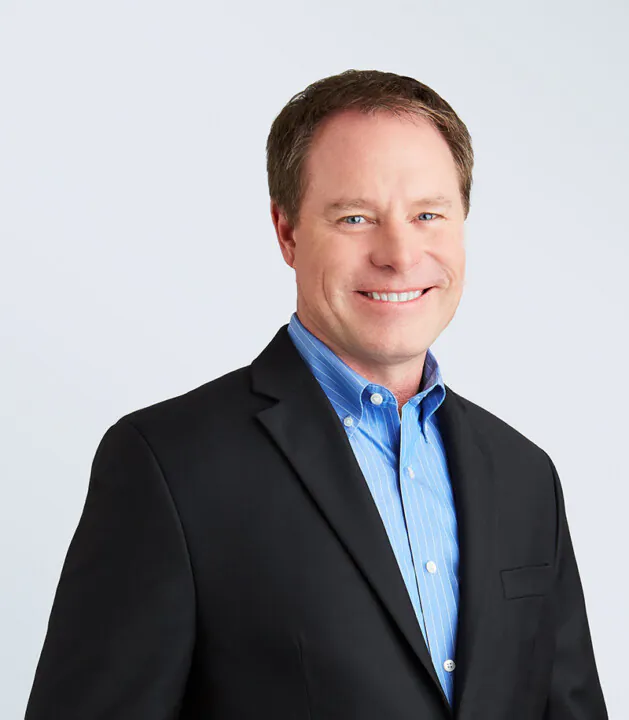 ONCE, THE Six-Million-Dollar Man roamed TV as a pop culture icon. Call Wicker the $2 billion man.
That’s because Cain Watters, already the nation’s largest financial and accounting firm focused on the dental market, increased its assets under management from $3.5 billion to $5.5 billion in the year since Wicker last appeared on this list—a 57 percent boost.
That’s the kind of return Wicker might like for dentists who use his firm, which has specialized in financial education and services for dental professionals since 1984, and now serves about 3,600 clients.
More than 90 percent of clients are practicing or retired dental professionals at CWA, whose business increased substantially during the pandemic—and which has grown more than 150 percent cumulatively since 2019. Wicker, 55, attributes the success to the strong advice of CWA associates, who “deliver disciplined, fiduciary-minded guidance and long-term value for our clients and for the dental community.”
His advice to dentists: Start planning early, with a team of specialists, “so that key practice and personal decisions are made with discipline, and retirement readiness is built over time rather than trying to catch up later.”
The CWA Financial Group umbrella includes Cain Watters, Elite Dental Alliance and several smaller go-to-market organizations that offer financial planning and advice. Wicker initially considered dentistry as a career but ultimately chose “math over science,” he says. He joined CWA in 1997. Good choice, we’d say. —J.M.
10. Sonia Williams
THE LENDER OF FIRST RESORT
Last year: 11
Senior Vice President and General Manager, Dental, CareCredit
Xenia, Ohio
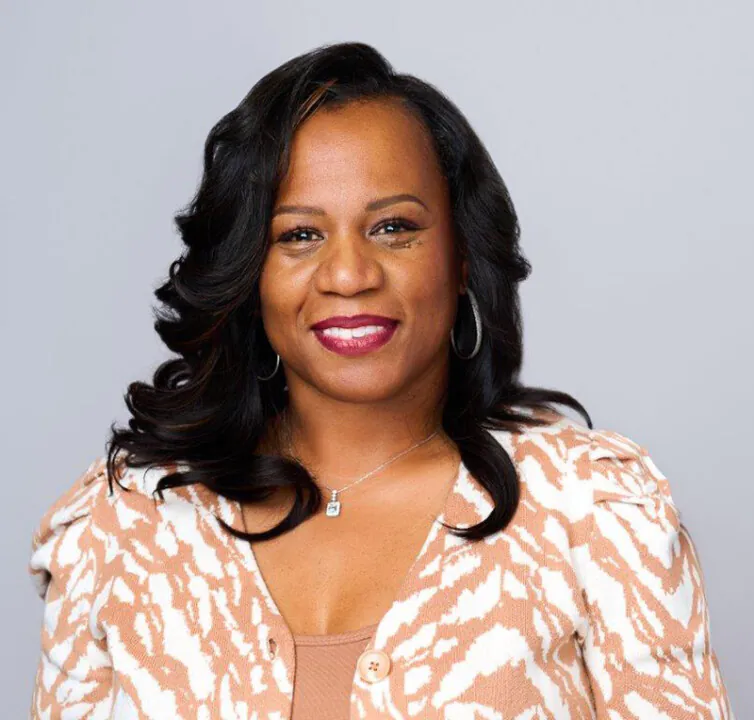 “PATIENTS ARE FACING more complexity than ever when it comes to understanding how to pay for care,” says Williams, who helps oversee the health-and-wellness credit card for Synchrony’s CareCredit, the largest facilitator of patient financing in dentistry. “Our goal is to remove uncertainty from the financial side of care.” CareCredit achieves that “by providing a trusted, widely accepted financing solution at the point of care,” she says. Today, the CareCredit platform counts 13 million cardholders and over 290,000 provider locations; it helps finance 8 million to 10 million procedures every year.
CareCredit does more than offer financing, Williams adds. The company also provides tools and resources that support patients’ informed decision making, such as sample billing statements that indicate balances and accrued interest, payment calculators that help patients estimate monthly costs in advance and educational content that explains financial concepts. CareCredit also trains providers so they can communicate financing options clearly and consistently.
Since assuming her role in 2024, Williams says she has been struck in particular by “how many patients fall just outside traditional credit models.” That’s why, last year, the company released Synchrony PRISM, an underwriting system that “allows us to look beyond traditional credit scores” by considering other kinds of data, such as cash flow and rent payments. “It’s helping us expand access in a more inclusive way, while still maintaining responsible lending standards.” CareCredit also has been exploring multisource financing for patients who don’t qualify through a single solution. —N.P.
“Our goal is to remove uncertainty from the financial side of care.”
11. Brian Colao
THE MIDMARKET MENTOR
 NEW: Director, Dykema Dental Service Organizations Industry Group
Dallas
LAST YEAR, WE went looking for the go-to thought leader for small DSOs. This year, we realized we’d been looking past him all along. While we left the No. 13 slot open in our 2025 rankings for a dentist-CEO to fill that role, the best authority turned out to be neither doctor nor operator, but an attorney who has quietly shaped the DSO landscape for more than three decades.
Colao, director of Dykema’s Dental Service Organizations Group, has spent nearly 31 years guiding DSOs through formation, structuring, mergers and acquisitions, and the full maze of regulatory compliance. Early in his career, the industry fixated almost exclusively on large DSOs, but around 2015, Colao saw a decisive shift. He tells Incisal Edge that the middle market “really took off,” driven by “an explosion of dentist and non-dentist entrepreneurs who wanted to build and operate DSOs in the 10- to 150-office range.”
Colao’s phone hasn’t stopped ringing since. According to him, the middle market “still comprises the largest segment of the DSO industry in the aggregate.” Its appeal was straightforward: Doing business there is “generally much simpler than doing business with the more sophisticated larger organizations,” making the segment attractive to service providers and vendors.
Nowhere is Colao’s influence more visible than at the annual Dykema DSO Conference, the industry’s most vital midmarket gathering. The idea took shape in 2013, when Colao realized that there were few truly DSO‑focused events—and that “the information being provided about DSOs was often incorrect.” When other conferences showed little interest in covering DSOs, he decided to build his own.
The inaugural event drew just 41 people. By 2021, it had grown into “the largest event in the history of the DSO industry” with 1,328 attendees, and by 2025, attendance had reached nearly 2,500, representing DSOs, vendors, technology companies, lenders, consultants, accountants, brokers, investment bankers and Dykema’s legal team. The most attendees, Colao notes, come from the middle market—which remains the heart of the industry.
For those organizations, opportunity and risk go hand in hand. The biggest opportunity, Colao says, is “the ability to leverage technology to increase same-store growth,” whether by bringing in new patients, doing more dentistry for existing ones or streamlining operations to remove unnecessary costs. Middle‑market DSOs, he says, benefit from the fact that “due to their smaller size [they] are able to move quickly and implement new technology.”
The greatest threat, however, is expansion without discipline. Too much overhead—often driven by growing too fast—remains a persistent danger. At the same time, regulatory compliance continues to be the most significant legal challenge, particularly ensuring that DSO structures and business agreements are compliant both on paper and in day‑to‑day practice.
After three decades in the industry, what keeps Colao engaged is not only the work, but the community. “The thing I love most about the DSO industry is far and away the people,” he says, describing a culture where “collaboration [is] the rule instead of competition.” He’s equally energized by innovation, calling this “the most exciting time to be in dentistry,” with more advances in the past five years than in the previous hundred.
For the middle market, Colao offers something increasingly rare: experience without noise, authority without bluster and a steady voice grounded in facts. There remains no clearer guide—or steadier hand—shaping its future. —E.K.
“The thing I love most about the DSO industry is far and away the people,” Colao says, describing a culture where “collaboration
is the rule instead of competition.”
12. Joe Hogan
THE REGULAR
Last year: 22
CEO, Align Technology
San Jose, California
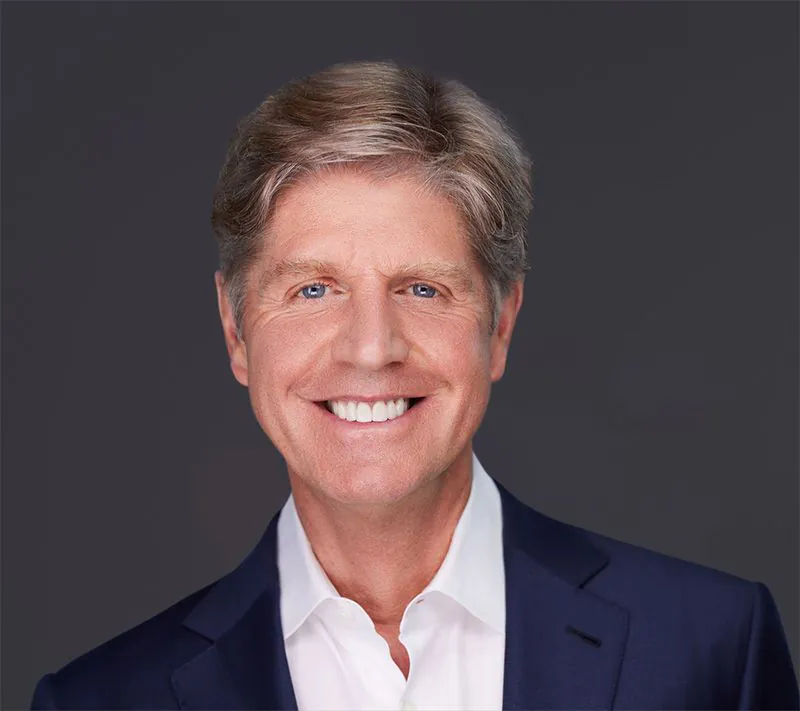 A YEAR AGO, we took the step of labeling Hogan—a fixture on this list over the years, often in the top five—a “Wounded Titan” after Align experienced a rough 2024.
His wounds appear to be healing.
Align, home of the wildly popular Invisalign teeth-straightening system, enjoyed a better 2025, delivering record total revenue of $4 billion and record Clear Aligner volume of 2.6 million shipments globally, up 4.7 percent year over year. As of press time, the company’s stock price was up 12 percent since the start of the year.
And yet, and yet: Longer-term trends remain touchy. Align’s stock price is still down 70 percent from five years ago, while its market cap ($12.5 billion as of press time) has declined substantially since its pandemic-era high of $57.2 billion in September 2021.
That has attracted the interest of at least one potentially unwelcome interested party: activist investor Elliott Investment Management, which has built a significant stake in Align amid reports it would summarily push for better stock performance.
Hogan, a venerable leader who has steered Align since 2015, seems unfazed. “We regularly engage with our investors and look forward to engaging with Elliott, just as we do with other stockholders,” he tells Incisal Edge. “We stay focused on executing the fundamentals—serving doctors and patients, advancing our technology road map and operating with discipline.”
The 68-year-old chief executive rattled off a series of recent innovations, including preparations to start directly 3D-printing its core aligners. Hogan would not give a timeframe for the move, saying that “any timing and financial impact will follow our normal disclosure approach.”
Other innovations over the past year: ClinCheck Live Plan, which automates the generation of initial doctor-ready Invisalign treatment plans in about 15 minutes, which helps reduce planning cycles from days to minutes; and continued expansion of the capabilities of Align’s family of iTero intraoral scanners.
The company’s intellectual property portfolio also keeps growing, with more than 2,000 active patents and patent applications worldwide. “Innovation is central to our strategy—and it’s not innovation for its own sake,” Hogan says. “It’s innovation designed to help doctors deliver better outcomes, run more efficient practices and provide patients with an elevated digital experience.” —J.M.
“Innovation is central to our strategy—and it’s not innovation for its own sake,” Hogan says. “It’s innovation designed to help doctors deliver better outcomes, run more efficient practices and provide patients with an elevated digital experience.”
13. Michael Apa
THE ASPIRATION ENGINE
Returnee:
Cosmetic Dentist, One-Man Megabrand, Educator, Philanthropist
New York, Los Angeles, Miami, Dubai
 HE’S NOT YET 50, and he’s giving it all away: not just his obsessively honed, internationally lauded techniques, but nearly every aspect of how he runs a practice, from floor plans to operations. Some of his playbook is free, shared openly on social media. However, the full reveal comes at a premium, most recently at the second annual Apa Symposium, held in March at the Fontainebleau Miami Beach. Either way, the appeal is the same. Followers don’t merely want to do dentistry like Michael Apa; it feels like many want to be him.
Of course, doing so isn’t easy. If Aaron Sorkin were writing the screenplay for this biopic, a supporting character might ask, “I’m doing what Michael Apa does—how come I’m not as successful?” And someone close to him would answer: “Michael Apa is Michael Apa because he’s Michael Apa.” That distinction isn’t lost on him. “Of course it’s flattering, but perspective is important,” he tells Incisal Edge. “It’s not really about me as an individual. It’s more that people are responding to what’s possible.” But that level of visibility weighs heavily. “The gratification is there, but the responsibility is greater because people are studying the mindset behind the work as much as the work itself.”
The Apa Symposium, which has quickly become the focal point for that mindset, is no vanity project. Long before launching it, Dr. Apa had already been investing deeply in education, funding scholarships and training programs, reshaping curriculum and expanding access for students. After selling out his inaugural symposium with about 400 attendees from 33 countries, the second edition matched the demand, featuring live clinical demonstrations, case reviews, administrative insights and even a keynote from Shark Tank’s Kevin O’Leary. “My proximity to NYU College of Dentistry and CUNY School of Public Health—along with the younger generation coming through the practice—gave me a clear sense of what people wanted but weren’t getting.”
That transparency extends well beyond the symposium. Asked why he’s willing to open the playbook so fully, Dr. Apa is direct. “Information is the foundation, but there’s another layer: execution and discipline. Opening the playbook doesn’t take anything away from me or Apa Aesthetic; it raises the standard and pushes the industry forward.”
Raising standards has been a recurring theme since he first landed on our 32 Most Influential ranking in 2020. Dr. Apa collaborates with NYU College of Dentistry to influence curriculum, build a state-of-the-art clinical education space and pursue accreditation for aesthetic dentistry—still not a recognized specialty. Internally, the same rigor applies. “Our workflow requires real control, so the culture has to be right,” he says. “But we’re all aligned on what we’re building and what we represent in the industry.”
What sustains him now is both people and possibility: “Skills can be developed, but only in the right individuals, and over time I’ve learned how to take good people and help them become great.” And when it comes to legacy, his answer is measured but typically ambitious: “I’d want it to be about setting a new standard, clinically, culturally and in how we think about what dentistry can be.” —E.K.
14. Marv Nelson
THE EVOLUTIONIST
Last year: 25
CEO, A-dec
Newberg, Oregon
 CADILLAC. PAN AM. BlackBerry. The business world is filled with cautionary tales of once-dominant innovators that lost focus, mismanaged change or failed to evolve with their markets. A-dec might have joined that club. Instead, it’s stronger than ever: the world’s largest manufacturer of core dental equipment. Still family-owned. Still independent. And under Nelson’s leadership, the company has concentrated not on reinvention for its own sake, but on purposeful innovation.
“A-dec has focused a lot of attention on expanding and enhancing our portfolio of core equipment solutions over the past three years,” Nelson tells Incisal Edge, pointing to growth across orthodontic, pediatric and specialty environments.
Where reinvention becomes more visible is in integration and connectivity. “A-dec software that connects our customers’ equipment, front office and service tools into one intelligent ecosystem is paving the way for the next era of operatory performance management,” Nelson says. That systems-based approach is also shaping A-dec’s partnerships, including its evolving relationship with Dentsply Sirona to integrate motors and scanners into delivery systems. “The future of dentistry is connected, but intentionally so,” Nelson says. “A-dec’s role is to bring that connectivity into the practice in a way that feels seamless.”
Notably, this has occurred while A-dec has remained family-owned. “We have a very active and engaged family ownership group who are invested in the future of the company,” Nelson says. That has helped A-dec weather industry disruptions, including tariffs. “While no product maker has been immune to tariffs,” Nelson says, “because A-dec is a U.S.-based manufacturer with the majority of our supply chain within the U.S., we’ve been able to minimize adverse effects on our customers.” In an industry defined by consolidation and rapid-fire technological upheaval, Nelson’s influence lies in ensuring that A-dec evolves without losing what made it foundational to so many practices in the first place. —E.K.
15. Toni Oloko, Daniel Hanover
THE YOUNG DISRUPTORS
NEW: Cofounders, Dandy
New York, New York
DANDY, THE digital dental lab Oloko and Hanover started in college, bills itself as the future of dentistry, aiming to create an “Apple-like experience” for dentists seeking higher-quality crowns and other dental restorations.

Based in New York with three lab locations in Utah and Texas, Dandy certainly does things differently. It offers live chairside chat between dentists and lab technicians—and an unusual business model in which new customers get a free intraoral scanner, a touchscreen workstation to go with it and software. The catch? The goodies come in exchange for a minimum of $1,000 a month of Dandy lab work—and a one-time $800 shipping and setup fee. Does that mean Dandy is essentially buying business with free scanners?
The Institute of Digital Dentistry, while praising Dandy as “one of the most disruptive forces in the industry,” has expressed skepticism. “Dandy’s model is not universally welcomed,” wrote the New Zealand–based institute, an online training platform. “Within dental lab communities, reaction has ranged from curiosity to alarm.”
Dandy “made a very early decision to exclusively focus on digital workflows,” says Andrew Bukuras, senior manager of product marketing. Oloko and Hanover, both 29, started Dandy at the University of Pennsylvania. “We became the digital lab dentists were begging for,” Hanover recently posted to LinkedIn. “Free scanners to replace putty impressions. Three-day turnaround instead of two weeks.”
Today, Dandy offers a range of lab services, including veneers, implants and clear aligners. Bukuras would not comment on financing, but the Institute of Digital Dentistry reports that it is heavily venture-backed; its most recent funding round was a $95 million Series C led by General Catalyst in September 2025. —J.M.
16. Paul Keel
THE COMPOSED CATALYST
Last year: 27
CEO, Envista Holdings
Brea, California
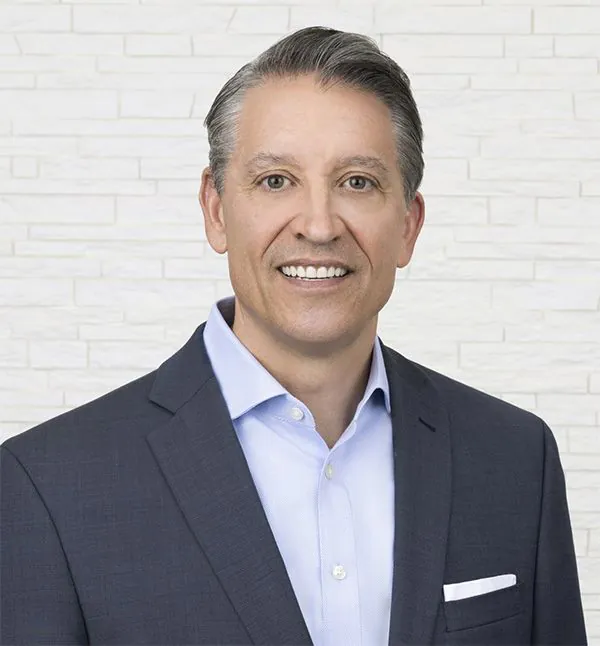 MAKE NO MISTAKE: Keel was hired as a turnaround and transformation artist to align one of dentistry’s most formidable product portfolios with financial performance shareholders would finally applaud. We named him “One to Watch”—just outside our 32 Most Influential—soon after his 2024 hiring as Envista’s stock price scraped a 52-week low. He has jumped twice since, first to No. 27 as a disciplined plan took shape, and now to No. 16 on the strength of something Envista had been missing for years: momentum backed by clear results. Market cap is up. The stock price, obviously, is up. And his deliberately unflashy, back-to-basics strategy is paying off.
Keel’s confidence—and equal modesty—is unwavering. “Envista has been serving the global dental community for over 135 years,” he tells Incisal Edge. “Over time, good things generally happen to good companies—and Envista is a very good company.” More tellingly, he believes the company remains “closer to the beginning than the end” of reaching its full potential. “We’re allocating the lion’s share of our time, attention and resources to the short list of vital priorities that best move the needle,” he says.
Even amid economic uncertainty, Keel remains focused on fundamentals. “When you take care of your customers, take care of your colleagues and invest in your communities,” he says, “the rest generally takes care of itself.” So far, industry observers and markets agree. —E.K.
17. Anton Woolf, Julie Woolf
THE WOOLFS AT THE LAB DOOR
Last year: 29 (Anton); New (Julie)
CEO and COO, Argen
San Diego
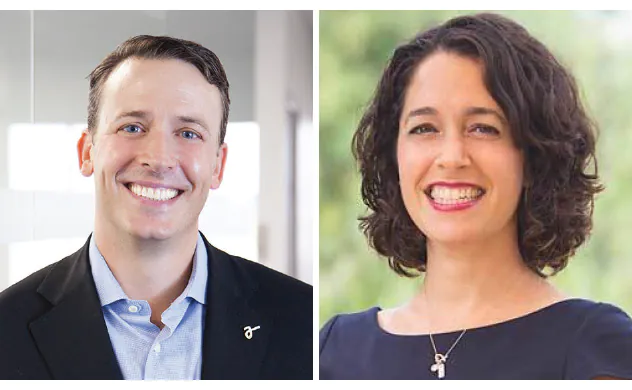 ARGEN HAS BEEN the world’s largest maker of precious dental alloys for over two decades, supplying small and midsize labs with critical supplies. “Traditionally we were a metals company, but we’ve grown into so much more,” says Anton Woolf, who, as CEO since 2008, has guided the transformation of the San Diego–based company, which his parents moved from South Africa to the U.S. in 1983, into a digital manufacturer.
Anton touts new products such as the recently released ArgenZ GT, which he calls “the most advanced zirconia on the market.” But Argen’s intense focus on innovation involves not just what it makes, but how. Since 2022, the company has adopted lean manufacturing principles that Julie Woolf, COO since 2019, says have “transformed our business” by helping Argen get its off-the-shelf and custom products out the door as quickly as possible. “People want everything yesterday,” Julie says. “Expectations are higher than ever.”
Now, the family-run company intends to share what it’s learned with its lab customers. “Our goal is to bring many lean methodologies [such as parallel manufacturing] to our lab partners to help them become more efficient and successful,” Anton says. While dental manufacturing has shifted from mostly analog to mostly digital, “a lot of labs are still set up in an analog fashion,” Julie says. “We think there’s an opportunity to help them.” To leverage that opportunity, Argen has been developing software that will help labs manage their workflows more efficiently—and plans to launch the tech in the next one to two years.
After 20 years of marriage and four kids, Julie credits her and her husband’s ability to work well together as Argen’s co-owners partly to implicit trust and partly to their complementary mindsets. “I’m more process-focused, and Anton has a more strategic mindset,” she says. “And he could sell ice to Eskimos.” —N.P.
18. Dan Scavilla
THE GUY AFTER THE GUY AFTER THAT OTHER GUY
NEW: President and CEO, Dentsply Sirona
Philadelphia
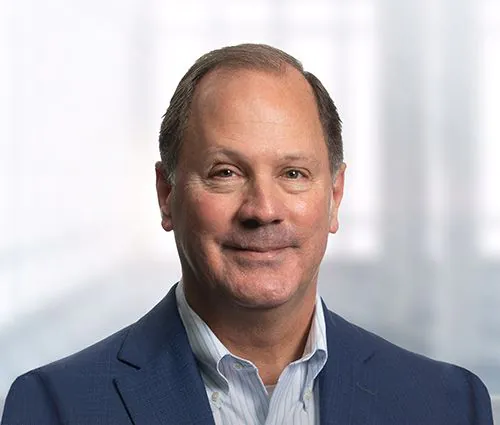 SCAVILLA IS Dentsply Sirona’s fourth CEO in five years, taking over during the latest period in which the company’s revenue, market cap and stock price are down. “We’ve been clear that our recent performance has not met our expectations, and frankly, it’s been unacceptable. We take that seriously, and we’re acting with urgency,” Scavilla, 62, tells Incisal Edge.
The new boss says he understands “the importance of providing consistency and clarity for our customers, teams and partners who need to trust that we’re a stable, reliable company.” Scavilla took the helm last July and brings more than three decades of experience in medtech and pharma. Central to his strategy is DS Core, a cloud-based platform introduced in 2022 that integrates imaging, diagnostics, treatment planning and collaboration for restorative dentistry, aligners and implantology. In 2025, Dentsply partnered with Pearl (see Ophir Tanz, No. 6) to integrate DS Core with Pearl’s chairside dental AI software, to give docs an AI-powered second opinion.
As for the transition from chairside milling to chairside 3D printing, Dentsply is investing in both. Scavilla calls the company’s Primeprint 3D printing system, designed and manufactured in Germany, an important focus that “positions us well for a much broader role in chairside 3D printing over time.”
Jeff Johnson, a longtime industry analyst at Robert W. Baird, says Scavilla’s focus on DS Core has “a chance of being highly differentiating,” but that it’s too soon to tell if he can guide Dentsply to recovery. “This company has had so many changes that you can’t expect someone to come in in six months and change what has been a stalled and stilted strategy for five years,” Johnson says. “We’ll see where it goes.” —J.M.
19. Bill Dorfman, Ben Winters
THE VERY ONLINE
Last year: 12 (Dorfman); New (Winters)
Dentist and Multimedia Influencer (Dorfman); Orthodontist and Influencer (Winters)
Los Angeles (Dorfman); Plano, Texas (Winters)
 EDUCATING AND ENTERTAINING go hand in hand for these two, and they do both with gusto. “I’ve been called America’s dentist, dentist to the stars, the Michael Jordan of dentistry—I love it all,” says Dr. Dorfman, who has been in practice since 1983. The moniker that gives him the biggest kick? “ChatGPT consistently rates me the No. 1 cosmetic dentist in the world,” says the doctor, who name-checks celebrity clients such as Katy Perry, Usher, Mark Wahlberg, Eva Longoria and—gotta floss out those fava beans—Anthony Hopkins.
Dr. Dorfman, 67, is a celebrity in his own right. He improved people’s smiles for years on TV’s Extreme Makeover, which was “a huge component in raising people’s dental IQ,” he says. Last year, he and his abs made a star turn in Men’s Health Mexico. “I think I’m the oldest guy ever photographed shirtless on the cover of Men’s Health—besides Arnold Schwarzenegger and Sylvester Stallone,” he says, then twists the knife. “But I’m in way better shape than both of them.”
Dr. Dorfman boasts 2.3 million Instagram followers. Impressive for sure, but dwarfed by the roughly 20 million followers—15.9 million of them on TikTok alone—who are claimed by Dr. Winters, known online as “the Bentist.” (He did not respond to requests for comment.) The Bentist’s high-energy posts include a recent video on halitosis-promoting tonsil stones—which, as it happens, Dr. Winters can help patients address with a water flosser sold by his dental products company, Something Nice. —N.P.
20. Gordon J. Christensen, John Kois, Frank Spear
THE THREE MUSKETEERS
Last year: 14 (all)
Founder, Practical Clinical Courses (Christensen);
Founder and Director, The Kois Group (Kois);
Founder and Director, Spear Education (Spear)
Provo, Utah; Seattle; Phoenix and Seattle
THE CHEST PAIN hit Dr. Spear during a hike near his home on an island north of Seattle. A visit to his cardiologist revealed a 99 percent blockage in his coronary artery, leading to the insertion of two stents. But the esteemed dental educator still had no energy and would faint in the bathroom at night, sometimes face-first on the tile floor.
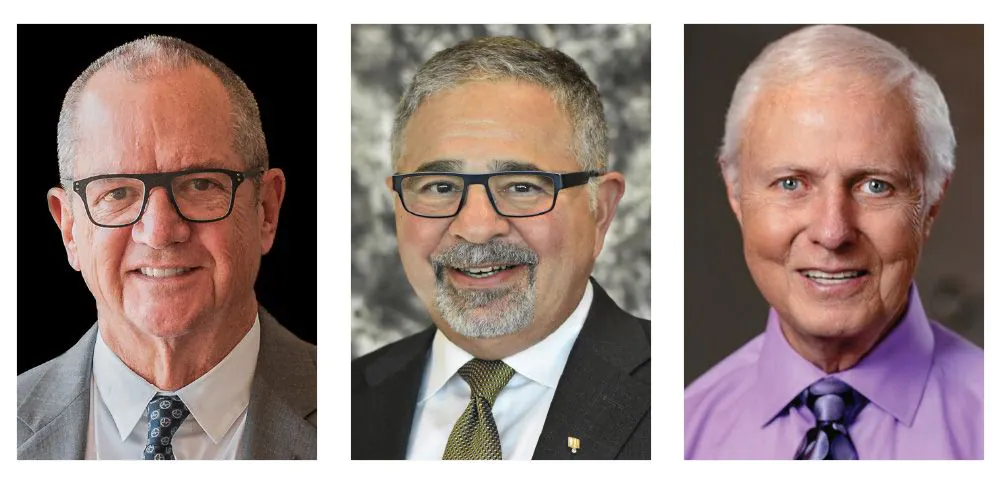
It was just the beginning of a 2025 medical journey in which doctor became patient, with Dr. Spear undergoing a second heart procedure that led to liver failure. Near death, with a transplant his only option, he was turned down by one transplant center—but ultimately underwent a successful liver transplant in September at the Ochsner Transplant Institute in New Orleans.
“I was in really bad shape. But they were willing to take the risk,” recalls Dr. Spear, who credits his wife, Charlene, with keeping him going when he nearly gave up. “She said, ‘I’d rather see you die on an operating room table than die in bed.’ She was like a pit bull,” says Dr. Spear, 73, who recently aced his six-month checkup but is still weak on strength and endurance.
One might think all this would signal retirement for Dr. Spear, who along with Drs. Christensen and Kois make up a legendary old guard of dental education who regularly appear in these pages. Yet Dr. Spear has already traveled post-surgery for several of his signature presentations, and while he acknowledged he will cut back from his typically frenetic speaking schedule going forward, he has no plans to stop.
The same goes for his two compatriots. “I do not intend to retire, since my health is great for my 89 years, and life is wonderful,” says Dr. Christensen, who still presents more than 80 courses each year in various locations and plans a similar schedule in 2026. He remains actively involved as CEO of his educational organization, Practical Clinical Courses.
Dr. Kois has cut back on travel to focus on teaching at the Kois Center in Seattle, which he founded in 1994. “I’m more excited than ever to continue what I’ve been doing, because so many exciting changes have occurred in dentistry,” says Dr. Kois, 75.
All three have versions of succession plans in place. Dr. Christensen says Derek K. Hein is current CEO of the nonprofit Clinicians Report Foundation (CR) and oversees its day-to-day leadership. At the Kois Center, Dr. Kois has no current administrative responsibility, and his son, Johnny Kois, is CEO.
As for Dr. Spear, his eponymous Spear Education in Arizona has a CEO, Matthew Coggin, while Dr. Gregory Kinzer—whom Dr. Spear calls his protégé—oversees education programs. “My role today is I go give a presentation, and I go home,” Dr. Spear says. All three have slowed a bit, in other words. But quit altogether? Not on their lives. —J.M.
“I do not intend to retire, since my health is great for my 89 years, and life is wonderful.”
—GORDON J. CHRISTENSEN
21. Chris Steven Villanueva
THE NEW-MODEL DSO DISRUPTOR
Last year: 10
CEO, MB2 Dental
Carrollton, Texas
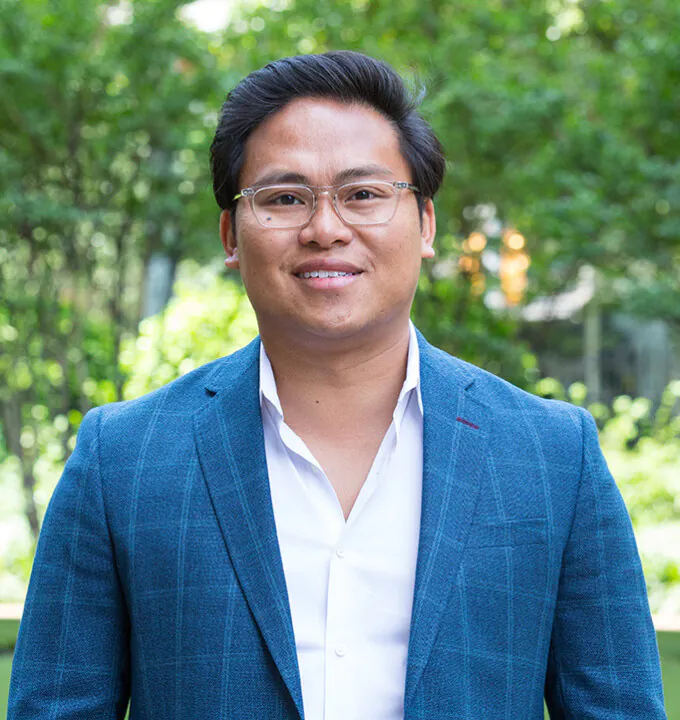 WHEN DR. VILLANUEVA opened his own practice at age 27 two decades ago, he could have been any dentist in America. “My path was to be a traditional dentist in private practice and hopefully save enough to retire in my 60s,” he once told The CEO magazine.
But he soon found himself working nights and weekends just to run the business. Frustrated that he spent so much time not treating patients, yet not a fan of the DSO model, he developed a new one, creating MB2, the nation’s first “DPO” (dental partnership organization), in 2007. In 2025, his creation celebrated what Dr. Villanueva calls a “defining” year: MB2 now partners with more than 800 general and specialty practices across 45 states, adding 60 new partner practices last year.
MB2 also tried another new model of sorts, opening Carabelli Club—a membership program for practices that stay private but gain access to preferred pricing from vendor partners in areas such as labs, equipment and supplies. Carabelli, launched in June 2025, already has more than 350 members across 45 states. “We continued to scale the business while staying true to what makes our model work: strong partnerships and local autonomy supported by the right infrastructure,” Dr. Villanueva tells Incisal Edge, pointing out that revenue in 2025 grew about 14 percent year over year.
MB2 also expanded its headquarters last year, while Dr. Villanueva led a conversation with former President George W. Bush at the November 2025 MB2 Dental Owners’ Retreat. “It was an experience I won’t forget,” he says. “We talked about leadership under pressure, tough decisions and staying grounded.”
Going forward, Dr. Villaneuva, 47, vows to stay true to his DPO model, which helps doctors pool the benefits of linking up with a larger organization—such as shared services and access to capital—while retaining the autonomy of a private practice. “We’re building a better way to practice dentistry,” he says. —J.M.
22. Haley Abivardi, Goli Abivardi
THE SWISS SISTER ACT
NEW: Dentists and Cofounders, vVardis
Zug (Haley) and Zurich (Goli), Switzerland
 SWISS-TRAINED DENTISTS, innovators, serial entrepreneurs and sisters, the Drs. Abivardi (that’s Goli on the left below, and Haley on the right) are motivated by a mission to deliver “fear-free” dentistry. In 2002 they founded Swiss Smile, a premium dental clinic with a spa-inspired, stress-free ambience. After building that concept into an 11-clinic network in Switzerland with locations in London and Moscow, they sold it in 2017 and launched vVardis in 2019. Backed by health care investor OrbiMed, vVardis has raised $85 million; an IPO potentially looms.
With its focus on biomimetic technology, vVardis continues the “fear-free” dentistry throughline by focusing on redefining how dentistry treats decay: Its flagship innovation is Curodont, a noninvasive peptide technology that treats early cavities by regenerating tooth enamel to potentially avoid the necessity of having to drill.
While shifting from the business of delivering dentistry at scale to clinical R&D may seem like a parallel lane switch, it’s not: The Abivardi sisters applied the savvy they gleaned from Swiss Smile to vVardis in 2024 by giving Henry Schein exclusive U.S. distribution rights of Curodont to DSOs. They knew that rather than persuading individual dentists one by one, targeting multi-site standardized care models would accelerate adoption. An early big win was getting in the door of Heartland Dental, which supports some 1,900-plus practices and more than 3,000 dentists.
But don’t toss your drills yet. While supported by promising clinical data, controversy surrounds the integrity of Curodont’s clinical trials, and the fact that it’s being marketed more broadly than its ideal use case. While not addressing the controversy directly, vVardis has been making incremental tweaks to make diagnosis more precise, application more consistent and improve patient follow-through. —L.R.
23. Gary Dickenson
THE BRITISH IMPORT
NEW: CEO, Seattle Study Club
Shipton, England
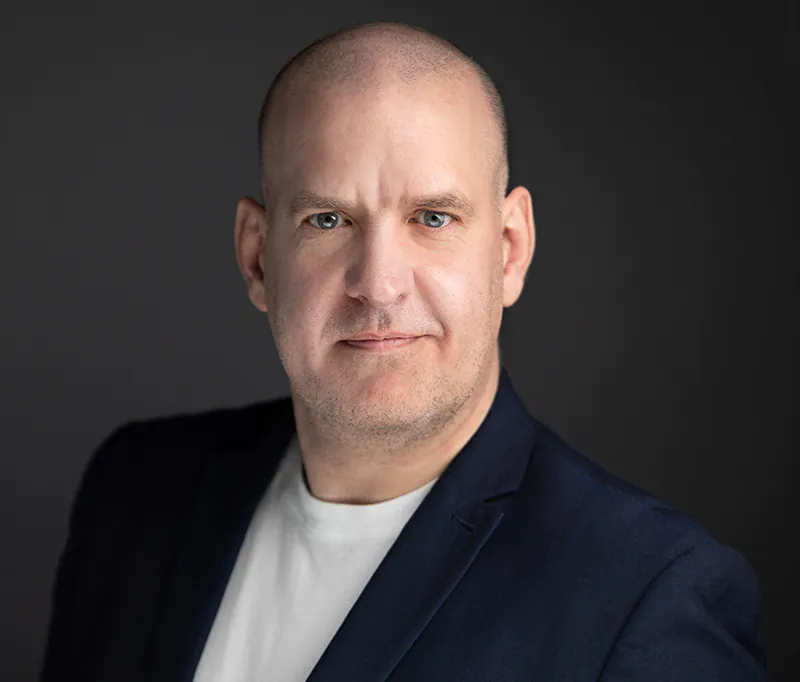 BRITISH IN SEATTLE? Indeed, the venerable Seattle Study Club has a new(ish) chief executive, and he hails from York in England’s north. He began his career as a nurse, which he still describes as his true calling. But when he had trouble making ends meet, he “stumbled across” an ad for a job in dental sales.
“It said, ‘You must have dental experience, must have sales experience,’ ” Dickenson said on a recent podcast. “And I had neither. I thought, ‘What’s the harm of writing a letter?’ ” He now has more than 20 years of dental experience, having worked for companies and founding or cofounding an orthodontic lab and SmileFast, a digital cosmetic dentistry system. In November 2024, he took over SSC, which was founded in 1992 by Dr. Michael Cohen to connect dentists worldwide for continuing education, networking and professional growth.
Gradual growth has thus far been Dickenson’s watchword. With 28 new clubs enrolled in 2025, SSC now boasts some 250 clubs total; it added 480 new dentist members last year for a total of around 6,000. Among his initiatives: partnerships with SimplyTest, a salivary diagnostics company; Dental Intelligence, an analytics provider; and Oryx Dental, a leader in AI-powered, cloud-based practice management software. “AI is going to play an ever-larger part, and we have reshaped our education to make sure we are at the cutting edge,” he says.
Then there’s the enduring influence of Dr. Cohen, a stalwart on early iterations of this list, who sold the club to TerraMar Capital in 2021. “Michael is a true icon of dentistry,” Dickenson says. “He has been an amazing mentor to me.” —J.M.
24. Karim Mansour
THE GUARDIAN
Last year: 19
President of Dental Solutions, Solventum
Paris, France
 SPUN OFF FROM 3M in 2024, Solventum’s Dental Solutions unit finds itself navigating an existential challenge: not how to grow, but how to matter. A 25-year veteran of 3M, Mansour has led the unit through its transition into a stand-alone company, keeping his unit stable and profitable while increasingly under pressure to prove its relevance within the larger health care portfolio. During an earnings call in late February, Mansour noted that Dental Solutions accounted for 17.2 percent of Solventum’s total revenue for the fourth quarter of 2025.
The primary source of pressure is activist investor Nelson Peltz of Trian Partners, Solventum’s largest shareholder with an approximately 5 percent stake. Peltz has been pushing the company to streamline its portfolio and prioritize higher-performing medical units, advocating for divestiture of smaller units such as Dental Solutions.
Mansour remains nonplussed. “Dental serves as a proving ground for Solventum’s broader strategy by combining material science, digital innovation and customer insights to create solutions that solve what matters for dentists and orthodontists around the world,” he tells Incisal Edge. This past February, Solventum celebrated its second anniversary with the opening of a $200 million R&D facility in Eagan, Minnesota.
Even as its market cap and stock price have remained relatively flat over the past year, Mansour is steadfast: “The success of our dental business demonstrates how targeted investments in innovation can yield outsize returns, making it a vital contributor to Solventum’s overall success.” —L.R.
25. David Rice
THE ONE-MAN BUSINESS SCHOOL
NEW: Founder, IgniteDDS
Buffalo, New York
 TOO OFTEN, dental students leave school with penetrating clinical knowledge but limited business acumen. Enter IgniteDDS, which provides business coaching and mentorship to dentists, especially early in their careers—more than 26,000 of them and counting.
“A lot of young dentists don’t have a great education in leadership or business, so they struggle when they come out of school,” Dr. Rice tells
Incisal Edge. “We help young dentists come out of the gate and find success faster.” Dr. Rice, who has practiced dentistry for more than three decades, speaks from experience: “I didn’t have anyone in dentistry to guide me when I was a young dentist, so I struggled, and it took me too long to find success.”
IgniteDDS’s main offering is a customizable, one-on-one coaching program that lasts a year at a time, though two years typically marks the “sweet spot,” Dr. Rice says. A second, more DIY-type program offers virtual recorded lessons, as well as a cohort to field questions.
A third program, which will debut later this year, aims to address two big problems with dental learning institutions, Dr. Rice says: They’re very expensive, and they’re not great at helping dentists apply what they learn to their own practices. With the new IgniteDDS program, “people will be able to take lessons back to their practice immediately and make some magic happen.” —N.P.
“A lot of young dentists don’t have a great education in leadership or business, so they struggle when they come out of school. We help young dentists come out of the gate and find success faster.”
26. Heikki Kyöstilä
THE FABULOUS FINN
Last year: 26
CEO, Planmeca
Helsinki, Finland
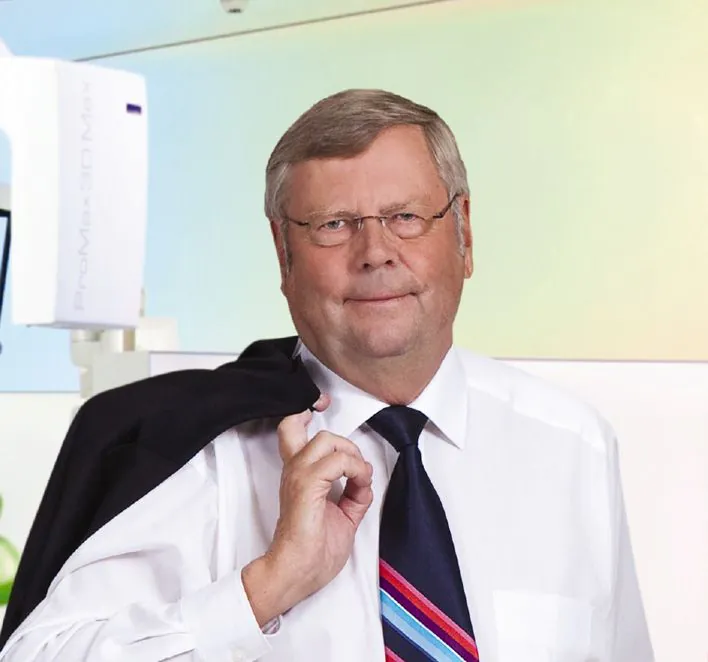 AT 80, KYÖSTILÄ remains at the helm of Planmeca, likely the largest family-owned global dental company, with revenue exceeding €1 billion and a workforce of more than 4,000 worldwide. Since launching the company from his garage in Helsinki in 1971, Kyöstilä has built a dental empire spanning equipment, imaging systems, CAD/CAM technology and software thatserves some 120 countries. The company maintains control over manufacturing and distribution through Plandent, its subsidiary.
Corporate growth has been helped by the lack of quarterly earnings pressure and the freedom to invest on a long horizon. Rather than pursuing serial acquisitions, Kyöstilä operates with tight ecosystem control, incremental product expansion and selective large-scale partnerships. The last major deal Planmeca made was a $455 million acquisition of KaVo’s treatment unit and instrument business from Envista in 2021, which significantly expanded Planmeca’s equipment footprint. Since then, its focus has shifted to organic growth.
At last year’s International Dental Show in Cologne, Germany, Planmeca launched new products across every major category, and in 2026 introduced Planmeca PULSE, a new platform positioned as the hub of its CAD/CAM ecosystem. A partnership with Aspen Dental, deploying Planmeca imaging technology across more than 1,000 locations, signals a deliberate push into DSO-scale distribution in the U.S. A new machining center opened in Finland in 2024 as part of a multimillion-euro investment in in-house production.
Entering his own ninth decade, Kyöstilä faces the question every founder-controlled empire eventually must answer: What comes next? Family members are involved in the business, but no clear successor has been appointed, leaving the query unanswered for now: What happens when Heikki takes his leave? —L.R.
Kyöstilä operates with tight ecosystem control, incremental product expansion and selective large-scale partnerships.
27. Bob Margeas
THE THOUGHT LEADER PAR EXCELLENCE
Last year: 21
General and Cosmetic Dentist; Industry Opinion Leader
Des Moines, Iowa
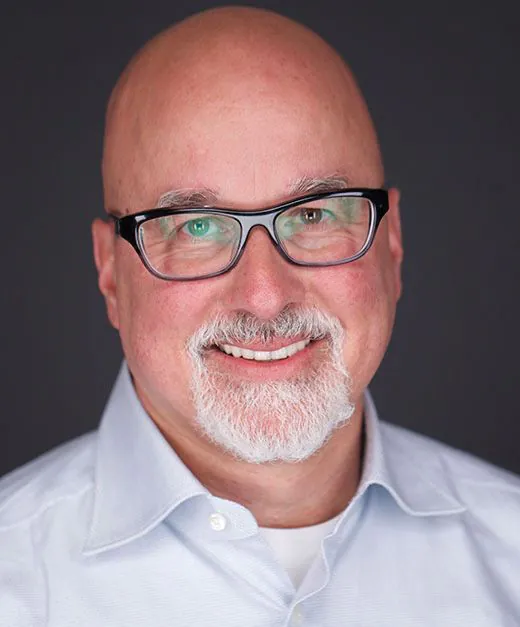 DR. MARGEAS’S IMPACT on dentistry differs in certain ways from others across these pages in that he’s neither a founder, an innovator nor a disruptor. He is, rather, a highly respected clinician-educator, internationally recognized for his bona fides in esthetic and restorative dentistry.
The means through which he shares his expertise with old dental heads and fresh-out-of-school tyros alike include a year-round global lecture schedule; as a consultant of sorts for Solventum; as editor in chief of Inside Dentistry magazine; and as a regular attendee at major dental conferences and on continuing-education circuits.
Meanwhile, with the same 24 hours the rest of us have each day, he practices full-time at Iowa Dental Group, his private practice in Des Moines. He also serves as an adjunct professor in the Department of Operative Dentistry at the University of Iowa College of Dentistry and Dental Clinics. His reach—and his grasp—are vast.
Known for minimally invasive techniques with emphasis on preserving tooth structure, Dr. Margeas is relatable because he teaches what dentists actually do every day. What’s the most common mistake clinicians make? “Thinking they can make every patient happy with treatment, even if the treatment was done well,” he says.
Don’t think of him as anything like a Luddite, though. “Technology enhances decision making,” he tells Incisal Edge. “For example, Overjet [see No. 6] may inspire you take a second look at X-rays for something you may have overlooked.”
We’ve routinely spoken of Dr. Margeas as the next major dental thought leader, and nothing in the past 12 months has dissuaded us from that forecast. His reputation is global as he refines the fundamentals of restorative dentistry and teaches them to thousands of dentists worldwide. —L.R.
Is Dr. Margeas the next major thought leader in dentistry? Nothing that has happened in the last 12 months has dissuaded us from that forecast.
28. Amir Mansouri
THE THREE-DIMENSIONAL MAN
Last year: 18
Cofounder and CEO, SprintRay
Los Angeles
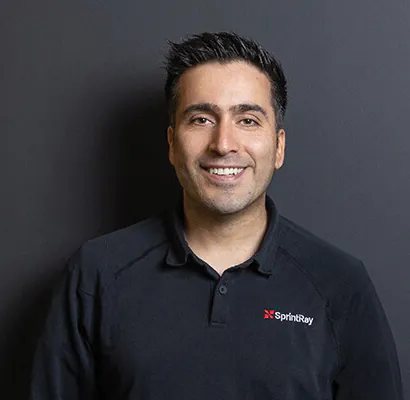 AN ENGINEER BY TRADE and a disruptor at heart, Mansouri introduced desktop 3D printing way back in in 2016 with a general prototyping printer. When dentists began employing the tech to create surgical guides, models and other high-accuracy devices, SprintRay in 2017 introduced the MoonRay, its first printers optimized for dental workflows. In 2019 it launched the SprintRay Pro, designed exclusively for the dental industry.
While these printers had an industry-changing impact on clinical workflow, Mansouri’s true vision was to create a chairside printer that would rival lab-milled restorations in durability. Unveiled at SprintRay’s 3DNext event in April 2024, the Midas chairside 3D printer was positioned as a replacement for lab-quality restorations and produced chairside in minutes.
A pretty cool accomplishment, but the ceramic content came in only at 70 percent, failing to match the durability of lab-milled crowns. Dentists were underwhelmed. Mansouri’s reaction was to shift focus. In March 2025, SprintRay partnered with Solventum to leverage its legacy in materials science. A few months later it acquired EnvisionTEC—and with it more than 200 patents and experience in dental 3D printing.
“To be successful, the product has to be as reliable as a lab and easier than what dentists do today,” Mansouri tells Incisal Edge. “Clinically, that means validated materials and predictable outcomes across core indications. Practically, it has to fit into a normal day, with simple workflows and minimal training.”
SprintRay repositioned Midas and showcased it at the February 2026 Chicago Midwinter Meeting, followed in March by the launch of the Midas World Tour, a global series of immersive, hands-on educational events. “Early excitement is valuable, but long-term adoption depends on clear indications, outcomes and a path to ROI for the practice,” Mansouri says. “We have become more disciplined about how we introduce new technologies. Ultimately, success is not about introducing something new; it is about making it indispensable.” —L.R.
“We have become more disciplined about how we introduce new technologies. Ultimately, success is not about introducing something new; it is about making it indispensable.”
29. Howard Farran
THE MENSCH
Last year: 28
CEO, Farran Media, Dentaltown, Orthotown, Hygienetown
Phoenix
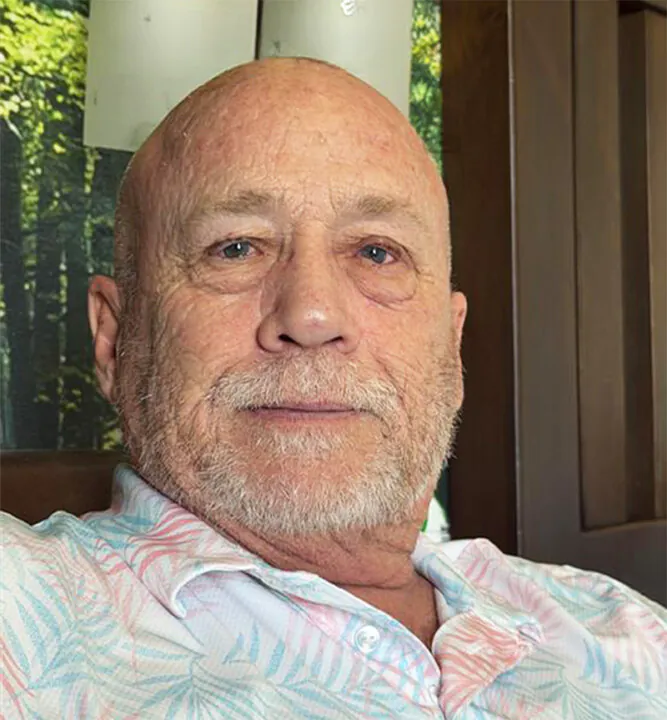 DEATH, TAXES and Howard Farran on the 32 Most Influential list. You can also bet your last nickel that we’ll be mulling whether the good doctor’s influence is waning. He’s still here, of course, though it’s fair to observe that dentaltown.com, founded in 1999, looks and feels like a blog relic in the TikTok era.
Dr. Farran, 63, acknowledges that Dentaltown “peaked years ago under a very different internet model,” while posts on the site “continue to grow, though at a slower rate than in the peak years.” The pace of any decline—or current membership numbers for Dentaltown, or numbers about anything at all—could not be determined, as Dr. Farran did not answer our questions about them. “We’ve been in a transition,” he told us via email, signing his missive “Create a great day, Howard.”
Like the media mogul he remains, though, he broke some news: He is busy positioning Dentaltown and its offshoots for the digital future. Since late 2023, he says, Farran Media has been rebuilding “the entire system from the ground up . . . the foundation, architecture, UX, mobile experience and now AI integration. It’s not just a redesign. It’s a shift from a static forum model to an intelligent, dynamic system in which every piece of content becomes searchable, usable knowledge—what we believe will be the first true dental AI layer trained on real-world clinical conversations, not generic datasets.”
His podcast, Dentistry Uncensored—with more than 1,700 episodes—remains vibrant. “So no, I don’t think our influence is waning. It’s been in a holding pattern while we rebuild the engine,” he says. “Dentaltown has never chased trends. It’s about building something durable for the profession.” —J.M.
30. Britt Baker
THE VANISHING HEEL
NEW: Dentist (after a fashion), Wrestler
Winter Park, Florida
 BAKER MIGHT BE the most famous non-practicing dentist in America. The University of Pittsburgh–trained DMD became an All Elite Wrestling star in 2019, incorporating her chosen profession into a central part of her “villain dentist” wrestling persona.
The gimmick, for better and now worse, created an (unfortunately) overly enthusiastic fan base: In an interview with sports journalist Adam Glyn in February, Dr. Baker said she has stepped back from dentistry due to death threats from “scary wrestling fans who struggled to separate my heel persona from reality.”
In short—and in the annals of sad sentences we’ve ever published in this magazine, this one is up there—practicing dentistry placed her in dangerous proximity to the public. Yet the plot thickens: She hasn’t been seen in the wrestling ring either since November 2024 despite being officially listed on the AEW roster and having an active contract that runs through the end of this year.
In March she broke her silence by responding to fan speculation on social media, stating that her return is “not up to me.” While that comment implies behind-the-scenes politics, AEW President Tony Khan has publicly said that he expects her back, though he declined to provide a specific time frame. Meanwhile, various wrestling outlets report no internal signs of her return; rumors abound of a move to World Wrestling Entertainment once her current AEW contract expires. Neither Baker nor her team responded to inquiries from Incisal Edge. So again we ask: When, where and in what capacity might we see Britt again? —L.R.
31. Cecile Feldman
THE A-PLUS ACADEMIC
NEW: Dean, Rutgers School of Dental Medicine
Newark, New Jersey
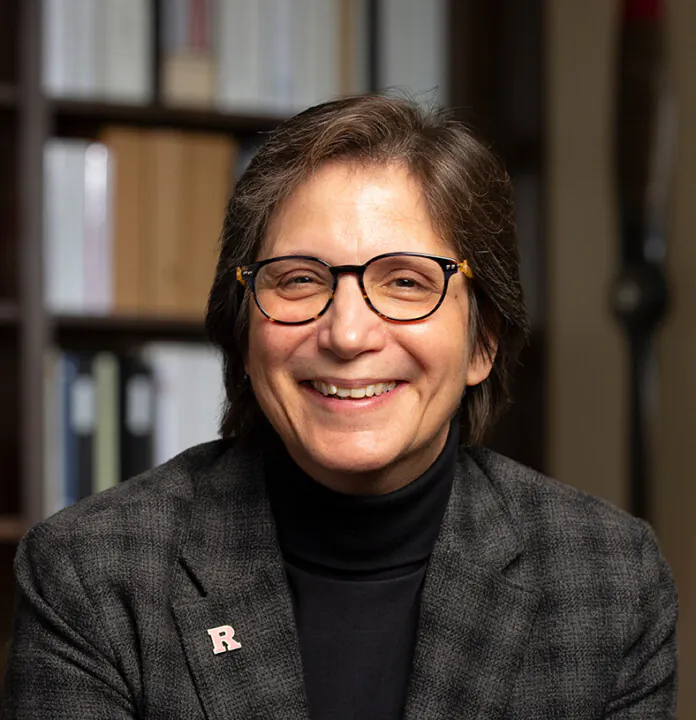 THE ACCOLADES just keep rolling in for Dr. Feldman, the country’s longest-serving dental school dean. Having assumed that position in 2001, she has demonstrated “decades of measurable impact on academic dentistry, oral health education and research,” according to the American Dental Education Association, which honored her last year with the prestigious Gies Award for Eminence in Vision and Leadership.
Heady stuff. Though she only now makes her first appearance in these pages, she has been on the Rutgers faculty since 1988. Her research credentials include a landmark manuscript that envisioned instant access to comprehensive electronic patient dental records, and a recently completed study of the effectiveness of opioids versus other means for postoperative pain.
The study, the largest randomized clinical trial of its kind, found that patients given an ibuprofen/acetaminophen combination for an impacted mandibular third molar extraction experienced less pain than those given hydrocodone. “There was no added benefit for providing patients with an opioid containing pain medication,” says Dr. Feldman, who balances her busy research schedule with authoring opinion pieces (better dental care for veterans is one focus) and overseeing Rutgers programs she launched, such as one that trains foreign dentists to practice in the U.S.
Dr. Feldman—who says she considers student debt and the need to maintain the centrality of research as key challenges facing dental education—said she plans to remain dean “for as long as I continue to wake each day energized by the challenge of moving the school to the next level.” Her advice for aspiring and current dental students: “Select a [career] path you’re passionate about—because with passion comes excitement, commitment and excellence.” —J.M.
32. Jennifer Hill
THE HYGIENIST’S BEST FRIEND
NEW: CEO, American Dental Hygienists’ Association
Chicago
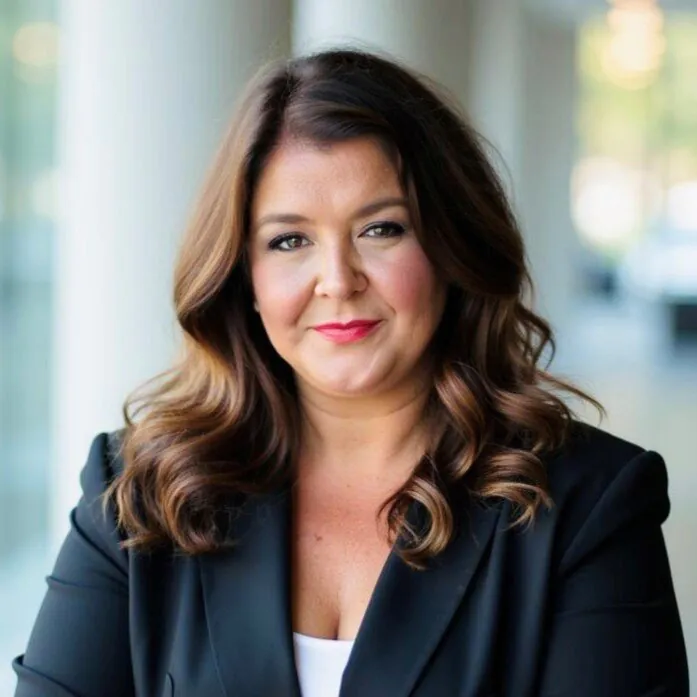 THE HYGIENIST SHORTAGE—which Incisal Edge has chronicled in detail—has no dearth of causes, according to Hill, who last year had the “interim” removed from her CEO title at the ADHA. She cites pandemic attrition, not enough program capacity, not enough faculty, rising student debt and regulatory restrictions on where and how hygienists can practice. While supply has declined, demand for preventive care has only increased, she notes.
ADHA, which represents more than 220,000 hygienists nationwide, is tackling the problem on multiple fronts. It aims to grow the pipeline through programs like Hygienist Inspired, an awareness-building recruitment initiative that reached more than 8,500 people last year, almost half of them high schoolers (“a critical audience for workforce growth,” Hill says). ADHA addresses burnout and workplace dissatisfaction partly by advocating for greater compensation. And it pushes for direct reimbursement and to remove restrictions on care settings.
Hill hopes the organization will be even more effective now that it has modernized its own governance structure. For over a century, the ADHA’s House of Delegates, comprising roughly 150 individuals representing every state, set the group’s policy and direction but made critical decisions only during its annual meeting. Under Hill’s leadership, ADHA last year replaced that model with what she describes as a “competency-based board, with members selected for expertise rather than geography.” Now, with a nine-member board of directors, ADHA leadership can act more quickly.
“Overhauling a governance structure that had been in place for more than 100 years is not something most organizations attempt, and even fewer pull off,” Hill says. “It was a huge organizational and cultural shift.” —N.P.
Where Did They Go?
Several notables from a year ago are no longer here. What’s up?
Robert F. Kennedy Jr.
Secretary, Department of Health and Human Services
Washington, D.C.
Last year: 1
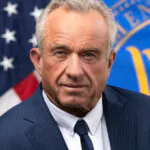 BY ANY reasonable measure, Kennedy’s influence on dentistry has been both swift and unsettling. Last year, the anti-fluoride HHS secretary topped our list—not because of broad professional support, but due to the scale of the policy shifts he set in motion. Chief among them were efforts to roll back community water fluoridation, spur cuts at the National Institute of Dental and Craniofacial Research and eliminate the CDC’s Division of Oral Health—moves widely viewed by dental professionals as threatening to an already strained oral health infrastructure.
At the same time, Kennedy elevated attention on nutrition-based approaches to oral-systemic disease prevention: an area that could, in theory, yield long-term benefits related to caries and periodontal disease. But his net effect, in our view, has been negligible. Since his appearance at No. 1 last year, he has neither dismantled the infrastructure he oversees nor demonstrated that his policy shifts are measurably improving oral health outcomes. And he has failed to attract anything resembling substantial support for his anti-fluoride stance. For 2026, influence without evidence of progress, positive or negative, wasn’t enough to keep him on the list.
Stephenie Goddard
CEO, Glidewell Dental
Newport Beach, California
Last year: 7
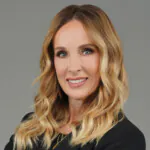 IT WAS A remarkable vote of confidence: After more than 50 years at the helm of his eponymous company, Jim Glidewell handed the keys to World Bank alumna Goddard, who spent nearly two decades at Glidewell, including four-plus years as CEO. During her tenure, Goddard rose as high as No. 6 on our ranking (in 2022). In early May, she announced her departure from Glidewell via LinkedIn. Reached for comment, Goddard referred us to her statement saying she’s “taking time to be intentional about my next move” and that it “isn’t a goodbye to the dental industry.” It’s easy to imagine paths forward for the polished vet, from founding a startup to leading transformation at a legacy company or simply consulting. We’ll have to wait and see, but the smart money says she’ll reappear in our ranking before too long.
Stanley Bergman
Former CEO, Henry Schein
Melville, New York
Last year: 16
 FEW EXECUTIVES have shaped modern dentistry for as long. During his 35-plus-year tenure as CEO of Henry Schein, Bergman helped transform a regional mail-order company into a global health care powerhouse. That legacy kept him squarely on our list in prior years. In July 2025, though, he announced he would step down as CEO at the end of the year and transition to chairman of the board. The transition came amid heightened scrutiny, as Schein navigated a variety of difficulties, including a 2023 cyberattack. By this March, the company had a new chief executive (see below), ending the day-to-day influence that once defined Bergman’s outsize impact. While we have no doubt he remains deeply respected and involved at the board level, his current role is advisory rather than directive—important, yes; decisive, no.
ONES TO WATCH
Two influential almosts on the cusp of inclusion in these pages.
Fred Lowery
CEO, Henry Schein
Robert Rajalingam
CEO, Patterson Companies
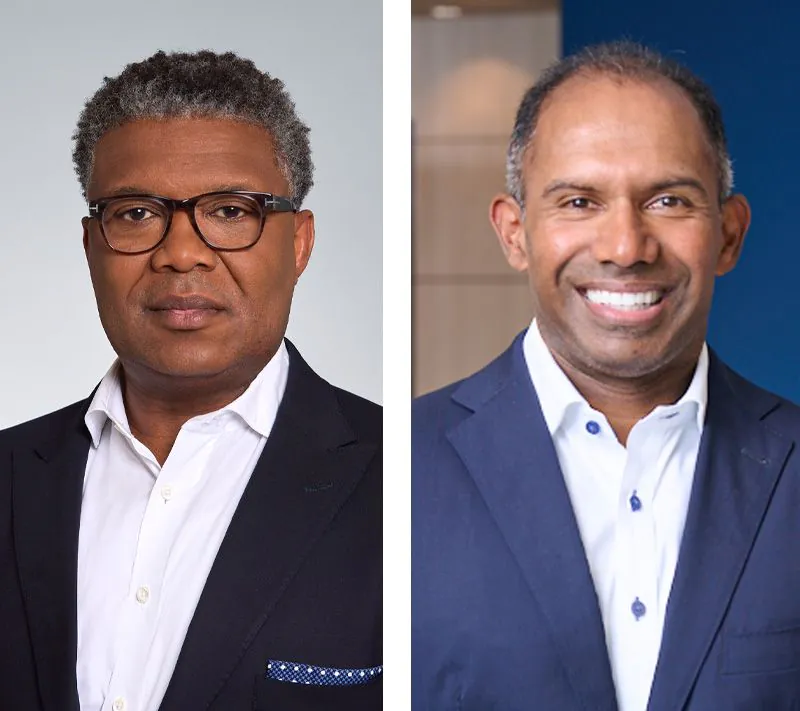
FRED LOWERY, taking over from Stanley Bergman at Schein, has enormous nitrile gloves to fill—that’s perhaps an understatement—and is also new to the organization, arriving from Thermo Fisher Scientific, where he most recently served as executive vice president and president of laboratory products and bioproduction.
He’s been on the job only a few months and for now remains in our wait-and-see pile. Much the same can be said for Patterson’s Rajalingam. He took the helm in April 2025 under unusual circumstances, following Patterson’s acquisition by Patient Square Capital and its transition to a private company. Rajalingam inherited apparently high expectations for decisive operational and strategic repositioning.
His résumé suggests he might be suited to the task: He brings more than 25 years of health care leadership experience, most recently helping lead Cardinal Health’s U.S. medical distribution business through its pandemic response.
At both Schein and Patterson, stakeholders appear optimistic. But until tangible outcomes emerge, it remains to be seen whether the industry will look to one or both for directional guidance. If either moves from promising but unproven to a sought-after voice shaping the profession, don’t be surprised to see them on this list in the years ahead.
Dentistry’s Dizzying Decade
Man, has it ever been a busy ten years. Here’s a casual rundown of the 32 Most Influential list’s back pages: the highlights, the lowlights . . . and however you’d classify Robert F. Kennedy Jr.
THE LAST DECADE has changed dentistry more, we’d argue, than any three decades before it. All that change is driven by people—influential people who make their living in some aspect of our noble profession. We’ve tried to keep track of it, and impose some order on it, with our annual 32 Most Influential ranking. It’s been a wild ride. Here’s a careen down memory lane.
2017
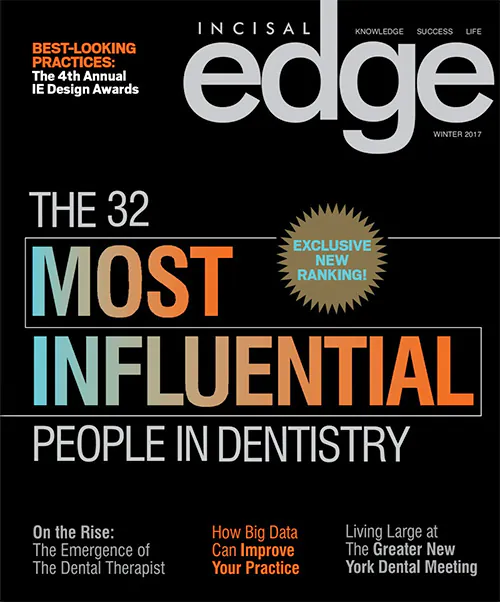
Cover Star: No one—we went, unusually, with text only for the big debut. We suppose the look we were going for was stoic and sober, an austere table setter for a Very Important Issue of the magazine. Guess it worked!
Unofficial Issue Theme: We had this big idea to rank the entire panoply of dental influence, so here it is. We kicked off the whole louche party by observing that “measuring ‘influence’ is a little like measuring love, or the water view from an apartment terrace.” More poetic words have never been set to ink in a publication about the dental arts.
No. 1: Jeffrey Slovin, CEO, Dentsply Sirona. “The market is watching closely, because [the Dentsply-Sirona merger] marks the first time any dental manufacturer has tried to fully integrate equipment and consumable operations,” we wrote. Turns out the market is one harsh SOB.
No. 32: Peter DuBois, executive director of the California Dental Association.
Wild Card: Gwyneth Paltrow (No. 28), for having cofounded the Bruce Paltrow Oral Cancer Fund.
Hottest Take: Ben Carson (No. 8) was “hotly tipped to head Health and Human Services in the coming [first Trump] administration.” Whoops! Carson was shunted off instead to Housing and Urban Development and has not been heard from since.
2018

Cover Star: Marco Gadola, CEO, Straumann (No. 2).
Unofficial Issue Theme: “Reinventing dentistry”—changing the industry for the better through sheer force of influence.
No. 1: Stanley Bergman, chairman and CEO, Henry Schein.
No. 32: Marko Vujicic, chief economist and vice president, ADA Health Policy Institute. Hey, he’s No. 1 this year (see page 41)! That’s a climb worthy of Sir Edmund Hillary.
Wild Card: Iris Mittenaere (No. 30). The French Miss Universe from 2016 “has longed to help others through dentistry ever since she was young,” we wrote.
Hottest Take: “An Elon Musk type, Marko Vujicic has referred to himself and his team as ‘a group of futurists.’ ” Well, here’s a bulletin from that future: Things are working out pretty well for Musk and Vujicic alike.
2019
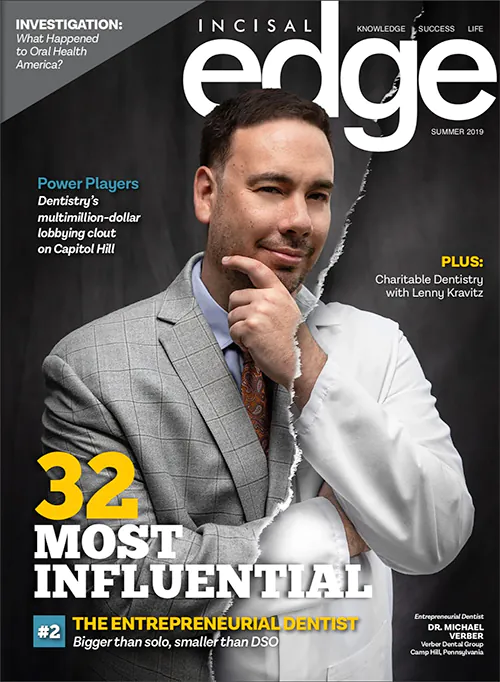
Cover Star: Dr. Michael Verber (No. 2), the quintessential “entrepreneurial dentist” from Camp Hill, Pennsylvania.
Unofficial Issue Theme: Entrepreneurship is good! “Bigger than solo, smaller than DSO,” we wrote, “ a host of entrepreneurially inclined doctors have established hybrid practices that are neither fish nor fowl.”
No. 1: Joseph Hogan, director, president and CEO, Align Technology.
No. 32: Roger Levin, founder and CEO, The Levin Group.
Wild Card: Beto O’Rourke (No. 30), a Democrat who was hot, hot, hot as he prepared to run for president in 2020. (We swear this is true.) He went to the dentist and proceeded to livestream his cleaning. That’s all that happened. It was funny at the time.
Hottest Take: “Dentists could learn a lot from the 2016 movie The Founder, which told the story of Ray Kroc, who built McDonald’s into a global behemoth.” (We’re still not sure what we were getting at here.)
2020
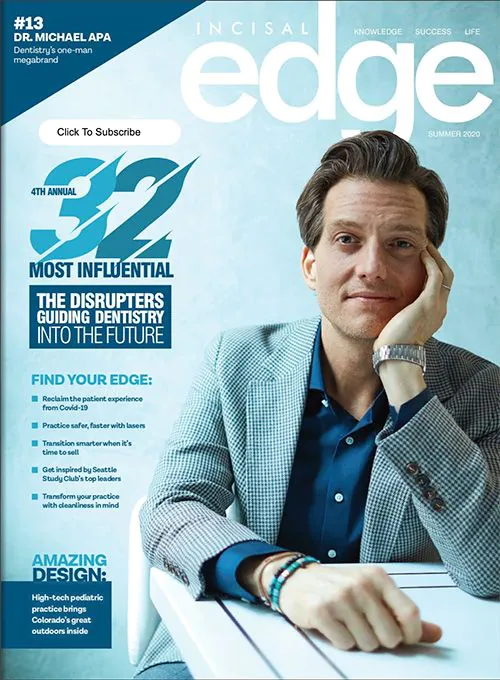
Cover Star: Dr. Michael Apa (No. 13). He’s back, placing at lucky 13 again this year.
Unofficial Issue Theme: Covid-palooza! Don’t miss the fun.
No. 1: Eric Wenzel, director of oral care, 3M, who oversaw manufacturing of N95 respirator masks, suddenly more valuable than a bucket of Nvidia stock.
No. 32: Dave Sproat, CEO, Young Innovations.
Wild Card: Dr. Paul Gosar (No. 5), a Republican who was one of five dentists in Congress. He would later be formally censured for posting violent images to social media.
Hottest Take: “The introduction of artificial intelligence to dentistry means we’re witnessing a scientific and medical revolution in real time.” Nailed it! (Yes, prognostication like that was a layup, even in 2020. But still.)
2021

Cover Star: Dr. Rena D’Souza (No. 3), director, National Institute of Dental and Craniofacial Research.
Unofficial Issue Theme: Taxpayers are forking over nearly $500 million a year for Dr. D’Souza to spend. Where’s it all going?
No. 1: Joseph Hogan, Align Technology.
No. 32: Tom Daulton, CEO, National Dentex Labs
Wild Card: Kendall Jenner (No. 31), indefatigable promoter of the “Kendall Jenner Teeth Whitening Pen.”
Hottest Take: “The pandemic has created fresh opportunity for doctors to purchase their first practice, given the virus’s impact on soon-to-retire industry veterans.” Uh, yay, pandemic?
2022

Cover Star: Dr. Gordon J. Christensen (No. 12) and his icy-blue Paul Newman eyes. Call it Oral Tiger Beat—surely this cover still hangs on the bedroom walls of teen girls across the nation.
Unofficial Issue Theme: Is Covid-19 finally in the rear-view? Maybe? Pretty please?
No. 1: Joseph Hogan, Align Technology, spending another year at the head of the list.
No. 32: Anne Vela-Wagner, the executive director of the Mars Wrigley Foundation, “one of the largest funders of dental programs in the United States.”
Wild Card: “The Senior Citizen Dentist” (No. 10). “Sage with age and mulling retirement,” we said. (Our polite way to tell Gramps and Granny to get off the stage.)
Hottest Take: “Grizzled fogies are presumably less comfortable with the risk of airborne pathogens so common to the profession even before the pandemic.” Like we said: Retire already! (Oh, and thanks for your service.)
2023
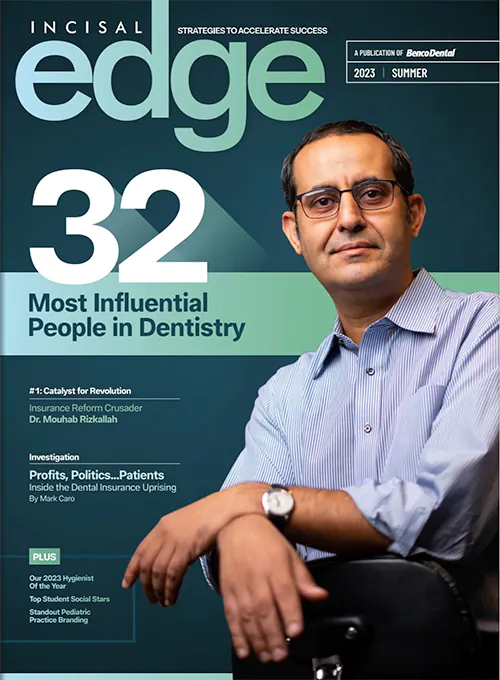
Cover Star: Dr. Mouhab Rizkallah (No. 1), crusader for dental insurance reform, first in Massachusetts and then nationwide.
Unofficial Issue Theme: What the hell are we gonna do about dental insurance?
No. 1: Dr. Rizkallah.
No. 32: Jeff Johnson, senior research analyst, medical technology, Robert W. Baird & Company.
Wild Card: Victoria Yu (No. 8), chief dental officer, Walmart Health. Dr. Yu was just the latest in a long line of people tasked with trying to make a success of Walmart’s flirtation with the provision of dental care to its gazillion regular shoppers. Spoiler: nope!
Hottest Take: “A cynic might posit that one of the Arkansas giant’s goals through Walmart Health is to boost foot traffic to its stores. That cynic might be right.”
2024
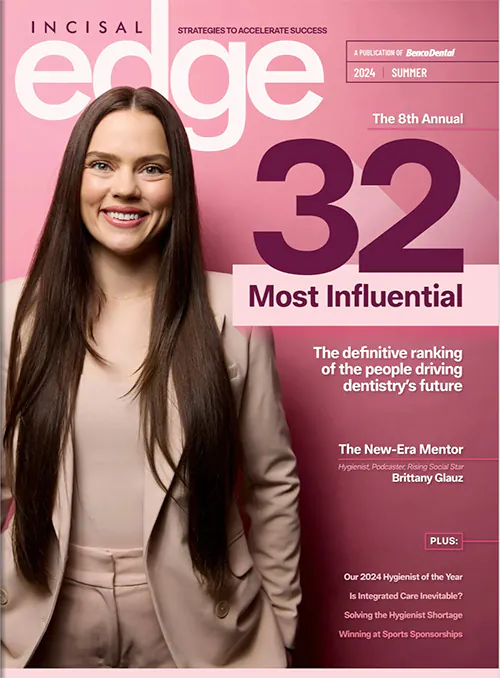
Cover Star: Brittany Glauz (No. 27), hygienist and rising social media star.
Unofficial Issue Theme: Is anyone missing a bunch of hygienists? They were all here just a minute ago. Where’d they go?
No. 1: Guillaume Daniellot, CEO, Straumann.
No. 32: Jett Puckett, a lawyer whose wife, known as “Pookie,” was a social media star, making him fame-adjacent in the most 2020s way imaginable.
Wild Card: Puckett. We called him “a Kardashian husband.”
Hottest Take: “Remember Winston Wolf from Pulp Fiction, the ultimate problem solver played by Harvey Keitel? We can’t quote him much in this family publication, unfortunately, but we can compare him (favorably, we hasten to add) to Simon Campion, Dentsply Sirona’s latest CEO.”
2025
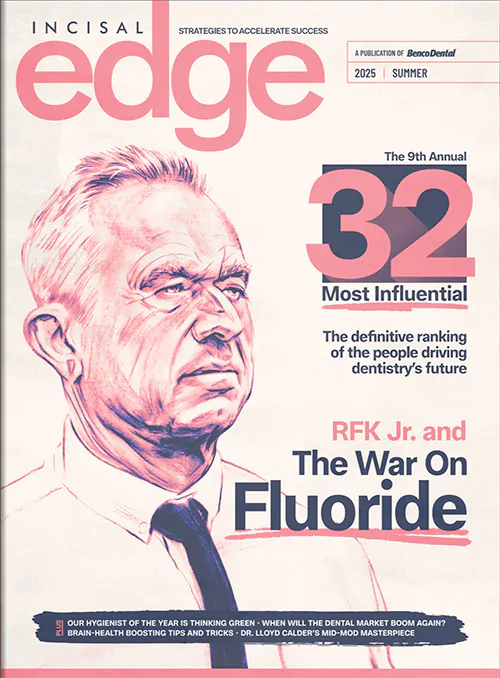
Cover Star: Robert F. Kennedy Jr. (No. 1), illustrated—an Incisal Edge first. Bear cub and whale carcasses not pictured.
Unofficial Issue Theme: Sooo, is RFK just garden-variety crazy or, like, world-historical crazy? Let’s ask dentists.
No. 1: RFK Jr.
No. 32: Dr. Truvella “Trudy” Reese, Mrs. Nevada America 2024, a dentist and an impassioned advocate for victims of human trafficking.
Wild Card: They get no wilder than Robert F. Kennedy Jr.
Hottest Take: “It’s hard to nail down exactly what Robert F. Kennedy Jr. stands for.”

 LOADING FORM...