
Our 2026 Hygienist of the Year, Charlene Nawara, has overcome one setback after another as she has built a life and career. Her focus: putting patients—who sometimes remind her of her younger self—fully at ease. “Who better to guide someone through this process,” she says, “than somebody who has dealt with it personally?”
By Gia Mazur Merwine
Photography by Rocky Kneten
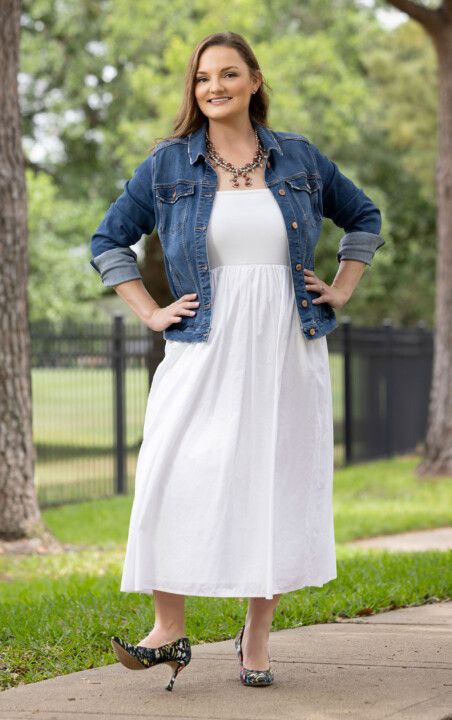 CHARLENE NAWARA remembers the first time she sat in a dental chair. She can’t recall how old she was, but she does remember exactly how it felt. Anxious and uncertain, she listened as the adults around her spoke about her mouth, her condition and her treatment—without ever talking to her directly. They offered no reassurance, no sense that she belonged in the conversation at all.
“I didn’t feel part of the plan or part of the process,” Nawara says. “They were talking about me, not to me.” That moment resonated: one of a number of early experiences that would shape how she understood dental care, and how she would eventually come to practice it.
Today Nawara, 38, is a hygienist at Cinco Ranch Dental in Katy, Texas, just west of Houston, a practice led by Dr. Andrew LeQuang. The perspective she brings is shaped as much by those early experiences as by her clinical training. She understands the fear, the unnerving sense of being judged while sitting in the chair, because she has lived it. As such, she has made it her mission to bring clarity, comfort and a sense of control back to the patient experience.
“I think that’s why I connect with patients the way I do,” she says. “I’ve felt all of that myself.”
Brave Face
Born and raised in Las Vegas, Nawara did not grow up in a house that prioritized dental care. Appointments were infrequent and reactive, something to endure only when a problem arose, and by the time her permanent teeth came in, the effects were visible. She had cavities, abscesses and infections severe enough to show in school photos, along with noticeable gaps where teeth were simply missing.
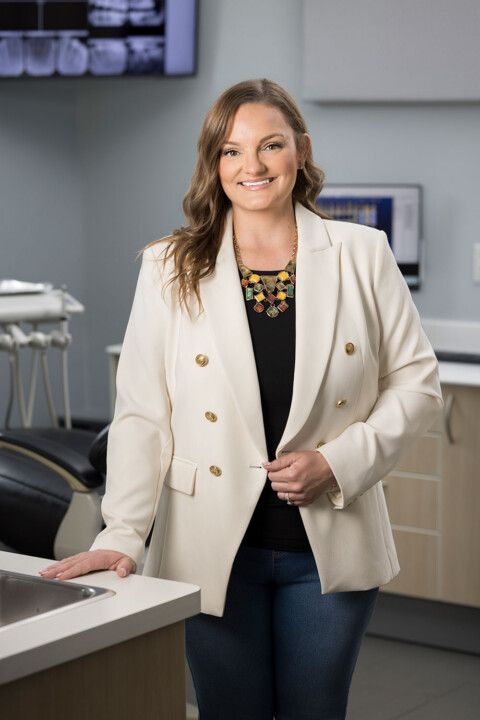 Others noticed. She remembers the comments, the looks, the quiet awareness that her smile set her apart in ways she couldn’t control. She learned to manage it early, angling her face just so, keeping her lips closed when she spoke, relying on humor and personality to stay one step ahead.
“I would kind of beat people to the punch,” she says. “I would make fun of my smile before anyone else could. That was my protection.”
She carried that awareness into adulthood, living with significant tooth loss, eventually relying on a removable “snap-on smile” to create the appearance of a full set of teeth. It was a solution, though not a comfortable one.
“I couldn’t eat with it,” she says. “If we went out to a restaurant, I’d have to take it out, hide it in a napkin, go to the bathroom and put it back in. It was just . . . an ordeal.”
The experience made clear that dental care wasn’t just clinical. It was emotional, social and deeply personal. For patients who felt judged or overlooked, it could become something to avoid altogether. That understanding would eventually lead Nawara into dentistry, though not directly and not easily.
Nawara left high school in ninth grade during a time marked by substance use, growing up too fast and instability, she says. What
followed were periods of finding her footing and losing it again: from Las Vegas to Arizona, then to Texas with her brother, back again and forward again, living with family, and like many teenagers, still figuring things out.
“I was trying to do the right thing. I just didn’t always know how,” she says. “But I’m proud of me—where I am today and what I had to do to get here.”
Back in Las Vegas for a time and back on track, in 2011 she enrolled at Pima Medical Institute and trained as a dental assistant, her first step into the field, drawn in part by curiosity about her own experience in the chair: “Who better to guide someone through this process than somebody who has dealt with it personally?”
The first dentist she worked alongside as an assistant understood what she had endured and began restoring Nawara’s teeth. It started with that “snap-on smile” and eventually moved toward more permanent solutions—bridges, crowns and partials—that enabled her to function like everyone else.
“I could go to a restaurant and just eat and never have to think about it,” she says. “That was something I never had before.”
I appreciate every day. I didn’t always have this. Now that I do, I don’t take it for granted. I feel like I found what I’m meant to do.”
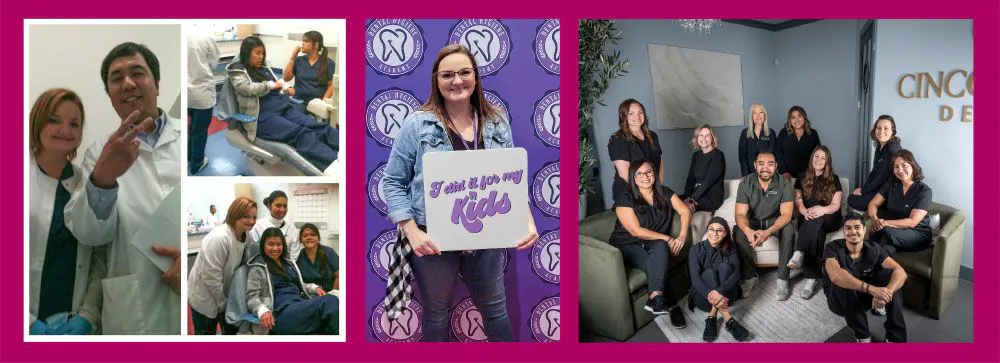
CAN’T STOP, WON’T STOP: (From left) Nawara with colleagues during her early years in dentistry; celebrating a hard-earned achievement
in hygiene school, driven by the motivation to succeed for her children; and with the team at Cinco Ranch Dental in Katy, Texas.
Steady as She Goes
Determined to keep moving forward, Nawara had also enrolled in an online program that promised a second chance at finishing high school. She worked quickly, motivated by the idea that she could finally close that chapter. By then, she had returned to Texas, reconnected with her now-husband, Chase, and started building a life in the town of Rosenberg. The couple welcomed their first child, daughter Allie, now 12, and then a son, Waylon, now 8, a few years later. Job stability mattered more than ever with two kids in daycare, but so did Nawara’s calling to pay it forward.
Around 2018, she faced another setback when she learned the diploma she earned online wasn’t recognized by hygiene schools. She would have to start over from square one. While completing her GED, prerequisite coursework and applying to hygiene school, Nawara balanced raising two young children with mounting personal challenges. Her husband suffered a serious ankle injury that led to complications, infection and extended treatment. The demands at home intensified just as her academic workload did. “Life was lifing,” she says. “I cried every day. Every day I thought, ‘I can’t do this.’ ” Today she especially credits Chase, as well as her mother-in-law and father-in-law, for the support they provided throughout.
What kept her going wasn’t abstract ambition. It was sitting beside her at the kitchen table. “[I did it for] my kids,” she says. “Watching me study, watching me not give up. I wanted them to be proud of their mom and [my husband to be] proud of [his wife]. . . . Look what you can do if you just set your mind to it.”
When she finally finished her degree, Nawara had much to celebrate, including landing the job at Cinco Ranch right out of school. “I still pinch myself,” she says. “Even now, driving to work, I think, ‘This is my life?’ ”
In Good Hands
Today, Nawara brings that full history into every patient interaction. Having spent years without answers about her own dental health—most of which remain a mystery, she says—she became intentional about giving her own patients what she once lacked.
She estimates that a significant majority of her patients arrive with some level of anxiety, often rooted in experiences not unlike her own. Patients often feel rushed or like they’ll be judged, so she tries to meet them wherever they are. This sometimes leads to sharing parts of her own story, shifting the dynamic from clinical to personal. “I want them to feel like they’re a guest in my home,” she says.
Those in the chair quickly respond to that warmth, says Dr. LeQuang, a member of the Incisal Edge 40 Under 40 from 2025. Often, he adds, they’ll open up to Nawara about insecurities or fears they might otherwise keep to themselves. “Patients feel safe with Charlene,” he continues. “She communicates in a way people actually understand, and they know she genuinely cares about them. They don’t feel like they’re being sold something. They trust her.”
Nawara’s perspective extends beyond the operatory. She volunteers in local schools to introduce children to oral health early. She’s also beginning to think more seriously about mobile dentistry and other ways to reach patients with access problems, including the elderly, people with disabilities and those who simply can’t make it into a traditional office setting.
The work is still unfolding, but Nawara’s perspective, shaped by everything that came before, remains constant. “I appreciate every day. I didn’t always have this. Now that I do, I don’t take it for granted,” she says. “I feel like I found what I’m meant to do.”


 LOADING FORM...