
THE NEW THINKING IN DENTAL SCHOOL INNOVATION
Schools Get Their ACT Together
By Dr. Mark Hyman
Forty years ago, I bought what was essentially a bankrupt dental practice in Greensboro, North Carolina, where I grew up. I had graduated from the University of North Carolina Adams School of Dentistry, worked as a volunteer dentist in Israel for four months and just finished a two-year oral medicine/general practice residency at UNC. I then put $2,500 of my own money into this struggling practice. After a week, I was almost broke and the business checking account had dropped to $80. I quickly realized that the practice lacked both advanced technology and business systems.
So I met with Linda Miles, then the lead voice in practice management leadership, and Cathy Jameson, Ph.D., founder of the Jameson Group, a consultancy in Oklahoma.
Together, over months and years, they showed me how to create success systems, and shape and manage my practice. I had to buy new technology and take the time to train on it.
It wasn’t exactly smooth sailing. My receptionist quit. I had to fire a hygienist whose habits and attitude were completely at odds with the culture I was trying to build. That left me with one employee. I was 27 years old.
Over time, I turned that dental office into a top 1 percent practice generating millions of dollars in revenue. I was not only its CEO but also personnel director, marketing director and purchasing officer. That’s the pressure that the public doesn’t see: Dentists wear different hats—often with very little training.
When I studied at UNC’s dental school in the 1980s, we learned the best methods of doing dentistry at the time. As a practicing dentist, however, one must continuously innovate and change. While the principles of quality don’t change, the technology, techniques and materials constantly do. And change is hard—especially when what you’ve always done has been working just fine. But amid technological advances and growing financial pressures, “just fine” is no longer enough for our dentists or the schools that train them.
Today’s schools need to teach new technologies as well as the interpersonal and business-management skills that I had to learn on the job.
While running my own practice, I was offered the opportunity to teach at UNC beginning in 1989. In December 2017, I left private practice and was appointed to the faculty at the UNC Adams School of Dentistry. I felt called to teach because much of my success has come from a willingness to look at our profession and say, “If it ain’t broke, break it. There can be a better way.”
A similarly innovative, norm-breaking mindset led UNC’s dental school to adopt the ACT (Advocate-Clinician-Thinker) curriculum. Launched in 2021, the ACT curriculum equips our students not just with the clinical skills they need but also with the “soft” skills of advocating for their patients and thinking critically about the care they recommend and provide.
Other forward-thinking dental programs could benefit from studying UNC’s curricular model.

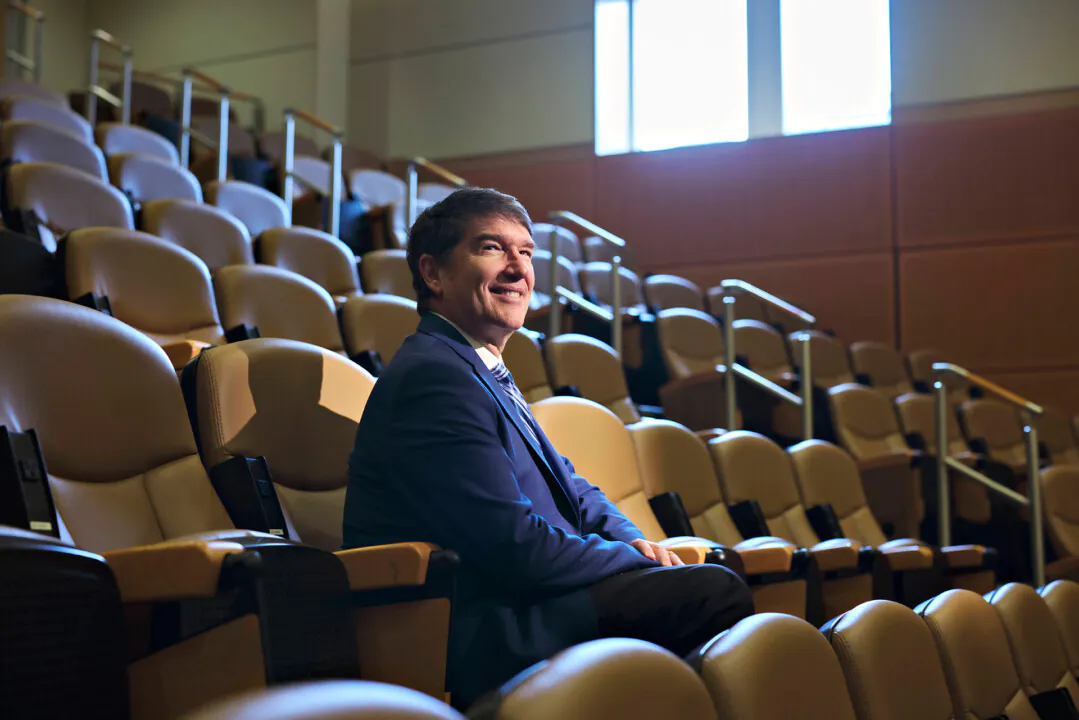
Dr. Mark Hyman at the UNC Adams School of Dentistry, January 2026
The Case for Change
Today’s dental students face extraordinary pressures. While the cost of education has risen astronomically in recent decades, fees and insurance reimbursements have not kept up with inflation. And while dentists have professional opportunities available—dental service organizations, public health, the military, Veterans Affairs, the Indian Health Service—it’s challenging to start a solo practice
that depends heavily on insurance reimbursement.
Plus, dentists who start their own practice out of school must suddenly manage, pay and sometimes fire staff—but with very little business training. I know how hard that is. Add to that daily physical and emotional pressures.
To help students do this valuable work more easily and effectively, schools need to embrace a paradigm shift. They need to teach not only the tried-and-true fundamentals of clinical dentistry but also the state-of-the-art technologies and interpersonal and business skills that new dentists need.
The ACT curriculum represents this new paradigm.
What a Modern Curriculum Looks Like
Because both future dentists and seasoned professionals may be reading this, I’ll explain the curriculum in a way that attempts to speak to both groups. With the ACT curriculum, we’re closing the distance between theory and the demands of modern clinical dentistry. Thanks to the addition of so much that wasn’t taught when I was a student—implants, sleep medicine, digital imaging, AI and more—we now must teach six years’ worth of material in the same four years as before. It’s a challenge, but through our four-phase approach it’s possible. Phase One, Basecamp, sets expectations over the first several weeks. Phase Two, Foundations of Practice, encompasses the first two years and focuses on developing core knowledge and skills through integrated experiential learning and early clinical exposure. Phase Three, Guided Advanced Clinical Practice, builds on this foundation through progressively complex clinical experiences. Phase Four, Individualization, allows learners to explore specialized areas within dentistry as well as interests outside the profession.
Consider amalgam fillings, which served dentistry beautifully for almost 200 years. Many schools still teach how to do magnificent silver fillings, but few in private practice still provide them. Education should reflect this.
“If it ain’t broke, break it. There can be a better way.”
As technology evolves, schools must keep pace. Here are just some ways we’re integrating tech into our curriculum at UNC:
- Intraoral cameras. All our students have access to intraoral cameras in every operatory, so they can document everything they do in real-time, full-color images and build a portfolio of their work.
- Digital prosthodontics. Fixed and removable prosthodontics were traditionally done using PVS impressions. We still teach that technique, since not every practice has a scanner and students need to know it in case their scanner ever fails (more on that in a moment). But we also teach fully digital restorative workflows, giving students competency in both conventional and modern approaches.
- 3D printing. Additive manufacturing is advancing rapidly and expanding its usefulness at a pace where our curriculum demands its inclusion.
- “Virtual drilling.” We use Simodont, a VR‑haptic dental simulator, to help students build clinical skills in a safe, repeatable virtual environment. It provides high‑resolution 3D visuals and realistic haptic feedback that feels exactly like the real thing, but without damaging a costly model or real teeth.
- Same-day crowns. Students learn to use a scanner and associated CAD/CAM software and hardware—something many people believe is far more common in dental schools than it actually is.
- Isolite. I was taught to use rubber dams to isolate teeth, and many dentists still use them (and, of course, endodontists always do). Our students use this single integrated mouthpiece combining suction, retraction, illumination and airway protection to decrease procedure time by around 30 percent to 50 percent, with much greater safety and patient comfort.
- Diode lasers. If you wanted to stop a bleeding gum when I studied dentistry, you didn’t have a lot of good options. Now you can do it with a diode laser. Our students learn to use lasers to perform procedures such as minor periodontal surgeries, biopsies, frenectomies and to cauterize bleeding tissue.
- Advanced radiology. Beyond conventional panoramic X-rays, students learn to use CBCT technology for high resolution 3D views of the teeth, jaws and surrounding structures.
- Advanced software. Students learn to use it for implant placement, partial dentures, sleep appliances, bite guards, whitening trays and more.
- Generative AI. Any school with enough funding can purchase new equipment, but meaningful innovation requires an even greater investment in time, training and people. Our students are being exposed to gen-AI tools that help them learn how to interact with patients, ask better clinical questions and improve diagnostic accuracy. The system supports enhanced caries detection, pathology, assessment of bone loss, recognition of fractured roots and more, enabling students to perform with greater precision, speed and confidence, to everyone’s benefit.
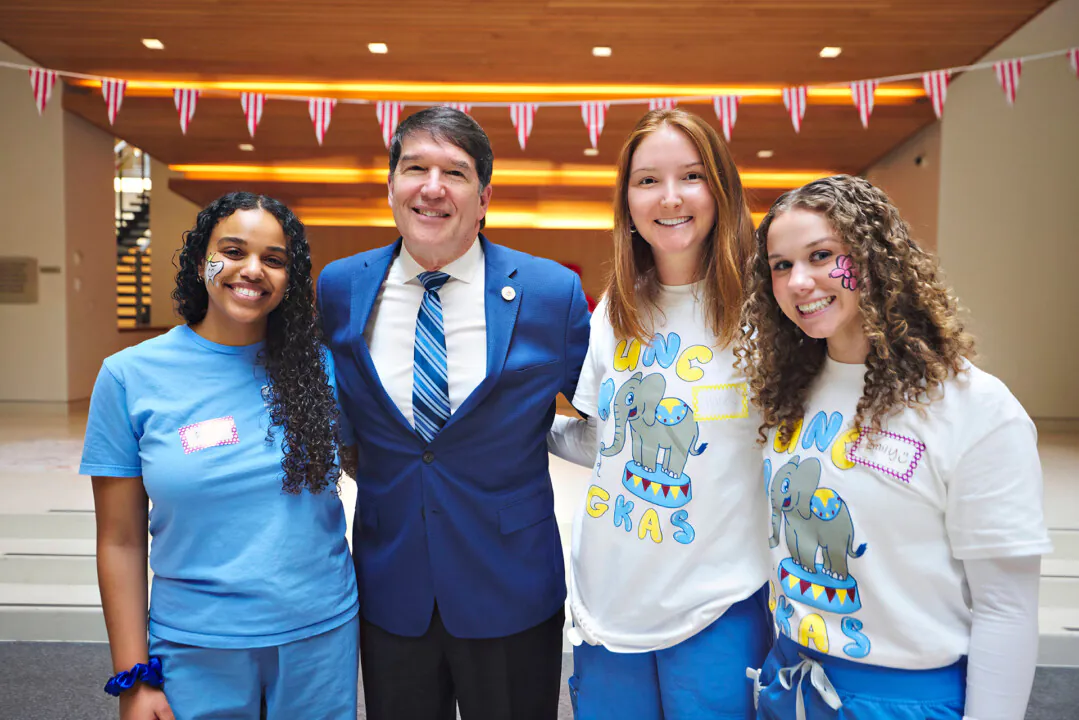
Dr. Hyman with (from left) students Didi Mesfin, Halle Earnhardt and Emily Baker during UNC’s Give a Kid a Smile Day.
Beyond Technology: Interpersonal and Business Skills
So much of what I was taught in dental school was about the art and science of dentistry. With the ACT curriculum, we take an enhanced approach. Along with teaching continually evolving technologies, ACT places strong emphasis on interpersonal skills. We teach students to communicate with their patients, listen to them and advocate for them—the “A” of ACT.
As our students discover, advocating for one’s patients doesn’t mean the old-school approach of simply telling them what they need to do. That is, in fact, a word I advise my students never to use with patients: need. Instead, inform patients of their dental health, then ask them what they want to do. Here is where the “C” and “T” of ACT come in: becoming equally skilled master clinicians and critical thinkers. Technology facilitates patient advocacy. When I use an intraoral camera to show patients their teeth, they don’t have to take me at my word. The camera enables them to see the difference between their healthy and unhealthy teeth.
I advise my students to take before, during and after images of everything they do not only to keep patients informed and engaged, but also as documentation for insurance companies. It’s one of the most stressful aspects of dentistry: An insurance company claims a procedure you did, which you took great care and pride in, wasn’t necessary and the insurer won’t pay. Documentation helps greatly.
Again, communication skills are essential. Over my 32 years of private practice, every new and emergency patient had an initial consultation with me and a treatment coordinator at which
I asked 10 key questions. Now I bolster my students’ communication skills by teaching them to do the same of new patients:
- Whom can I thank for referring you to me?
- How can I help you?
- What more can you tell me? (Patients might say, for example, “I hide my smile.” Which leads into the next question. . . . )
- How do your teeth make you feel?
- What did your last dentist tell you about your teeth, and how did that make you feel?
- Why now?
- What are your long-term goals for your teeth and your smile?
- Who else has input here? Does anyone else—a family member, for example—have a say regarding your dental health?
- Do you have a budget in mind?
- When do you want to be finished? (We can do that!)
After asking these questions, I realized something surprising: Nearly every patient chose to move ahead with their necessary care. They weren’t just agreeing to treatment; they were saying yes to trusting me. Ten minutes of genuine conversation transformed a stranger into someone whose needs and concerns I understood. Back then, this was unusual; whenever I asked patients whether any dentist had ever started their relationship this way, they all said the same thing: “never.”
We also teach our young doctors to take care of themselves so they can take care of others. I loved my clinical career, but the physical and mental stress of clinical dentistry eight hours a day for decades wears you down. Our students learn proper ergonomics, and again, technology helps: They receive ergonomic loupes, a brilliant innovation that enables dentists to see a patient’s teeth while facing straight ahead, without having to bend and strain one’s neck.
Crucially, we also help our students transition into the profession thanks in part to a $5 million endowment that supports innovative leadership classes—including Bell Leadership Institute courses—integrating career preparation, business readiness and leadership training in the school’s new curriculum. We also have a mentorship program that partners our students with UNC-trained dentists. And at Think Big!, an annual two-day workshop, expert speakers from around the country meet with our fourth-year students to help them consider their future.
Further, we impress upon them strongly that education shouldn’t end upon graduation. I encourage them to pursue continued education, as well as another year of supervised training with an internship or residency. Just 12 more months of education will help them enormously as they embark on their decades-long careers. From there, I suggest a goal of at least 50 hours of CE per year. My personal goal is 100 hours.
If you have soft skills but aren’t tech-savvy, you’re not going to succeed. If you’re a master clinician but unpleasant with patients, you won’t succeed. We all know there’s both an art and a science to dentistry, and the ACT curriculum enables students to master both.
We teach students to communicate with their patients, listen to them and advocate for them.
Still Learning the Old Ways
A pedagogic focus on new technologies doesn’t mean throwing out all the old ways. For modern dental education, we have to teach the basics along with the cutting-edge. Yes, dentists should learn to take digital scans—but what happens if the scanner goes kaput? Students must learn what to do when the technology fails. They need fundamental skills to fall back on.
When I was in dental school, we had only 2D panoramic X-rays. Now, 3D CBCTs are the standard. But if you’ve never read 2D X-rays, it’s harder to understand 3D images. Students still need to learn how to take and read X-rays before they do more complicated CBCTs.
Yes, our students now learn virtual drilling with haptic simulations, but also to cut into plastic teeth and then real teeth. If a CAD/CAM machine makes a crown that ends up not quite fitting, the dentist won’t be able to look at the appliance and identify the problem unless he or she also understands traditional impressions and handcrafted prosthetics.
We don’t need to spend the same amount of time on the fundamentals as I did in dental school in the 1980s. But we do need to give today’s students a foundational understanding of the basics.
What It Takes to Change Course
In private practice, I could make changes immediately. It’s not as easy for large educational institutions to shift course, and it’s all the harder for a state school like UNC that faces budget and purchasing protocols. Changing course at an educational institution is like turning around the proverbial battleship. But it’s vital that the thing turns—for the sake of the profession’s future and our patients’ immediate well-being.
Innovation in higher education relies on robust leadership. School leaders must recognize that the profession is constantly changing, and they need to empower their faculty and students to keep up. Pioneering leaders not only appropriate the funds for new technologies but also help gain buy-in among faculty.
The Adams School of Dentistry has been fortunate to have strong, courageous leaders. Our dean, Dr. Janet Guthmiller, has her eye on the future, and our associate dean for curriculum, Dr. Rocio Quinonez, has devoted years of her professional life to advancing ACT.
Prior to the new ACT curriculum, much of what had been taught at UNC was similar to what I was taught back in the ’80s. Now, dental schools around the world are asking us for information about ACT.
For these schools, I have three magic words: Success leaves clues. Visit innovative schools and ask their leaders what works for them and how they implemented it. The most successful dental practitioners, after all, are those open to new ideas—and who then ACT on them.
DR. MARK HYMAN is a dentist from Greensboro, North Carolina, and an accomplished public speaker who has given talks both domestically and internationally. He loved his 32 years in private practice, taught at the Pankey Institute and currently serves as an adjunct full professor and special assistant to the office of the dean at the UNC Adams School of Dentistry in Chapel Hill, North Carolina.

 LOADING FORM...