

This small Michigan nonprofit is thriving in ways that money alone can’t guarantee, proving that purpose is perhaps the most universal driver of practice success.
HARRIET STREET in the Detroit suburb of Ypsilanti is exactly the kind of tranquil but high-traffic location prized by entrepreneurial dentists. Flanked by churches, neatly landscaped corporate offices and rows of tidy houses, the tree-lined thoroughfare is home to the Hope Clinic, which provides comprehensive medical assistance to the underserved. Nothing about it, aside from the word clinic, pegs its dental facility as a nonprofit. That’s impressive, considering the Hope Clinic faces the same daunting challenges as better-resourced private practices, but with added pressures.
Purpose Over Pay
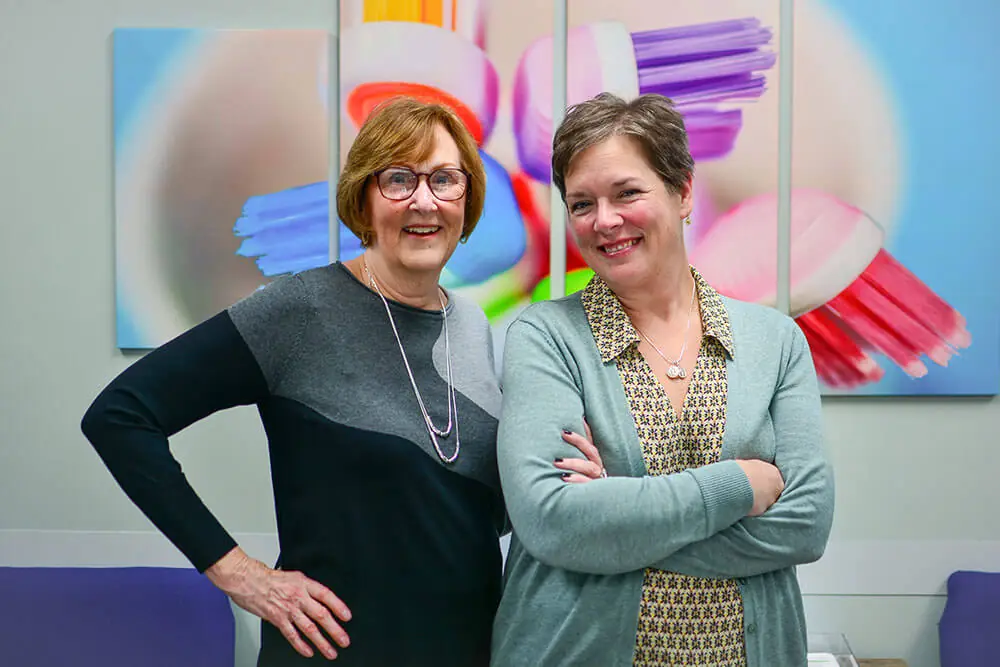
For example, many practices can’t hire enough hygienists at any price—so how does Hope get them to volunteer? “Lead with mission,” says Kathy Weber, CDA, RDA, the clinic’s dental manager (above left). That’s one of the few meaningful advantages nonprofits have: inspiring people through purpose rather than pay. “We provide the best comprehensive dental care possible without the pressure to generate profit. Our success is measured by patient outcomes, not clinical output.” Weber would know; she worked in private practice and ran a college dental assisting program before joining Hope’s board, and eventually its staff, five years ago.
Lynn Mullins (above right), Hope’s director of people, has spent the bulk of her career staffing nonprofits. She understands why money alone doesn’t solve personnel shortages. “They come because of the mission, and what keeps them here is that the mission never wavers,” she says. The key, she adds, is creating a solid structure. “Paid employees provide continuity, oversight and specialized expertise, while volunteers extend our reach and allow us to serve more people. We manage both by setting clear expectations, offering training and making sure roles are well-defined.”
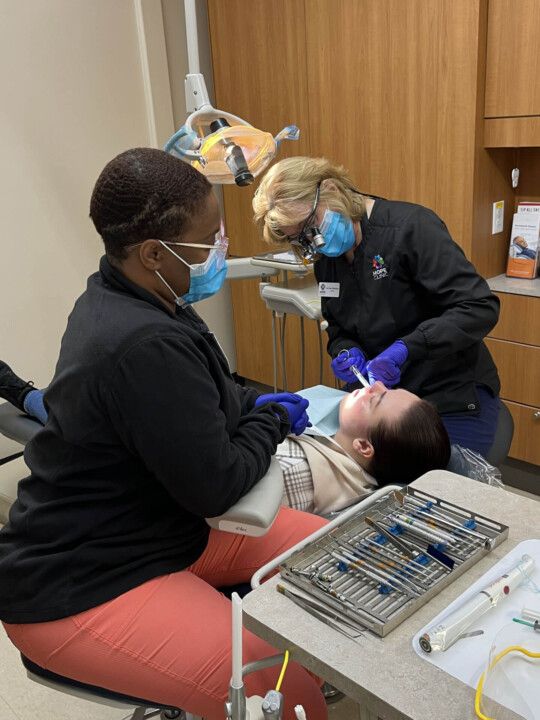
All in: The Hope Clinic’s paid dental staff is augmented by up to 400 volunteer hours per month plus a network of affiliated specialists.
Growing and Nurturing
Another successful strategy is igniting a passion for volunteerism early. “Many students who complete a clinical rotation at Hope Clinic actually return looking for employment,” Weber says. “Saying yes to someone who has run out of options is a powerful and rewarding experience.” Mullins notes that it’s vital to keep the act of volunteering from becoming a grind. “By nature, it can be more transient,” she says. “We take time to match volunteers with roles that fit their skills and interests, and we make sure they see the impact of what they’re doing. That sense of shared purpose is what makes the work worth showing up for.”
Protecting people’s well-being is important in any practice, but even more so for nonprofits. “It can be emotionally heavy at times, so caring for our staff and volunteer team is just as important as caring for our patients,” Mullins says. “We try to create a culture where staff and volunteers feel supported, through open conversations and making sure no one carries a tough story on their own.”
On the clinical side, creating an atmosphere comparable to that of a private practice has distinct benefits for both patients and team members. “From the minute our patients walk through the door until they leave, their experience is identical to the care they would receive in a for-profit dental practice,” Weber says. The flip side is how it also motivates the staff: “The clinic is exceptionally clean, decorated with a modern touch and has state-of-the-art equipment throughout.”
Collaboration Without Compromise
Maintaining a certain level of professional excellence goes together with attracting and retaining major donors. That requires continually demonstrating results and proving value to sophisticated grant partners including Trinity Health, Delta Dental and the University of Michigan. Then there’s the time-consuming component of cultivating the one-on-one donor relationships that form the backbone of Hope’s support. “Individuals and faith-based communities give financially and make up much of our volunteer base, plus keep us lifted in prayer,” Mullins says.
In a less well-run organization, you might see an internal fight over funding allocation between medical care, behavioral health, and food and basic needs. Not so at Hope, Weber says, pointing back to that shared sense of mission. “All the clinic directors and program managers are united in valuing the integrated, whole-person picture of health.”
Community and Continuity
What best encompasses this duo’s decades of combined experience? Says Weber: “It can be easy to get caught up in budgets and metrics, but the heart of the work is serving others.” Mullins recognizes that practices will always face struggles of some kind, so genuine positivity is imperative to maintaining forward momentum. “Remember that challenges are opportunities to get creative, strengthen your team and deepen your connection to your mission. Be flexible, communicate clearly and invest in the people around you. The team you build is what sustains your organization.”
The Hope Clinic demonstrates that making mission a cornerstone of your culture can consistently drive exceptional care and deep staff engagement, powering an organization through challenges like budgeting, staffing and complex patient needs. “There’s a much more personal investment,” Mullins says of nonprofit work. “Human resources is about supporting people and programs, and when I do that well, I feel rewarded personally and professionally.” Weber echoes her sentiment: “I love it when we change lives—give a patient a smile. That ripples out into every aspect of their lives.”
Remember that challenges are opportunities to get creative, strengthen your team and deepen your connection to your mission.”
—Kathy Weber, CDA, RDA
PHOTOGRAPHS BY ARTHUR ZHENG.
ARTHUR ZHENG, FREELANCE PHOTOGRAPHER: ARTHURZHENG@OUTLOOK.COM


 LOADING FORM...