

We Reached Out to several recently appointed dental school deans to learn how they’re innovating: across ideas, curricula and even personal leadership philosophies. Just one welcomed the opportunity to chat without reservation: Dr. Burke Soffe.
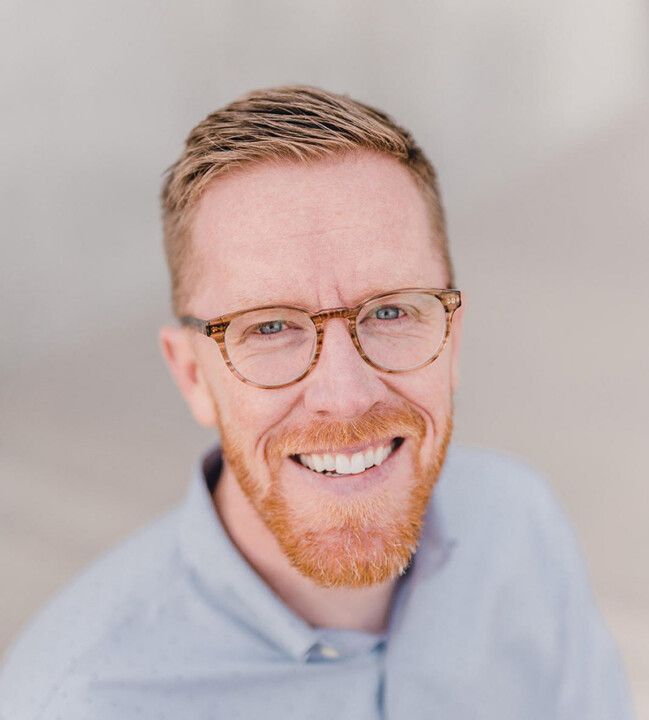 While our other requests went to leaders of legacy institutions, Dr. Soffe is charting a very different course as the founding dean of Arkansas’ first dental school: the Lyon College School of Dental Medicine in Little Rock. His willingness to engage was therefore unsurprising. As someone stepping into a pioneering role in a state that ranks last in the nation in oral health, he brings a refreshingly direct and unguarded perspective.
What does it mean to be a founding dean? It seems daunting given that you’re starting at square one.
Dr. Burke Soffe: Being a founding dean means helping shape not only an institution but a culture. While I joined Lyon College School of Dental Medicine after a feasibility study and initial curricular framework were already completed, building a dental school from the ground up is still an all-consuming endeavor. Every decision, from curriculum design, faculty and staff recruitment, clinical model, community partnerships, admissions and student recruitment, has long-term implications.
Startups move fast, but education demands rigor. Balancing urgency with excellence, innovation with accreditation and vision with day-to-day execution has been both demanding and deeply meaningful. What makes the effort worthwhile is knowing that we’re building a school that challenges outdated norms in dental education rather than simply replicating them.
Deans often seem like punching bags for critics who think tuition is too high and curricula not comprehensive enough to prepare students for, in particular, practice ownership. This is true of higher ed in general, not just dental schools, of course. What attracted you to the job?
The criticisms are real. Tuition is too high, and curricula are often overly comprehensive at the expense of what an entry-level, safe-beginner dentist actually needs on day one. National [American Dental Education Association] exit surveys consistently show that graduates feel underprepared in practice management, yet programs continue to add content without subtracting anything.
What attracted me to this role was the opportunity to make a tangible impact. I transitioned from private practice to education because I realized I could influence patient care at scale by shaping how dentists are trained. Reflecting on my own dental school experience, which was unnecessarily traumatic, I became convinced there is a more efficient, humane and collaborative way to educate dentists.
Arkansas was also a major driver. The state ranks last in oral health outcomes and dentist-to-population ratio and, at the time, was the only state with more than 2.5 million residents without a dental school. Helping launch a school that addresses both systemic issues in dental education and a profound state-level access-to-care crisis felt like a once-in-a-lifetime opportunity.
Given the high cost of technology, how do you envision a young school integrating emerging tech—AI, 3D printing, digital dentistry—into the curriculum? And what are the biggest financial, cultural and regulatory barriers that prevent dental schools from adopting new technologies and teaching methods?
At Lyon College School of Dental Medicine, emerging technologies are not add-ons. They are embedded from the beginning. We are actively integrating AI, 3D printing and digital dentistry into the curriculum while remaining aligned with our mission to serve underserved and rural communities. With nearly 60 percent of Arkansas classified as rural, our graduates must be adaptable across a wide range of practice environments.
That’s why we intentionally teach both digital and analog techniques. Technology enhances care, but fundamentals and critical thinking endure. A graduate who understands principles, not just platforms, can thrive anywhere.
Ironically, the biggest barrier to innovation in established schools is often cultural rather than financial. Students are comfortable with technology, while faculty resistance is more common. As a new school, we have the advantage of setting expectations early. We recruit faculty with innovation in mind, and students are empowered to lead the adoption of new tools. That mindset, built in from day one, has been transformative.
Does the dental industry have a responsibility to students in terms of their education? For instance, should schools and private businesses collaborate to prepare students for job hunting, adapting to production goals in today’s revenue-deprived practices, and finally how to become business as well as clinical leaders?
Absolutely. Dentistry is a profession, not just an industry, and we all share responsibility for its future. I vividly remember being told in dental school, “In dentistry, we eat our young.” That mindset is not only harmful, it’s unnecessary.
Dental schools and private industry should collaborate to help graduates transition successfully into practice. That includes mentorship, career placement support, exposure to business realities and leadership development. When schools and practices work together intentionally, graduates are more likely to become confident clinicians, ethical business owners and engaged community leaders who give back rather than burn out early.
Basic dental research feels like an endangered species. Do you have any plans for your school’s research?
Research can be challenging to prioritize in a startup dental school, but it is not optional. We consider it essential to an academic institution. We recently appointed our inaugural director of research, and our faculty and students are already contributing meaningful scholarship.
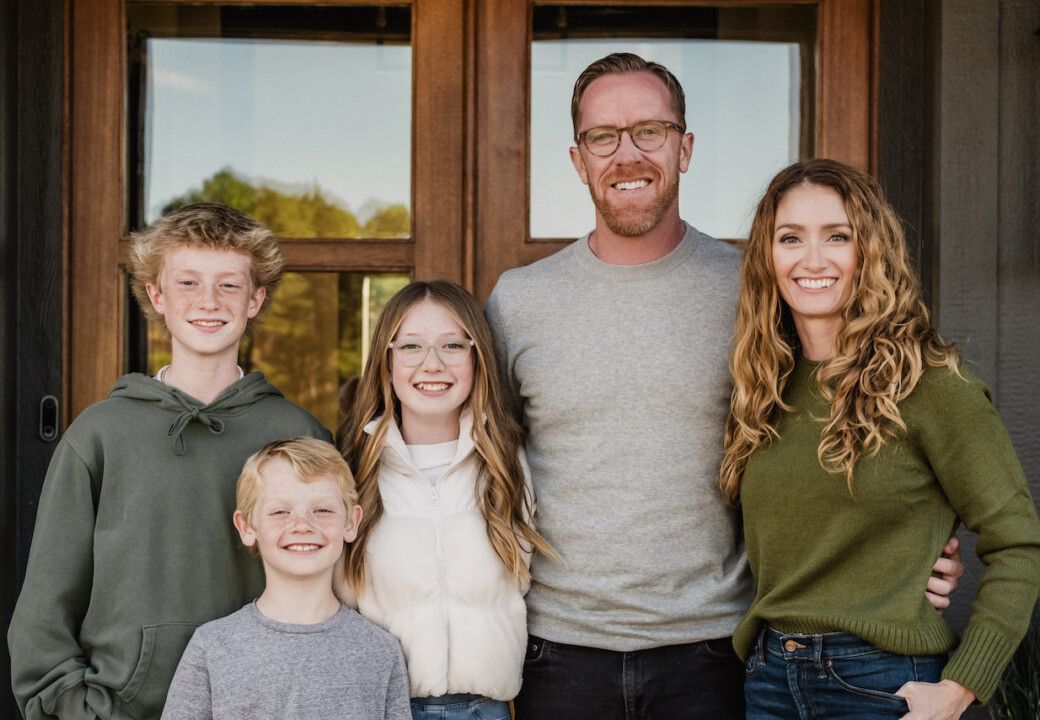
Dr. Burke Soffe with his wife, Lauren, and their three children
Technology enhances care, but fundamentals and critical thinking endure.
One recent publication calls on dentists to identify elongated or calcified stylohyoid ligaments on panoramic radiographs, an intervention that could literally save lives. Another ongoing study examines noise-induced hearing loss in dental education, an underexplored issue given the cumulative noise exposure in simulation and preclinical clinics.
Our approach to research is pragmatic and patient-centered. We focus on work that improves clinical awareness, practitioner health and real-world outcomes. With passionate faculty scientists and curious students alike, we see research not as an accessory but as a responsibility that is critical to our profession.
Any last thoughts for our readers?
What if dental education didn’t have to take four years? Lyon College School of Dental Medicine, by design, operates a 36-month continuous three-year program. Many dental schools in the 1970s were three-year programs; the shift to four years was driven more by financial models than educational necessity. The result has been unsustainable student debt that now threatens the profession.
By eliminating long academic breaks, focusing on enduring and applied knowledge through an intentional curriculum design process and using an integrated curriculum where biomedical sciences and clinical education occur simultaneously, we will graduate dentists sooner, with less debt and an additional year of earning potential. Students begin clinical experiences from the start, applying science directly to patient care rather than storing it away for later.
Innovation at Lyon College School of Dental Medicine is guided by purpose, emphasizing intentional efficiency, relevance and a deep respect for the future dentist.
This interview has been edited for length and clarity

 LOADING FORM...