
THE NEW LOOK OF INDUSTRIAL DESIGN
As doctors grow increasingly product-savvy—and demand more seamless and intuitive user experiences—industrial design is emerging as the secret weapon driving adoption of innovative dental technologies.
BY JERRY MARKON
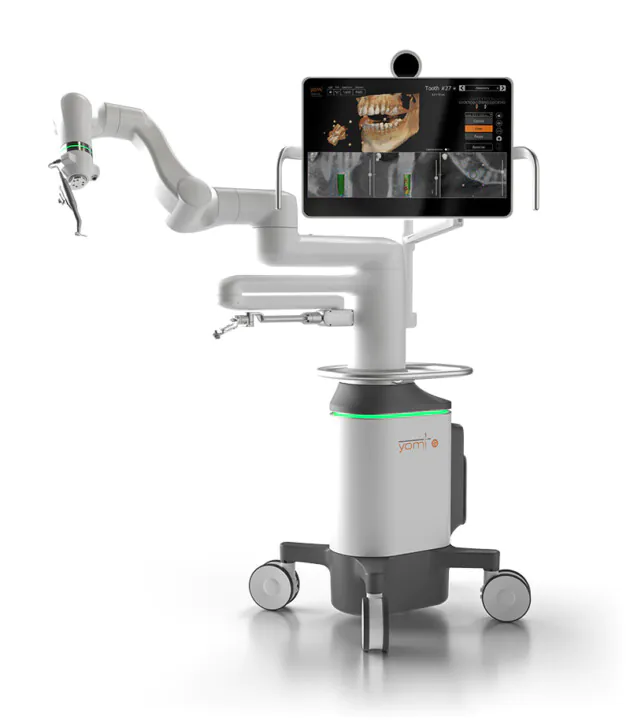 WHEN THE LEADER OF a pioneering dental robotics firm set out to create a new surgical robot, he incorporated principles of industrial design considered vital to accelerating innovation in dental products.
Neocis CEO and cofounder Alon Mozes already had a robotic system for dental implant surgery that hit the market in 2017. Known as Yomi, it helped dentists plan procedures using software that incorporated AI algorithms, with the robotic arm helping to hold and guide the drill.
 Intuitiveness Is the New Mandate
For the next-generation Yomi, overhauled and redesigned since around 2023, Mozes focused on intuitiveness. “The top priority was ease of use,” he says. “It had to be very simple, very intuitive for any dentist to use.”
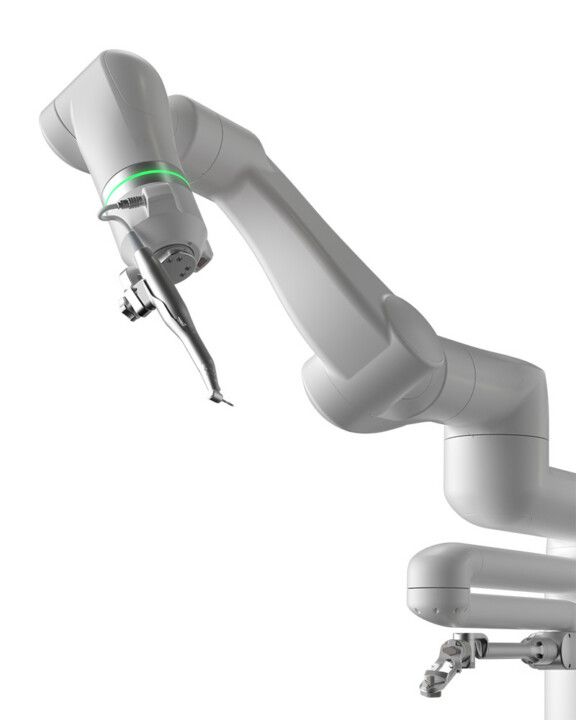
His design team accomplished that with improvements to the robot’s user interface. The original Yomi required a laptop, a keyboard and a dental assistant on hand to enter commands. But a single clinician can operate the new Yomi with its touchscreen, voice recognition and wireless foot pedal. Even the robot arm is more flexible and easier to operate because of an extra joint.
The team then turned to aesthetics, developing a product that has a sleeker look than the original, with a mostly white color scheme and dark gray accents. “An aesthetically pleasing design will have broader appeal,” Mozes, 48, says of the new device, christened Yomi S., which won FDA clearance in October and reflects “a ground-up rethinking of how to make Yomi work best for doctors in their workflows.”
 Experience Still Drives Innovation
Neocis, founded in 2009 and based in Miami, is on the newer end of the dental product innovation spectrum. Yet when venerable dental equipment manufacturer A-dec designed new tools in recent years, the company took a similarly innovative industrial design approach.
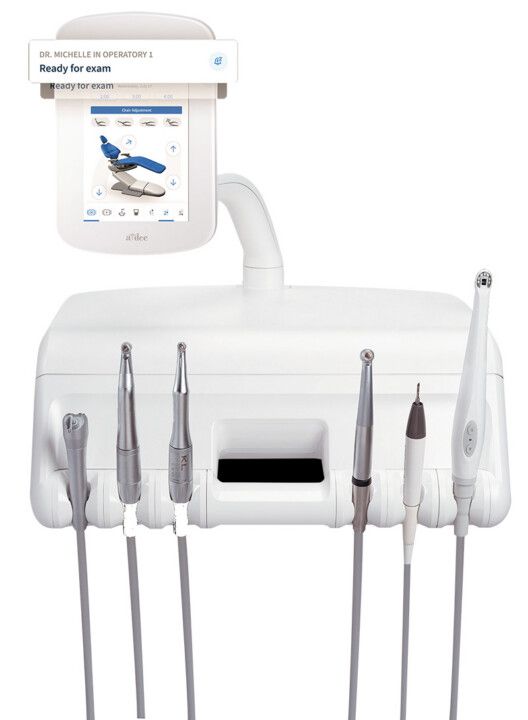
For its A-dec 500 Pro Delivery System, for example—a centralized platform for managing dental instruments and devices—the company engineered an intelligent touchscreen interface with integrated software and connectivity that links and controls operatory equipment. Company officials say it ensures predictable performance and consistent clinical workflows across every procedure.
“It’s a single user interface: simple, consistent and intuitive,” says Ryan Williams, A-dec’s senior vice president of product development and technology. “The aesthetics are modern, with an ergonomic design.” Industrial design, he adds, “has always been a key factor in product design” at A-dec, which was founded in 1964. “And it remains so today.”
Friends in high places: The era of financially siloed dental companies is fading. Case in point: The same venture capital currents that buoy Tesla and SpaceX helped power the redesign of the Neocis Yomi S. dental robotics system.
Rising Expectations Reshape Product Development
The convergence of two companies at different points on the dental product spectrum illustrates the growing importance of great industrial design in reinforcing product innovation.
Traditionally, experts say, the dental industry was considered slower to innovate than some other fields. But that is changing with the introduction of (among much else) intraoral scanners and digital imaging, along with the rapid growth of AI-enhanced diagnostic tools.
Digital dental products require more user-friendly interfaces and smarter esthetics. And with technology outside the dental practice advancing, if anything, even faster—as patients and clinicians enjoy the esthetics and high functionality of everything from smartphones to car infotainment systems in their daily lives—the focus is now on what some are calling the new look of innovation: sleek, usable and highly intuitive products that keep pace with the non-dental world. All of which puts the spotlight even brighter on industrial design.
When Your Competition Is the iPhone
“Dentists are people, and dental practices are made up of people. We have habits formed with our own personal use of technology, and it kind of loops back to the whole idea of intuitive design,” says Rosalea Peters, vice president of strategic operations at ICON Dental Partners, a national dental partnership organization based in Washington state.
“In your daily life, if you’re using smartphones and technology at the grocery store and in every other part of life, you’re interacting with a swipe screen and you pay by tapping your phone—dentistry is no different,” Peters says. “Dentists have to make sure they’re keeping pace with what’s happening across society.”
The rising expectations of patients and the dentists who purchase products has reached the point where industrial design expert Fred Sklenar says they fall under his “three strikes rule” for new products.
“I will give new fancy shiny objects three tries,” says Sklenar, 61, president and CEO of Kablooe Design, a Minneapolis product research design and development firm. “The first time, if it’s not intuitive, straightforward and effective, if it doesn’t do what it’s supposed to do easily or well, I will put it on the shelf and not look at it. Then at some point, I will try it again. If it’s again difficult to use, if it’s not designed well, I will put it back on the shelf.
“There will be no third strike.”
Design is the decisive lever for differentiating customer experience and brand value.”

Design worlds collide: Dentsply Sirona’s PrimePrint 3D printer sports a form factor and user interface reminiscent of a high-end smart speaker, making it look perfectly at home in even the most modern, design-forward practices.
Good Design Is a Universal Sales Driver
As dental equipment manufacturer Planmeca put it in a 2021 web post that industry officials say still applies, consumer expectations for user experience and the user interface of products, or UI, have skyrocketed over time.
“In the early days, the UI of a dental unit was basically just buttons and a membrane keypad, but since then we’ve entered this whole new visual world of graphic UIs [and] touchscreens,” the post said. “People now demand the same kind of usability and intuitiveness of a dental unit UI that they would expect of a smartphone. That’s something [industrial designers] need to carry over to the product.”
Designers try to meet the growing expectations by focusing on intuitiveness, user interfaces and aesthetics as three of the main factors in dental product design.
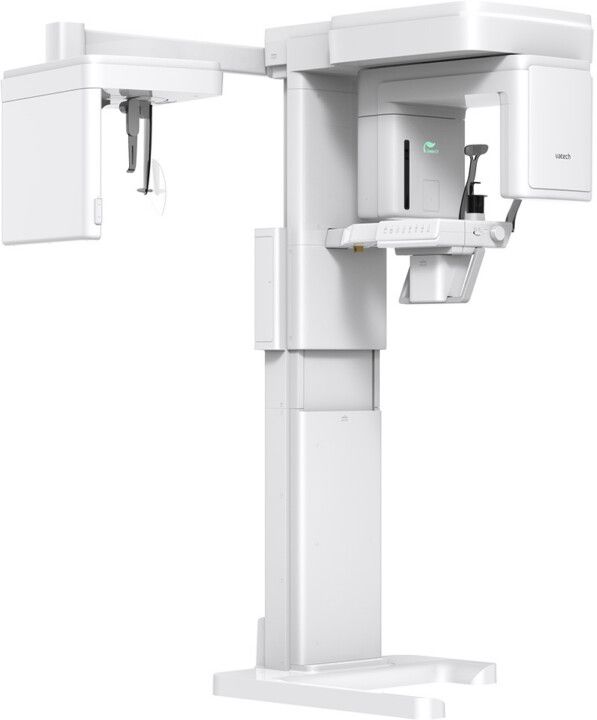
At Vatech, the South Korea–based manufacturer of dental, medical and veterinary radiographic imaging solutions, designers incorporate what they call the “three pillars,” according to Jongha Lee, head of R&D. They are user experience standardization to deliver intuitive experiences, a modular design system, and aesthetics and brand identity.
“Industrial design has become a core driver of competitiveness—well beyond making things look good,” Lee says. “Design is the decisive lever for differentiating customer experience and brand value.”
Innovating Within Real-World Constraints
Dental companies designing products also must compensate at times for smaller design budgets than their large nondental competitors. Lee, 52, says Vatech does this by pursuing “focus and efficiency,” while A-dec looks to other industries such as automobiles for inspiration.
“It’s important to leverage industry best practices,” A-dec’s Williams says. “A lot of really good industrial design principles have been established in other industries. Dentists, at the end of the day, are consumers and are driving a vehicle, so those became data points for users and customers of our products.”
Yet larger dental companies are also facing competition, as the new look of innovation has led to some degree of democratization, with smaller companies gaining more access to advanced design tools.
“Technology and the rapid pace of advancement enable smaller companies to jump in,” says Mozes, of Neocis. Before the digital era, he adds, “product innovation in the medical and dental space often required much deeper resources. If it’s software-focused, that’s certainly much easier these days.”
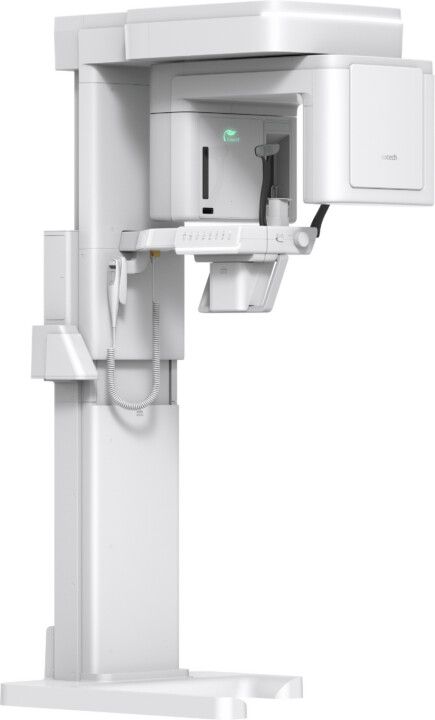
Professional gets personal: Traditionally, products in industries like health care and enterprise tech have lagged consumer counterparts in intuitiveness and visual appeal. Upstart companies like Vatech are rapidly closing that gap.
Big Investments Yield Bigger Innovations
Neocis had to dig deep to fund the new Yomi S. dental robotics system, which Mozes says cost millions of dollars. He would not be specific but said Neocis has been primarily funded overall by venture capital groups, including DFJ Growth (Tesla, SpaceX), Norwest Venture Partners (Uber, Spotify, Silk Road Medical) and industry venture arms from companies including Intuitive Surgical and Nvidia.
Mozes describes a development process that reflected years of learning from the original Yomi. The comprehensive redesign started with simulation models in software, then progressed to actual models
with doctors doing mock implant surgeries at the company’s 30,000-square-foot headquarters.
Dr. Jay Neugarten, 56, an oral and maxillofacial surgeon in Manhattan who helped Neocis plan and simulate the new Yomi S., calls it a model of innovative industrial design: “It’s ergonomic, with a sleek, cutting-edge, elegant design. It’s very easy, very simple to use, and it does not look overbearing or scary to a patient.”
Asked to independently review Yomi S.’s industrial design based on photographs, Sklenar agreed that the new robotic device “has a beautiful-looking form. From an aesthetic point of view, it seems to have the appropriate elements for mobility, clarity and balance.”
He adds, though, that Yomi S.’s “efficiency of outcomes” was unclear, especially for small dental practices that may not be able to afford “a very expensive robotics system.”
Mozes says Yomi S.’s cost is “in the ballpark” of $150,000 and that with the new robotics system now available, Neocis has leasing available for the original Yomi to make it more affordable.
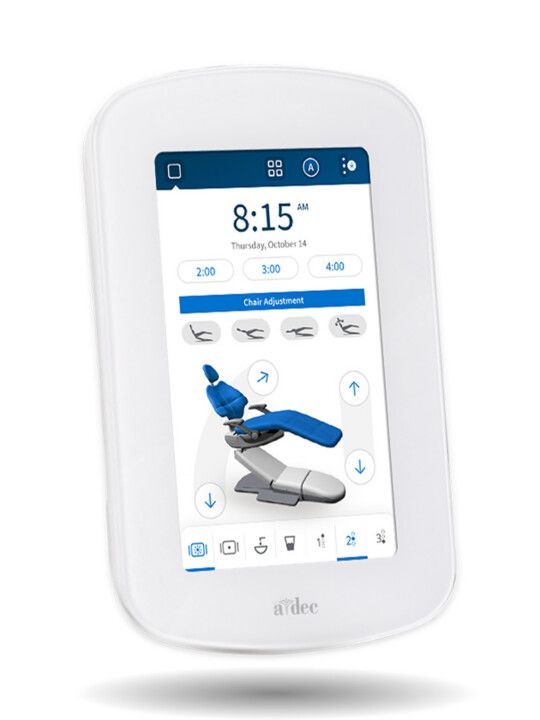
Old school, new cool:
A-dec’s 500 Series demonstrates how a legacy manufacturer can remain a permanent fixture on dentistry’s cutting edge. It’s the continuation of
a design-forward lineage that began when A-dec’s first dental chair shook
up the industry in 1978.
Legacy Companies Can Maintain Leadership
At the other end of the innovation spectrum, Newberg, Oregon–based A-dec has a long history of innovative products, including the first integrated dental cabinet and, in 1978, a state-of-the-art dental chair. It is still considered a leader in the core dental equipment market.
More recently, it has focused its innovation efforts on advanced technology and connected dental equipment, which in 2023 produced the A-dec 500 Pro Delivery System.
“Decades ago, industrial design and aesthetics was more focused in the physical space,” Williams says. “It’s evolving to also be more focused on digital—software intuitiveness and user experience and interfaces. The expectations of dentists are changing, and it’s key to have a dynamic user interface.”
Asked to likewise evaluate the A-dec 500 Pro Delivery Systems from photographs, Sklenar says the product “seems to have a very nicely designed form factor and an interesting graphic interface.
“It looks like a whole chair system, integrated with the back counter,” he adds. “They are thinking holistically about the entire environment, not just the tool they’re creating.”

 LOADING FORM...