
Women may newly dominate dental schools, but turning those numbers into real power could take decades. An overview of the current barriers—and how some of the industry’s top trailblazers are breaking through.
FIVE YEARS AGO, something remarkable happened: For the first time in American history, more women than men graduated from dental school. Perhaps you’ve heard. The Lucy Hobbs Project, among many others, has beaten this drum regularly for eons. It’s a significant change, to be sure—as the American Dental Association Health Policy Institute’s most recent workforce analysis pointed out, this isn’t just a demographic shift but a redefinition of how dentistry looks, feels and functions.
Exciting stuff. But also, to be blunt: So what? More female graduates is certainly a quantifiable achievement, but dentistry, like most industries, evolves glacially. The excitement and intrigue behind this shift are real, to be sure, but it will presumably be quite a while before changes at the entry level will cause noticeable differences in the C-suite.
Are increased numbers in personnel enough? We’re already finding out, but the eventual answer remains to be discovered. There’s no question that women in positions of power and influence are already making a difference; they’re at the helm more than at any previous moment, as stewards of technological advances and pioneers of care that prioritizes the social and emotional dimensions of health. Research shows that female dentists typically spend more time with patients, emphasizing empathy, communication, comfort and preventive care—qualitative aspects of health care that can boost measurable outcomes. They can bolster businesses’ bottom lines, too.

Today, roughly two in five practicing dentists are women; among dentists younger than 35, women represent closer to half the workforce. As Baby Boomers retire and today’s younger doctors mature into their careers, some analyses predict women will be more than half of practicing dentists in the U.S. by 2030—just four years hence. This will have an effect especially on female patients, as their doctors offer critical perspectives on their oral health needs, especially those related to pregnancy, menopause and other areas of medical research that have historically been neglected.
Forget for a moment the hard numbers regarding mortarboards and sheepskin certificates, though. Throughout the profession, women’s collective decision-making power lags their growing slice of the workforce. Senior roles in academia, research and development, and DSOs—as well as specialist areas excepting pediatric dentistry—remain largely male-dominated. When, and how, is that likely to change? As we mark 160 years since Lucy Hobbs obtained her historic
dental degree, Incisal Edge spoke with women at various helms—of private practices, dental support organizations, academia, mentoring programs and professional networks—who shared the distinct challenges, insights and wisdom that guide them as they navigate (and help effect) this shift.
The Curriculum Conundrum
The leadership gap begins, intentionally or not, in dental school. Imbuing students with strong business acumen in addition to top-notch clinical skills is not a high priority at most schools for the brief time they spend with their students. This gap can be especially difficult for women to overcome. Skills in negotiation, finance and quotidian practice management are most often self-acquired, and younger female doctors have fewer matriarchs—whether currently in the field or historically speaking—to turn to for guidance.
Peer-to-peer networks of women, unofficial and official alike, are therefore springing up at unprecedented rates to help bridge this divide. Incisal Edge spoke to the leaders of three such groups: Women in DSO, Guiding Leaders and Dental Entrepreneur Woman.
“The reason we created Women in DSO is that it was always men leading the conversation with women around the periphery,” says Dr. Aman Kaur, a Chicago doctor who in 2019 founded Women in DSO, an organization that works to offer women mentoring and leadership skills, hoping to secure better representation in the boardroom and beyond. “Creating a network for women has helped put us at the center of the conversation and make our voices heard,” she adds. “I want to see women leading in DSOs as the future of the industry. They have done the groundwork, and they deserve an opportunity to shine.”
Guiding Leaders is a similar program. Tailored to female clinicians and practice owners, it was founded by Glidewell Dental, also in 2019, in Newport Beach, California, and is spearheaded by Glidewell’s CEO, Stephenie Goddard. “People rightfully think that the field of dentistry is female-dominated. That’s true, just not in positions of power,” says Goddard, No. 7 on Incisal Edge’s 32 Most Influential People in Dentistry in 2025. “Women do face different challenges, in part because we tend to be primary caretakers and caregivers.” Guiding Leaders’ curriculum not only teaches women leadership skills but builds professional networks that continue to support participants long after the program ends.
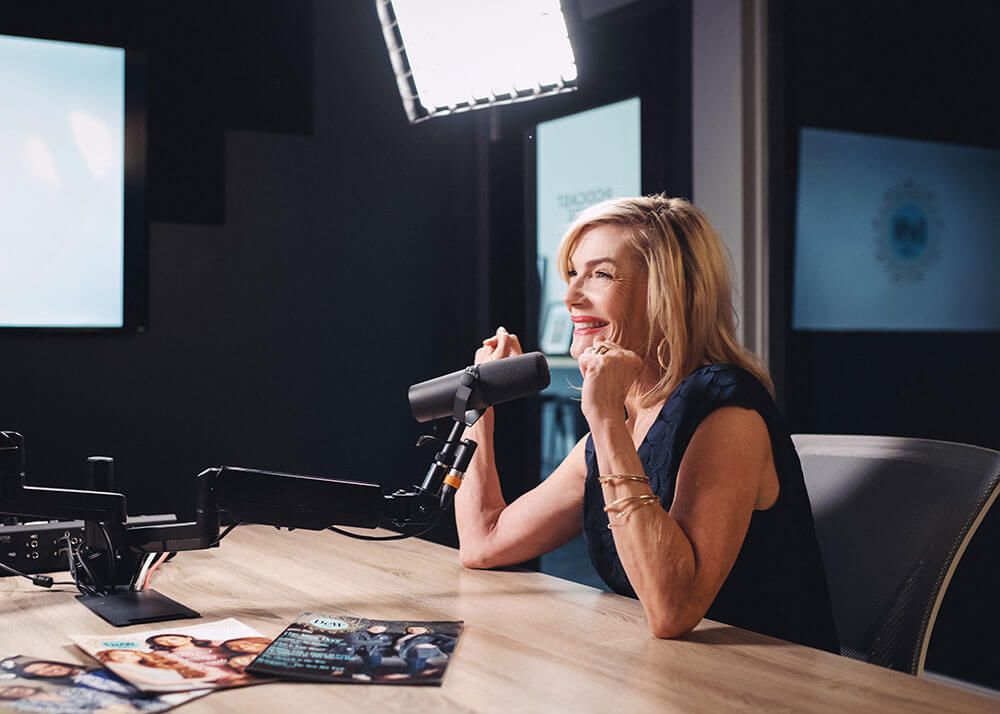
Similar support is on hand from Dental Entrepreneur Woman (DeW), based in Charlotte, North Carolina. Founded in 2016 after a 46-year career in hygiene by Anne Duffy, this year’s Lucy Hobbs Industry Icon honoree, DeW began as a magazine and has grown into a peer-support network that hosts retreats, a podcast and events to foster mentoring and connection. “I realized that while there has been tremendous change and progress, there is a lot of work to be done. I wanted to highlight women in dentistry who were doing remarkable work,” Duffy says. “Dentistry has typically been run by men—so in a way, we’re just now finding our voice.”
One noticeable throughline among women who run these types of professional networks is an attitude shift away from a highly competitive “scarcity” mindset. “It used to be that there were two spots for 100 women, and you had to hang onto that spot,” Duffy says. “That’s not true anymore. When an opportunity comes up, we can advocate for each other—because we have arrived at the next level. We continue to build the ladder of women rising to the top.”
As these organizations demonstrate, leadership in dentistry is being redefined not only chairside but increasingly in management positions as well. “There’s a groundswell of communities looking to uplift each other,” Duffy says. “When you bring women together, magic happens.”
The Power of Clear Expectations
 Dr. Bianca Clark, a 43-year-old cosmetic dentist and practice owner, learned to navigate the complexities of office leadership through a bit of trial and error.
“In the beginning, I tried to be a leader who was more on the friend side of things, versus looking at the business aspects,” says Dr. Clark (below). “I didn’t necessarily set what I thought were healthy boundaries between work and personal relationships. That’s a big difference between being a male and female practice owner: As women, we’re not given the same grace that men are in how we interact with team members. I’ve learned that as a leader and practice owner, I have to set boundaries and expectations early on.”
A Mississippi native and graduate of the University of Tennessee College of Dentistry, Dr. Clark is now co-owner of West Loop Smile Studio, a two-location practice in Chicago. A skilled practitioner in digital design and 3D printing, she has advanced training in biomimetic dentistry, blending technology with artistry to create elegant, functional smiles. “Dentistry is rapidly evolving,” she says. “We now understand the mouth not as a closed system but as an integral part of whole-body health—connected to diet, the oral microbiome and even genetic expression. Dental medicine is medicine.”
One of the biggest dilemmas as a practice owner, she says, is the outdated insurance model. As the cost of living rises and families feel stress, dental insurance comes to seem like a luxury and not a necessity, while those who are insured often misunderstand their coverage. The burden of explaining, processing and dealing with insurance falls to practice staff and dentists. “We get into this profession because we love science, we love art, we want to treat people and we want to treat teeth—but we have to become masters of dental insurance when that shouldn’t have a place in treatment,” Dr. Clark says, her frustration palpable.
As a woman and a dental leader—not to mention mother to a 5-year-old daughter—Dr. Clark understands the power of representation and shared experience. “Women have a unique set of challenges that I feel only other women can relate to and recognize. We also live in a world where research is heavily skewed away from understanding women’s bodies, and how the diverse changes our bodies make affect our entire systems. Women can empathize with other women in ways that reflect our shared sense of—and desire for—community. Women thrive in circles of women.”
Can Teamwork Help Make the DSO Dream Work?
 Affiliation with dental support organizations is booming, especially among female dentists—in 2024, 18 percent of young women in the profession were affiliated with a DSO, ahead of young men at 15 percent. Is that tie-up a good thing or a bad thing? DSOs offer support, stability and structure, sure—but they’re also perfectly placed to cater to younger doctors afflicted by early-career uncertainty and weighed down by crushing amounts of student debt. Those affiliation numbers are poised to increase; some industry watchers forecast the proportion of dentists paired off with DSOs to be as high as 30 to 40 percent by 2030—again, just a scant four years away.
The refrain is familiar: Despite women’s greater prevalence in partnership with DSOs, leadership positions in the sector are dominated by men. In this way, Dr. Layla Lohmann is a pioneer: The 41-year-old mother of two helped found Apex Dental Partners along with her husband and a third business associate in 2014. She’s now clinical director of Apex, which boasts more than 40 locations and a collective 200,000 annual active patients. Her early experience as an associate dentist was instrumental in developing Apex’s business model, which Dr. Lohmann calls the “third option”—a marriage of the best attributes of private practice with the benefits of a group practice model. “I wanted something that supports doctors making autonomous clinical decisions and offered a support framework at the same time,” she says.
A clinician who practices three days a week out of Apex’s flagship location, Dallas Dental Group in north Texas, Dr. Lohmann had a mindset shift in 2020 when she realized she needed to be a proactive provider, not just a conservative dentist. “The challenge for me was that I didn’t understand business. Numbers made me uncomfortable. You don’t define ethical dentistry with numbers—they teach that in dental school. What I’ve learned is that profitability follows. If I am an ethical dentist and I prescribe the necessary treatment for your care, the patient follows.” By changing her mindset and communication style, Dr. Lohmann’s case acceptance rate doubled, from 20 percent to 40 percent, between 2020 and 2022. It now sits around 56 percent.
That shift ignited an ember within her: a desire to share the wisdom she found through her own personal and professional growth with others. She raised more than $120,000 to launch the Apex Catalyst Program, a comprehensive curriculum that empowers clinicians with the skills and mindset to thrive in modern relationship-based dentistry. “Once I stopped worrying so much about wanting to be liked and instead felt empowered in my own right, everything changed,” she says. “I leveraged that shift with the business. I know that people and culture are an investment, but I had to learn how to communicate the ROI to the Apex leadership team. The money has to make sense.”
Dr. Lohmann is a glittering example of how women ascending to positions of leadership can over time transform a business or organization. “There’s still significant underrepresentation of women in decision-making seats, especially in roles that shape strategy, growth and clinical standards,” she laments. “That imbalance doesn’t just limit representation; it limits perspective.” She credits continued education, communication and leadership courses with her individual growth. “My ongoing education helped me flip a switch in my brain. I no longer have an elephant of anxiety on my chest.”
One of the most important lessons Dr. Lohmann wishes to pass on to other women, who tend to be natural multitaskers and caregivers, is that not everything needs to be done to the point of perfection. “As a mom and a dentist, my natural inclination is to fix things, people, situations, teeth. But that overburdening was a recipe for burnout. You can wear only so many hats before they all fall off.” She has learned that while she can’t do everything perfectly, she can surround herself with people who support her and are skilled in areas in which she might be weak—spreadsheets, for example. “I don’t need to know Excel to be great at my job,” she says with a laugh. “I can surround myself with people who know things I don’t. I surround myself with smart people, and we make this beautiful recipe together.”
My hope isn’t just that more women enter leadership; it’s that they’re sponsored into it, developed within it and supported to lead authentically, without having to trade empathy for influence.”
—Dr. Layla Lohmann
Looking ahead, Dr. Lohmann feels optimistic about the future of women in the DSO space—as clinicians, decision makers and agents of change. “My hope isn’t just that more women enter leadership; it’s that they’re sponsored into it, developed within it and supported to lead authentically, without having to trade empathy for influence,” she says. “We need to normalize women being both strategic and nurturing, decisive and relational. Those traits are not contradictions; they’re leadership strengths.”
Soft Skills, Solid Competence
Dr. Isabel Rambob moved to the United States from her native Brazil, where she owned her own practice, in the early 2000s—and was exasperated to find that she faced additional hurdles as a woman of color and an internationally trained clinician.
 “I was so aware of those barriers, so I worked harder to overcome and overcompensate. It’s not considered ‘ladylike’ to ask for things. If you’re assertive, you are labeled aggressive,” says Dr. Rambob (right), the assistant dean for student affairs at the University of Oklahoma College of Dentistry. “But I learned that I have to ask for what I want—not a favor, but an opportunity. Our best weapon is competency.”
Women might be a majority of dental students in the U.S. these days, but they’re still less likely to see themselves reflected in school staff. Only about a third of academic leadership positions in dental schools are held by women, with a February 2024 ADA Women in Leadership survey finding that women in academic dentistry face a shortage of mentoring, access to leadership training and administrative sponsorship. With two decades in academia to draw from, Dr. Rambob shares her sagacity with her students.
“One mistake I see especially women making is to wait: Wait for someone to recognize you, wait for someone to give you the chance, wait for someone to invite you to a seat at the table. Women tend to undersell themselves more often,” she says. “We have to be OK with rejection, and we also have to give ourselves grace. Learning to turn off that negative self-talk is something we have to practice for the rest of our lives.”
I learned that I have to ask for what I want—not a favor, but an opportunity. Our best weapon is competency.”
Formerly a professor at the University of Maryland School of Dentistry and past president of the American Association of Women Dentists, Dr. Rambob now works hands-on with Oklahoma students from day one through graduation (and beyond) to offer guidance and career planning. She’s cautious when students express interest in opening a practice right after they graduate; she encourages them to work for at least three years first to learn the ins and outs of running a business as an employee, not a boss, before taking on the financial and administrative responsibility of ownership. “I tell my students to learn to be a good dentist first. I want them to gain a wealth of confidence in their clinical skills before adding the stress of owning a practice,” she says.

In her observation, soft skills are as essential as clinical fortitude. “This new generation of younger students sometimes panic when they have to call someone, because they’re so accustomed to text messaging. I see the importance of connection and teaching students to take care of the person as an individual—not the patient, not the mouth, not the crown, but the person.”
 While dental schools’ top priority is to produce competent clinicians, Dr. Rambob sees hers, at least, as filling the gap of business management skills for students who eventually do want to own. The University of Oklahoma’s elective programming, lunch-and-learn sessions, senior practice management course and even a four-year DDS/MBA dual-degree track help them develop business and leadership skills beyond the core curriculum.
With technology in constant ferment, this is an exciting—if uncertain—time for dental education. “We do the best we can, but institutions are slower to implement change because of the size of the enterprise and the bureaucracy,” Dr. Rambob says. “I tell my students that they have to be lifelong learners. I know some people feel threatened by AI, but I see how it can expedite processes and allow us—dental providers—to spend more quality time with patients. The human touch cannot be replaced.”
Creative Thinking Promotes Positive Change
“The biggest challenge I face professionally is balancing all the competing demands,” says Dr. Sheila Dobee, owner of Your Caring Dentist in Fremont, California. “Running a dental practice takes a lot more than just being a good clinician. You’re not only treating patients—you’re leading a team, creating a culture, staying up-to-date on new technology and continuing your own professional growth.”
 Dr. Dobee (left) is a thought leader in AI dental innovation. She not only lectures on a variety of topics—she has taken the stage at the Glidewell Symposium, the Bay Area Dental Expo and at conferences as far afield as Dubai—but approaches her own education holistically. Her range of CE topics runs from AI innovation conventions to wellness seminars; she then incorporates the knowledge she gleans into a whole-patient approach in the operatory. “I get a lot of patients complaining about clenching and grinding,” she says. “I don’t just make them a mouthguard; I want to get to the root of it. I’ll often suggest breathing techniques, yoga and meditation. A lot of patients will later say, ‘I’ve never had a dentist talk to me like this, and the method you recommended changed my life.’ ”
Dr. Dobee isn’t afraid to rethink solutions to traditional management predicaments. Regarding staffing shortages, she favors creativity over moat building: Her office partners with other local clinics to share personnel as needed. “We created a pool of staff that benefits everyone,” she says. “When we work in collaboration and not in competition, it’s less stressful for everyone. It’s a better way to practice dentistry.”
Dr. Dobee is one of many clinicians who is paying her success forward by counseling younger dentists. “Early in my career, I didn’t really have female role models, and honestly, it was isolating. Many of us practice in our own worlds, which can make it harder for women to find mentors or elders to guide them. One of my biggest lessons as a leader was realizing that leadership includes using your experience and expertise to empower others to lead with purpose and confidence.”
One of her key pieces of advice for young women in particular: Don’t get burned out. That requires loosening one’s innate perfectionism. “I always tell my mentees to invest in themselves and build a strong support system. You can’t do it all alone. Learn to delegate. Trust your voice and your expertise. Leadership isn’t about perfection; it’s about confidence, resilience and empowering yourself and others to thrive.”
LinkedIn data from 74 countries show that women represent only 31 percent of leadership positions globally, and “progress has stalled or reversed in many countries,” according to its March 2025 report. Dentistry is part of those larger trends. How many more years will Incisal Edge need to report on representation gaps? Probably as long as dental schools lack female mentors and their curricula lack a business education component. Probably also as long as women continue to spend more time than men on unpaid family and household work. But the women profiled here—and the lives they touch—show the way forward. Representation remains a work in progress, but “in progress” is the important portion of that sentiment. That sound you hear is approaching change—and it’ll be here before any of us imagine.

 LOADING FORM...