
Staying true to the memory of three slain selfless friends, students at North Carolina’s Adams School of Dentistry refused to let the pandemic keep them from their annual day of community service.
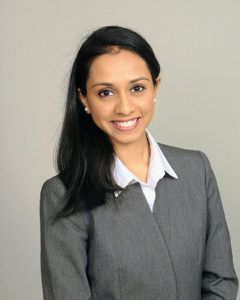
Photography courtesy of Karthika Kandala
In February 2015, three dental students were murdered near the campus of the University of North Carolina in Chapel Hill: Deah Shaddy Barakat and his wife, Yusor Mohammad Abu-Salha, both students at UNC, and Abu-Salha’s sister, Razan, was an undergraduate student at North Carolina State.
To honor their memory, nearly every student at UNC’s Adams School of Dentistry participated in a day of community service—homebuilding, elder care, meal delivery, oral-hygiene instruction for children—not long after. They called it DEAH DAY, an acronym for “Directing Efforts and Honoring Deah and Yusor,” and the initiative has grown steadily in the years since to encompass UNC alumni as well as students from the university’s medical, pharmacy and social-work schools. Incisal Edge spoke with Karthika Kandala, 25, Eva Desai, 27, and Rosa Muñoz Aldape, 27, all students at UNC Dental, about the DEAH DAY project, the impact it has had since its founding—and the good works that still lie ahead.
The initiative has grown steadily to encompass North Carolina alumni as well as students from the university’s medical, pharmacy and social-work schools.
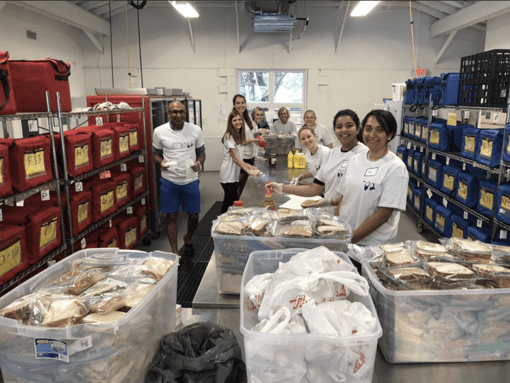
Sandwich Artists: Volunteers pack lunches for the needy.
In the past, Adams canceled school to allow students, faculty and staff to participate. How did UNC’s August decision to shift to remote learning for the time being affect this year’s DEAH DAY, on October 7?
Karthika Kandala: This event is central to the service mission of our school, and as such we still canceled classes for DEAH DAY. The general sentiment among faculty and students was that they didn’t want DEAH DAY to go away, even for a year. Considering the “new normal” and thinking of volunteers’ safety, we wanted to be prepared. We attempted to continue the tradition of on-site volunteering while also piloting many new virtual options. For any in-person site—which involves sorting and organizing inventory, delivering groceries and packing meals for those in need—we made sure that proper Covid-19 precautions were in place. We also had a number of outdoor opportunities available for volunteers, such as cleaning up public spaces and weeding botanical gardens.
Due to Covid-19, a number of sites we typically work with were unable to accommodate volunteers, so we also worked to include a number of virtual and remote options: off-site labor, such as making masks to be donated to the community, or virtual interaction, such as tutoring students via Zoom and making calls to chat with local senior citizens who don’t have the opportunity to leave their homes right now. We were excited to make DEAH DAY a success despite the challenges the pandemic has caused.
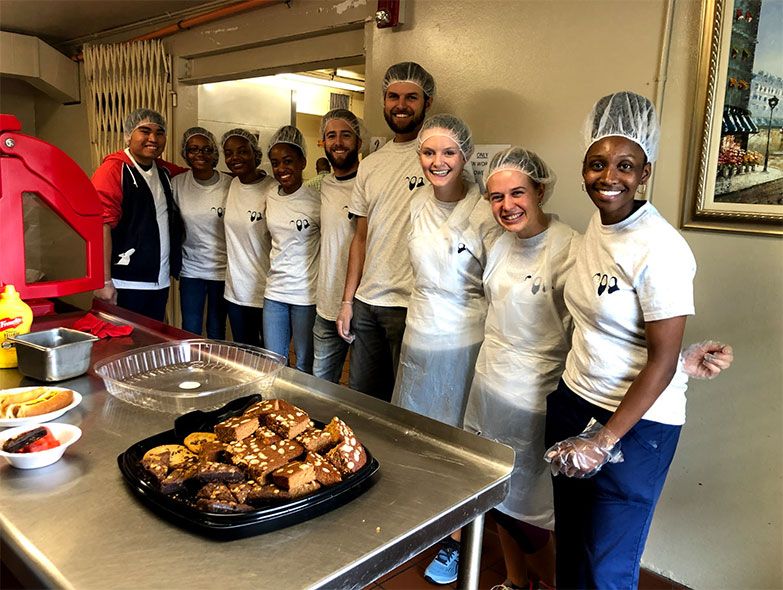
Line Cooks: DEAH DAY food-prep volunteers in action
For more information about DEAH DAY volunteer options, email Rosa Muñoz Aldape at munozald@live.unc.edu.
To donate, visit give.unc.edu/donate and search for “DEAH DAY Fund” under “Find More Fund Options.”
Memories of those Lost
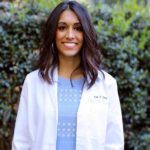 Deah was my tour guide the first time I visited UNC’s dental school, in 2014. He was enthusiastic, warm and extremely kind. It had not even been a year since I met him when I received the news about his death. Upon my arrival at UNC two years later, I knew I wanted to contribute to a larger cause that would help honor the legacy [he and the other victims] left behind.” — Eva Desai, fourth-year dental student, co-chair of DEAH DAY 2020
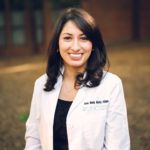 I was a senior in UNC’s dental-hygiene program when they were killed. Although I didn’t know them personally, everyone around the dental school knew Deah for the kindhearted person he was. I distinctly remember him emailing everyone at the school a few weeks prior that he had bought a new Keurig machine and put it in the student lounge for everyone to use. The motto #LiveLikeDeah, which encourages us to serve our communities, aligns closely with my values.” — Rosa Muñoz Aldape, fourth-year dental student, co-chair of DEAH DAY 2020
DEAH DAY: BY THE NUMBERS
2016
- Number of Sites: 24
- Volunteers: 407
- Volunteer Hours: 1,220
2017
- Number of Sites: 23
- Volunteers: 413
- Volunteer Hours: 1,250
2018
- Number of Sites: 31
- Volunteers: 432
- Volunteer Hours: 1,624
2019
- Number of Sites: 34
- Volunteers: 418
- Volunteer Hours: 1,146

 LOADING FORM...